

The Separation of Abraham and Lot: Faith Revealed at the Crossroads of Choice
Following Genesis 13, we reflect on the separation of Abraham and Lot, contemplating how faith manifests amidst visible benefits and God's promises. This story teaches us how peace and trust guide us through conflicts and choices.
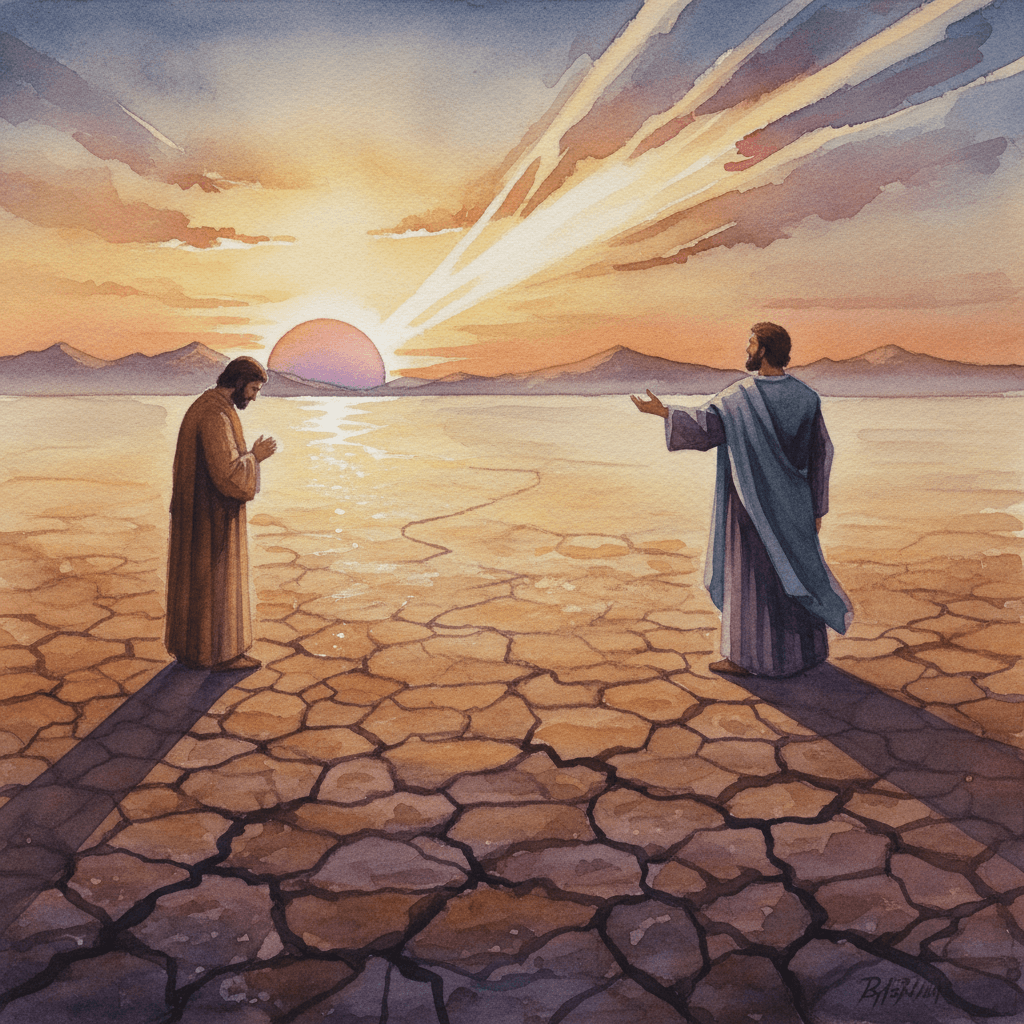
The Separation of Abraham and Lot: Faith Revealed at the Crossroads of Choice
Genesis 13 presents a very realistic scene from Abraham's life. Being a person of faith doesn't mean always experiencing miraculous wonders and grand promises. When God blesses us, new tests often appear in the very places where we are called to handle those blessings. The story of Abram and Lot is no different. As their livestock and possessions increased, the space where they dwelled together became increasingly cramped, eventually leading to disputes among their herdsmen. The Bible states, “The land was not able to support them while they stayed together, for their possessions were too great for them to remain united” (Genesis 13:6-7). While God's blessing isn't the cause of conflict, the larger the blessing, the more people's hearts and choices become evident.
This scene becomes even clearer when considering the cultural background of that era. In a farming and herding society, water and pasture were not just conveniences but vital for survival. The size of the herds could easily escalate tensions over wells, grazing land, and migration routes. Moreover, Genesis 13:7 adds, “Now the Canaanites and the Perizzites were dwelling in the land at that time.” This indicates that Abraham and Lot's conflict was not an isolated issue but also was visible to outsiders, illustrating how disputes within God's chosen family can have broader implications. Though conflicts are unavoidable among believers, how they are handled demonstrates spiritual maturity.
At this pivotal point, Abraham’s attitude stands out. As the elder and one called first by God, he could have asserted his priority in their relationship. Yet, he sought peace instead of asserting rights. Abraham said to Lot, “Let there be no strife between you and me, and between your herdsmen and mine, for we are relatives” (Genesis 13:8). The term ‘relatives’ here implies more than just kinship; it signifies a close relationship that must be respected and not taken lightly. Abraham did not see his opponent as someone to be defeated; he viewed him as someone whom he must preserve the relationship with.
What is even more remarkable is what he did next. Abraham gave Lot the first choice: “If you choose the land to the left, then I will go to the right; if you choose the right, then I will go to the left” (Genesis 13:9). This isn’t merely a gesture of concession. It’s an expression of trust that God would take responsibility for Abraham’s life. Humanly speaking, it looked like a loss—allowing Lot to pick the better land—but Abraham prioritized his relationship with God over immediate advantages. He knew that clinging to land was less secure than trusting in God's promises.
On the other hand, Lot’s choice was highly calculated and immediate. The Bible states, “Lot lifted up his eyes and saw that the Jordan Valley was well-watered everywhere, like the garden of the Lord, like the land of Egypt in the direction of Zoar” (Genesis 13:10). This description shows how strongly Lot's focus was on visible, material conditions. The problem was that his chosen direction led toward Sodom, which the scripture clearly describes as “wicked, great sinners against the Lord” (Genesis 13:13). It appeared that he selected rich pastures, but in reality, he was approaching a spiritually dangerous environment. The Bible teaches an important principle here: appearances that look good externally do not always reflect the faith’s true choice.
The significance of Abraham and Lot’s separation is not only that they lived apart as relatives but also that it demonstrates the importance of the criteria by which we make decisions. Lot followed visible prosperity, while Abraham chose to wait on God's promises after seeking peace in God's presence. After Lot departed, God reaffirmed His promise to Abraham: “Lift up your eyes from where you are, northward and southward and eastward and westward, for all the land that you see, I will give to you and to your descendants forever” (Genesis 13:14-15). Lot saw with his eyes first, but Abraham saw with God’s words. This difference is crucial. Human eyes tend to chase immediate gains, but faith eyes interpret the present through God’s promises.
From here, we learn a vital principle of faith. Faith is not an inactive stance of always sacrificing or losing, nor a weakness that avoids conflicts. Faith trusts that God sovereignly guides, and therefore, it does not hold onto rights as idols. Abraham was not someone defeated by losing his share but believed that God Himself would supply. His acts of surrender were not signs of failure but outcomes of trust. Similarly, believers aware of their righteousness through justification by faith do not rely on their own righteousness or strength but trust in the faithful Lord who justifies by grace.
Many moments like these occur in our lives today—at work, amidst family disputes, financial challenges, or in conflicts over pride. It’s tempting to cling to “I must have it first.” But not every conflict calls for pushing hard; the Bible does not teach compromise of truth. Confronting sin, standing for truth, fulfilling entrusted responsibilities are necessary. Still, often our battles grow because of pride and greed, not truth. This calls us to honestly evaluate whether our choices are driven by God’s will or by our selfish desires.
When revisiting Genesis 13, it’s helpful to carefully study the text alongside 성경 읽기, comparing Abraham’s words and Lot’s perspective. Pay special attention to the contrast between “Lot lifting his eyes” and God telling Abraham “Lift up your eyes.” Though they look at the same land, their viewpoints are entirely different. Additionally, reviewing 묵상이란 to connect observations and applications reveals that this story is not just about family disputes of the past but also functions as a mirror reflecting our current choices.
Ultimately, this story is about trust amid separation. Abraham entrusted the situation to God’s sovereignty and did not try to control everything himself. Lot, however, chased after immediate abundance. As we follow the unfolding of Genesis, we see that their choices brought very different results. The key question that remains when pondering Abraham and Lot’s separation is: What am I basing my decisions on right now? Is it an outwardly attractive position, or a place where I maintain peace before God and trust His promises?
This week, think about conflicts in your relationships and calmly write down what you can let go of before asserting your own opinion. As you start your day with 오늘의 말씀, remember again that what you must hold onto is not favorable conditions but a faithful God. When faced with a choice, what matters most is asking what is the right path before God rather than what looks best at the moment. God will not neglect His people but will lead those who obey Him in faith within His promises.
Related articles
Why Did Abram Let Lot Choose the Land First?
In Genesis 13, Abram lets Lot choose the land first to stop the conflict between their herdsmen. This article examines that choice and the word God spoke afterward.
Beyond Comfort Zone Compromises: Lessons on Spiritual Discernment from the Story of Lot
Reflecting on Lot’s choices and the story of Sodom, this article examines how small compromises impact the soul and why God's mercy and holy discernment must go hand in hand, grounded in biblical meditation.
Faith Revealed in Romans 4: Living a Life Dependable on Promises, Even When Invisible
Following Romans 4, we explore Abraham's faith and the gospel of justification by faith. Reflecting on the truth that righteousness comes through faith, not works, we meditate on living a life that holds on to God's promises amid life's uncertainties.
 Bible Habit
Turn this article into today’s reading habit
Keep your McCheyne plan, sequential reading, notes, and progress together so the next passage is always clear.
- Today’s passages
- Reading checklist
- Notes and highlights