

Deepening the Reading of Exodus by Understanding Egypt: Biblical Background and the Significance of Egypt
By understanding Egypt’s history, power, and religious background, the book of Exodus becomes clearer. This article carefully examines the biblical meaning of Egypt, God's sovereignty, the nature of salvation, and applies these reflections to daily meditation.
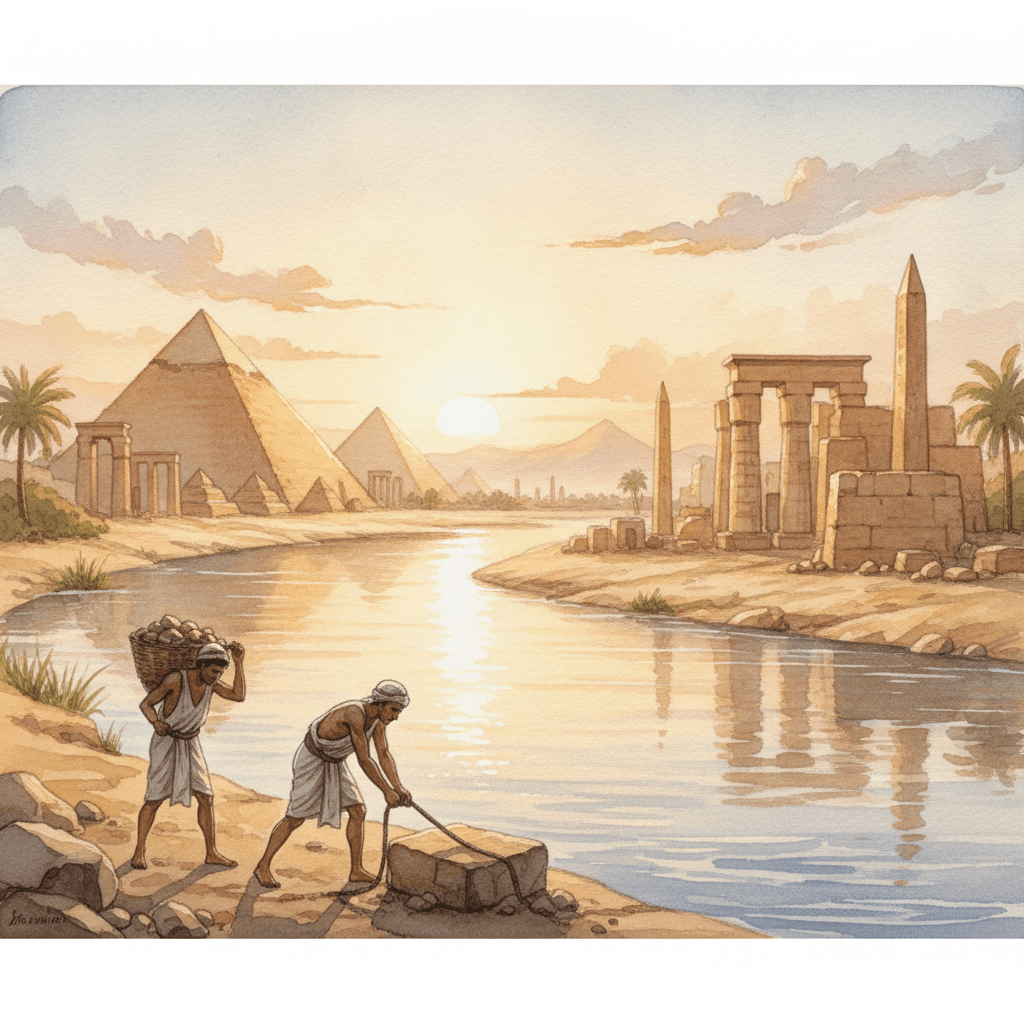
Deepening the Reading of Exodus by Understanding Egypt: Biblical Background and the Significance of Egypt
In the Bible, Egypt is not merely the name of an ancient empire. It was the land where Abram went to escape famine, where Joseph rose to prominence, and where Israel prospered before becoming enslaved. Understanding Egypt makes Genesis, Exodus, Psalms, and the Prophets much more vivid. The Bible is set against real historical settings, and exploring these backgrounds helps clarify the meaning of the text.
Modern Egypt is a powerful ancient civilization in the Near East, centered around the Nile River. Even in arid regions, the regular flooding of the Nile enabled agriculture, supported grain production, maintained administrative systems, and spurred monumental architecture. Recognizing why Egypt could withstand famine in Genesis, particularly Joseph’s grain storage policies, helps us see why his interpretations in Genesis 41 were so crucial, leading Egypt—and neighboring nations—to become dependent on it.
Furthermore, Egypt was a nation with a strong centralized government. The biblical Pharaoh was not just a king but a ruler wielding immense authority. This explains why Pharaoh in Exodus was reluctant to release the Israelites. Their labor was directly tied to national strength, and the increase of Hebrew people was seen as a political threat. Exodus 1:11 states that they built store cities like Pithom and Rameses for Pharaoh, revealing that Israel’s suffering was a tangible, economic oppression within the empire’s system.
Religion and culture in Egypt were also significant. Ancient Egypt worshipped many gods, and their natural phenomena and royal authority were intertwined within their religious worldview. The Nile, the sun, life, death, and abundance were regarded as divine orders. Against this backdrop, the plagues in Exodus convey more than natural calamities; they reveal God's sovereignty over Egypt’s power and idolatry. Exodus 12:12 states, “For I will pass through the land of Egypt that night, and I will strike all the firstborn in the land of Egypt, both man and beast; and on all the gods of Egypt I will execute judgments: I am the LORD.” Clinging to this verse when reading about the plagues helps us see the story not just as a record of terror but as a declaration of God's absolute sovereignty.
Egypt appears in the Bible in two contrasting lights: one as a refuge and the other as a house of bondage. For example, Joseph’s family fled to Egypt to escape Herod's threats (Matthew 2:14-15), and later, the story of Israel’s bondage is repeatedly recalled as God's act of salvation. The same geographic location served as both protection and oppression, illustrating that Scripture does not present geography as mere background but as part of God's providence.
This background contributes practically to biblical interpretation. First, it encourages us to see the scale of the Exodus as more than an event involving a few individuals—God rescued His people from a mighty empire. Second, it clarifies the meaning of salvation. The Exodus was not merely a migration but a liberation for worship, a release to serve God freely (Exodus 8:1). Salvation involves more than escape; it includes living as God’s chosen people.
Third, Egypt also symbolizes spiritual realities. While symbolic applications should not erase historical background, the Bible frequently depicts Egypt as a land of slavery—a place of former bondage. Reflecting on this, readers naturally consider their own lives—what binds them, what they consider security, and whether they rely more on God or worldly pursuits. These questions deepen meditation, rooting it in biblical reality. To better understand what meditation is, considering background knowledge helps connect biblical insights with personal application.
When engaging with passages about Egypt, it’s helpful to read through Exodus chapters 1-12, paying special attention to repeated phrases like “Let My people go” and “that you may know that I am the LORD.” If needed, consult 하이라이트란 to learn about tracking recurring expressions. When encountering unfamiliar phrases or connections, use AI 성경 검색 to search for expressions like “the God who brought Israel out of Egypt.” Tracking themes across Deuteronomy, Psalms, and the Prophets gives a comprehensive view. These methods foster a more holistic reading, preventing fragmented understanding and helping Scripture interpret itself.
Developing a habit of reading in context turns background knowledge from mere information into a deeper understanding of God's Word. To see the significance of reading the entire Bible, consider 성경 통독이 중요한 이유. For those new to consistent reading, 성경 읽기 습관 7가지 offers helpful tips to establish daily habits. Integrating background understanding and repeated reading brings greater fruitfulness.
Ultimately, Egypt symbolizes that no human power, however great, can eclipse God's sovereignty. It also serves as evidence that God hears His people's groans and actively works through history. The book of Exodus is not just myth or symbolism; it bears witness to the real salvation enacted by the true God in history. Therefore, through Egypt, we don’t just learn about an ancient civilization—we come to see more clearly who our sovereign God is.
One reason we sometimes struggle with Scripture today is that we see it too superficially. When we examine Egypt’s history, culture, power, and religion alongside, Exodus becomes much more vivid, and God's salvation more astonishing. Paying attention to familiar places and names enriches our reading. God reveals His purpose clearly through locations, history, events, and characters, and His Word calls us today to live in faith and obedience.
Related articles
What Happened at Passover in Exodus 12?
Follow the events of Exodus 12 to see how the Israelite households escaped the plague on Passover night and how the people departed from Egypt.
How Did Moses Return to Egypt in Exodus 4?
In Exodus 4, we look at how God answered Moses’s concerns with signs, words, and Aaron, and sent him back to Egypt.
Understanding the Background of Mount Sinai, Clarifying the Book of Exodus
Explore the biblical background of Mount Sinai, Delve into the historical, geographical, and wilderness context to better understand why the instructions in Exodus and Deuteronomy were given there, and how it helps us today.
 Bible Habit
Turn this article into today’s reading habit
Keep your McCheyne plan, sequential reading, notes, and progress together so the next passage is always clear.
- Today’s passages
- Reading checklist
- Notes and highlights