

Meeting Enoch in Jude: A Short Record of Sacred Steps
Reflecting on Enoch's prophecy in Jude 14-15, we meditate on God's holiness, judgment, and the grace of the Gospel. We apply the direction of a life walking with God, captured briefly in the record, to our daily routines today.
Meeting Enoch in Jude: A Short Record of Sacred Steps
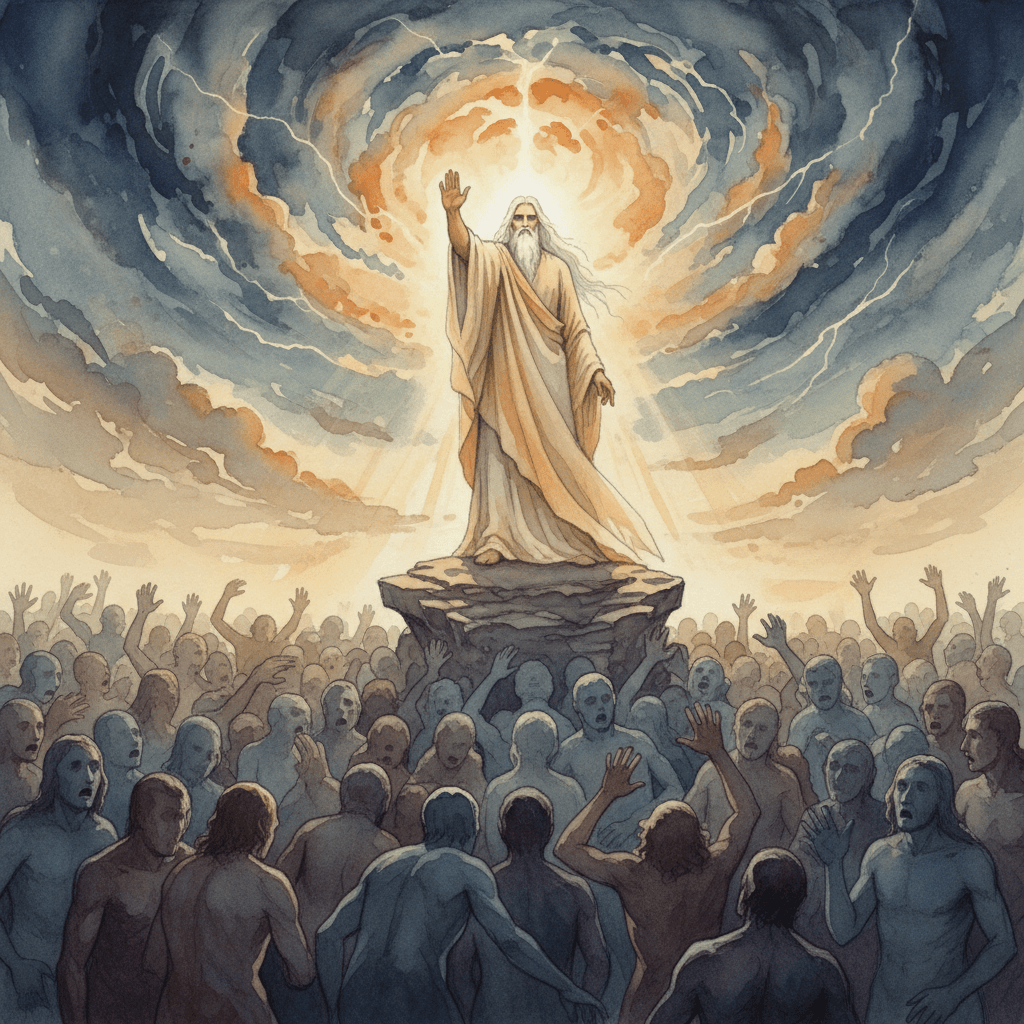
In the Bible, Enoch is a figure mentioned very briefly. Yet, his name remains etched in our hearts for a long time. Not because Enoch left many words behind, but because he is clearly remembered as someone who was righteous before God. Especially Jude 14-15 reveals important truths through Enoch. A life walking closely with God is not vague mysticism, but a sincere knowledge of God's holiness and judgment.
Jude is a letter written amidst threats of false teachings and moral decay in the early church. On the surface, it uses language of faith, but in reality, it infiltrates the community with an indulgent attitude that turns God's grace into license, denying our Lord Jesus Christ. In this context, Jude exhorts believers to earnestly contend for the faith, reminding them with various examples that God does not take evil lightly. Among these, Enoch appears.
Jude 14-15 states: "It was also about these that Enoch, the seventh from Adam, prophesied, saying, ‘Behold, the Lord comes with ten thousand of his holy ones, to judge all and to convict all the ungodly of all their deeds of ungodliness that they have committed in such an ungodly way, and of all the harsh things that ungodly sinners have spoken against him.’" The repeated phrase here is ‘ungodly.’ Through Enoch's name, Jude reveals that the biblical truth—that God has long hated sin and will judge evil—has been proclaimed since ancient times.
What’s crucial here is that Enoch's prophecy isn’t merely about conveying future information. It bears witness to God's very nature: He is love, yet also Holy. The Bible never separates these two. We risk weakening holiness by only speaking of love or dulling grace by only emphasizing holiness. Yet, the true Gospel clings to both. The glory of the Gospel is that a holy God, who perceives sin seriously, gave His only Son to save sinners. Therefore, when we meditate on Enoch, our focus ultimately turns to Jesus Christ. The certainty of judgment intensifies the urgency of the Gospel, and the grace of the Cross prevents us from taking holiness lightly.
The brief biblical account of Enoch’s life is actually beneficial for us. The Bible doesn’t spend much time describing his appearance, detailed career, or emotional changes. Instead, it highlights how he walked before God. This challenges us today as well: How impressive am I before others, and what is the direction of my walk before God? Faith isn’t proven only through remarkable moments visible to others. Often, what matters more is what we choose when no one is watching, in silent obscurity.
For example, at the start of a busy day, we might want to delay reading Scripture due to a hectic schedule. Choosing to briefly read a passage and reorient our hearts toward the Lord, even in small measures, is never insignificant. When someone’s words seem unfair, reacting with honesty and restraint rather than immediate retaliation also matters. Persisting in covering up sin dulls the heart over time; confessing honestly before God brightens the soul. A life walking with God often reveals itself in these small daily choices.
Considering Jude’s background, Enoch’s message remains relevant today. Even now, people speak of God while trying to diminish His Word’s authority. They avoid calling sins ‘sins’ or try to reduce faith to mere comfort tools. But Scripture is clear: God is alive and will judge according to His Word. This isn’t to instill vague fear but to awaken us. Holiness isn’t a set of strict rules but the freedom to live rightly before God. It means not being enslaved by sin but standing firm in the truth.
Another benefit of contemplating Enoch is that it tempers our imagination of what isn’t explicitly recorded in Scripture. Many traditions and interpretations about Enoch have existed for ages, but the only authoritative standard for believers is the canonical Bible. Jude’s mention of Enoch’s prophecy doesn’t automatically grant equal authority to all extra-biblical traditions. The clear standard given by God to the church is inspired Scripture. We must cling firmly to what the Bible unequivocally teaches. This isn’t an impoverishing attitude toward faith but a healthy one. We stand on firm and certain words rather than mystical stories. Only then can our faith grow on truth, not mere curiosity or ambiance.
Genesis testifies that Enoch walked with God and was taken by Him, and he was no longer in the world. Hebrews 11 confirms that Enoch was well-pleasing to God. The account in Jude aligns well with these testimonies. A person walking with God does not take His holiness lightly. He doesn’t just see God as love but recognizes Him as a holy and righteous Judge. At the same time, he does not despair in the face of holiness but treasures the salvation that God graciously offers.
Thus, Enoch’s brief record can be summarized as: a person who walks with God doesn’t follow the world’s flow uncritically. He remembers God’s holiness and does not take sin lightly. Knowing the reality of judgment heightens the value of the grace of the Gospel. And this faith manifests more through diligent daily obedience rather than extraordinary events. Our daily lives are no different. Amid busy schedules, familiar relationships, and repetitive responsibilities, we continually choose our way. At these moments, the name Enoch quietly questions, ‘Who are you walking with?’
Standing before this question makes faith clearer. Walking with God doesn’t mean being perfect. It doesn’t mean never stumbling. Instead, it’s returning to His Word after each fall, confessing sins without hiding, not cheapening grace, and walking anew with reverence for the Lord. Seen this way, Enoch’s record is brief but profound, filled with the weight and beauty of a life pleasing to God.
For a more contemplative study, read the passage directly in Bible Reading, or for related topics, look up Enoch references in Jude, Genesis, and Hebrews with AI Bible Search. Developing a habit of daily reading and meditating on Scripture can also be checked with the article 7 Tips for a Bible Reading Habit.
Reflection Questions
- Am I holding onto only God's love while neglecting the importance of holiness?
- What small acts of obedience in our daily routines could demonstrate walking with God?
- Instead of explaining or covering up sin, where do I need to honestly confess and repent before God?
The reason Enoch’s name still resonates today isn’t because he left many records, but because he is remembered as someone who walked rightly before God. We too can leave behind more authentic footprints than spectacular ones. A day spent revering God and holding to His Word, even if seemingly ordinary outwardly, is far from trivial. Even in unseen places, examining ourselves before the Word and walking with the Lord are never insignificant in God’s eyes. When such days accumulate, they leave traces of a person who walks with God in our lives.
Related articles
What Genesis 5 Records from Adam to Noah
Genesis 5 records how Adam’s descendants continued from the human created in God’s image, and tells of Enoch’s walk with God and Noah’s birth.
Faith Revealed in Romans 4: Living a Life Dependable on Promises, Even When Invisible
Following Romans 4, we explore Abraham's faith and the gospel of justification by faith. Reflecting on the truth that righteousness comes through faith, not works, we meditate on living a life that holds on to God's promises amid life's uncertainties.
The Theology of Time in Genesis 5: Promises Continued Amid Repetition of Death
Genesis 5 shows that God's promises remain unbroken despite the recurring declarations of death. Reflecting on the records of Enoch and Noah, we meditate on God's faithfulness working quietly within ordinary time.
 Bible Habit
Turn this article into today’s reading habit
Keep your McCheyne plan, sequential reading, notes, and progress together so the next passage is always clear.
- Today’s passages
- Reading checklist
- Notes and highlights