

What Should You Do When Your Family and Possessions Make It Difficult to Live Together?
Genesis 36 describes how Esau moved away when he and Jacob could no longer live together because they had too many possessions. Consider choices that can reduce conflict.
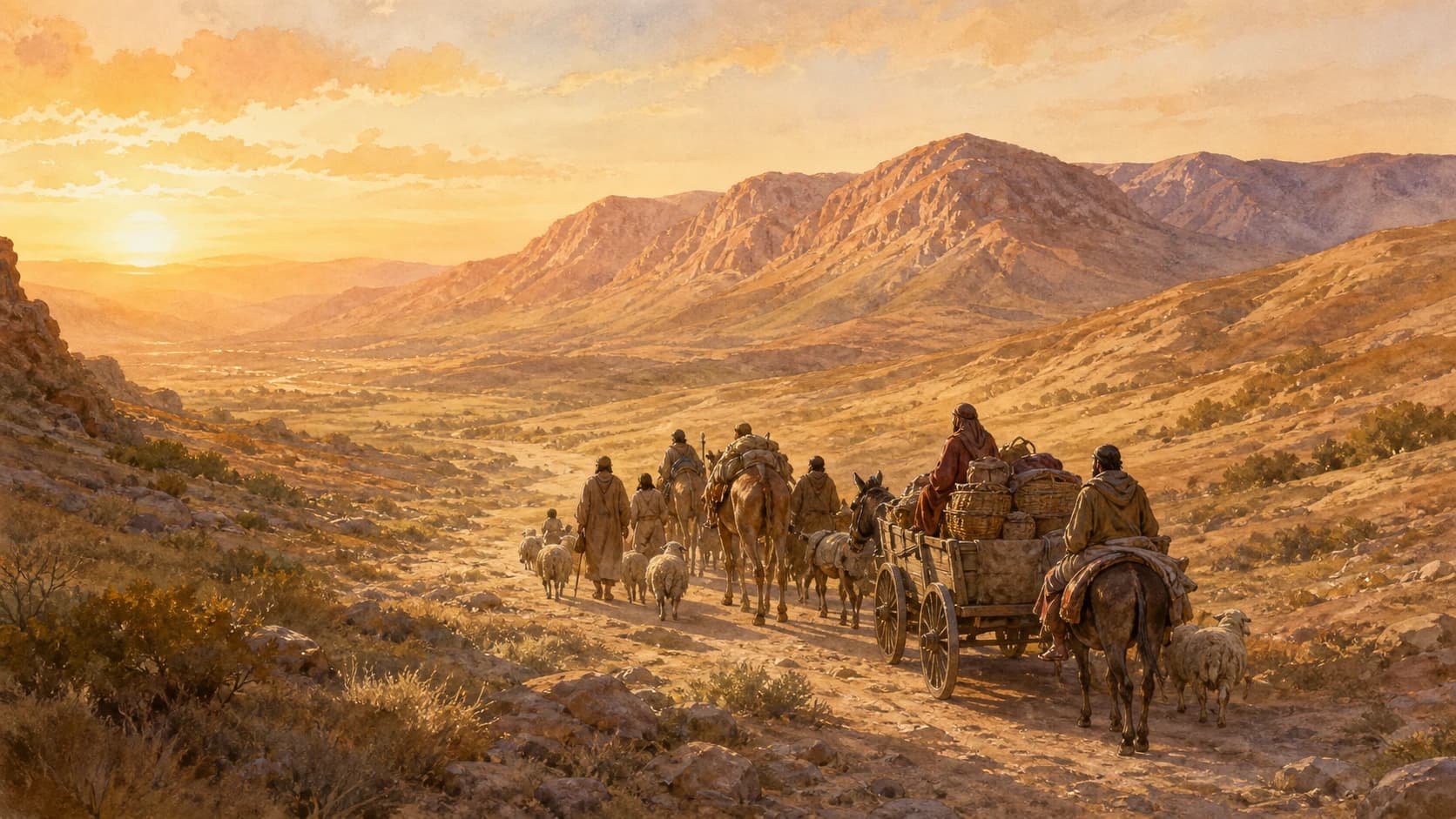
What should you do if your family and possessions make it difficult for everyone to live together in one place? Genesis 36 tells us that when Esau and Jacob had so many possessions that they could no longer live together, Esau took his family and belongings and moved elsewhere. This passage shows that rather than simply enduring every conflict, we can also consider each other’s circumstances and choose to create some space between us.
Why It Became Difficult to Live Together
Esau had his wives and children, everyone in his household, his livestock and animals, and the possessions he had acquired in the land of Canaan. Jacob also had many possessions. Their livestock had become so numerous that the land where they were staying could no longer support them all. The passage points to the abundance of their possessions and the limited land available for their animals as the reason they could not continue living together.
What we see here is more than a simple emotional conflict. When the circumstances of people living together change and resources become limited, even close family members may need to separate in practical ways. Through Esau’s departure, this passage presents one possible response to such a situation.
What Did Esau Choose?
Esau took his family, household members, livestock, and possessions and moved away from Jacob to another place. He settled in the hill country of Seir. After describing this event, Genesis 36 records Esau’s descendants and the chiefs of the land of Edom.
The passage explains that Esau chose another place because the possessions of the two brothers had become so abundant that they could not live together. The clear answer we can find in this chapter is this: even when people are close to one another, if their living conditions are no longer compatible, they can choose separate homes so that each person can continue to maintain their way of life.
Separation Is Different from Ending a Relationship
Genesis 36 records that Esau left Jacob and settled in the hill country of Seir. It then introduces Esau’s descendants, the chiefs of Edom, and the kings who ruled over the land of Edom. The passage shows how Esau’s home and descendants were established, but it does not expand this decision into a complete explanation of the brothers’ relationship.
Therefore, based on this chapter alone, we cannot make more specific claims about Esau’s feelings or his relationship with Jacob. What is clear, however, is that they acknowledged the reality that they could not live together and chose separate places to live. Adjusting the distance between family members does not always mean hatred or a complete break in the relationship.
One Thing You Can Do Today
If you are currently experiencing conflict with someone you live with over space or possessions, begin by writing down one specific thing that is actually in short supply. Is it the size of the room, storage space, livestock, or living expenses? You need to identify the issue clearly before deciding how to address it.
Then, instead of blaming the other person, talk about the living conditions each of you needs to maintain. Do not assume that continuing to live under the same roof is the only solution. Consider options such as dividing shared spaces or arranging separate homes. If you would like to read more of the Bible and revisit the message of Genesis 36, you can use Bible Reading.
Related articles
What Happened at Passover in Exodus 12?
Follow the events of Exodus 12 to see how the Israelite households escaped the plague on Passover night and how the people departed from Egypt.
Exodus 8: What Did Pharaoh Do When the Plagues Stopped?
In Exodus 8, Pharaoh broke his promises after the frogs and swarms of flies disappeared. Explore his repeated refusal and one practical step you can take today.
What Happened After Pharaoh Rejected Exodus 5
In Exodus 5, we look at the process from Pharaoh’s rejection of God’s word to Israel’s harsher labor and Moses’ appeal to God.
 Bible Habit
Turn this article into today’s reading habit
Keep your McCheyne plan, sequential reading, notes, and progress together so the next passage is always clear.
- Today’s passages
- Reading checklist
- Notes and highlights