

What God Did at Babel in Genesis 11
In Genesis 11, we look at why people built a city and a tower, and at the result when God confused their language and scattered them over the face of the whole earth.
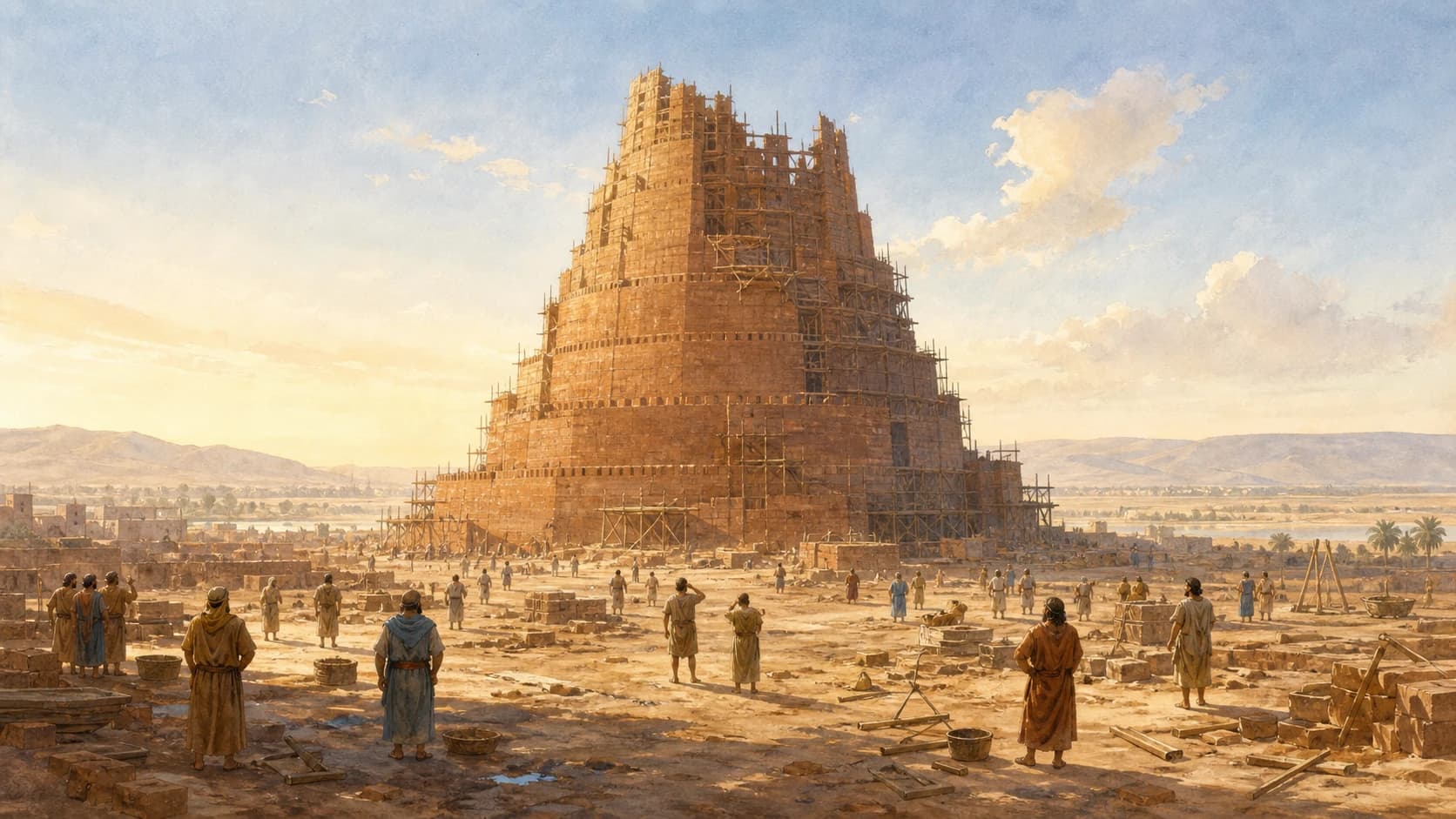
God confused the language of the people who were building a city and a tower at Babel and scattered them over the face of the whole earth. Genesis 11:1-9 records how people tried to avoid being scattered, but in the end they stopped building the city and were scattered across the earth. The following verses, 10-32, conclude the chapter by recording the descendants of Shem and then the family of Terah.
Why Did People Try to Build a City and a Tower?
At first, the whole earth had one speech and one language. As people moved eastward, they found a plain in Shinar and settled there. They could speak with one another, and together they made bricks and fired them thoroughly. Using bricks instead of stones and bitumen instead of mortar, they began to build a city and a tower.
The people also stated plainly what they wanted. They wanted the top of the tower to reach the heavens and to make a name for themselves. They also wanted to avoid being scattered over the face of the whole earth. These two desires are presented as the reasons they built the city and the tower.
The question to ask in this scene is clear. The issue is not whether people could accomplish something great together, but whether the plan they set in motion would actually be carried out. The passage places the plan and the actual result side by side.
How Did God Act on Their Plan?
The Lord came down to see the city and the tower that the people were building. God said that they were one people and had one language. He also said that because they had begun this work, nothing they planned to do afterward would be impossible for them.
God confused their language so that they could no longer understand one another. The one language that had once enabled them to understand each other no longer served that purpose. The work of building the city could not continue.
There is a sharp contrast between the fact that people wanted to make a name for themselves and avoid being scattered, and what God did. They built a city to remain in one place, but God scattered them from there over the face of the whole earth.
Why Did City Building Stop at Babel?
The direct reason the people stopped building the city was that God confused their language and scattered them. The passage records the name of the place as Babel. It also explains that the reason for that name was that the Lord confused the language of the whole earth there.
The end of this event is the opposite of what the people first set out to do. They tried to avoid being scattered, but they were scattered over the face of the whole earth. They tried to complete the city and the tower, but they stopped building the city. Genesis 11 shows by this outcome that even plans made by people together may not continue as intended before the work of God.
The Descendants of Shem and the Family of Terah Continue
After the Babel event, the descendants of Shem are recorded. From Shem the line continues to Arphaxad, Shelah, Eber, Peleg, Reu, Serug, Nahor, and Terah. Terah became the father of Abram, Nahor, and Haran.
Haran died in Ur of the Chaldeans before his father Terah. Abram’s wife was Sarai, and Sarai was unable to conceive and had no children. Terah took Abram, Sarai, and his grandson Lot with him when he left Ur of the Chaldeans. They intended to go to the land of Canaan, but when they came to Haran they settled there, and Terah died in Haran.
This record does not add a new explanation to the Babel event. It simply shows that Genesis 11 moves from the story of the scattered people to the story of the descendants of Shem and the family of Terah.
Read the Plan and the Result Together Today
Today’s one thing to do is to reread Genesis 11:1-9. Look for the plan the people spoke and the result God brought about. If you check together the part where people said, “Let us avoid being scattered,” and the part where God “scattered them over the face of the whole earth,” you will clearly see what was reversed in the Babel event.
Text References
- Genesis 11:1-4
- Genesis 11:5-9
- Genesis 11:10-26
- Genesis 11:27-32
Related articles
What Happened at Passover in Exodus 12?
Follow the events of Exodus 12 to see how the Israelite households escaped the plague on Passover night and how the people departed from Egypt.
Exodus 8: What Did Pharaoh Do When the Plagues Stopped?
In Exodus 8, Pharaoh broke his promises after the frogs and swarms of flies disappeared. Explore his repeated refusal and one practical step you can take today.
What Happened After Pharaoh Rejected Exodus 5
In Exodus 5, we look at the process from Pharaoh’s rejection of God’s word to Israel’s harsher labor and Moses’ appeal to God.
 Bible Habit
Turn this article into today’s reading habit
Keep your McCheyne plan, sequential reading, notes, and progress together so the next passage is always clear.
- Today’s passages
- Reading checklist
- Notes and highlights