

How Can We Prepare for Good Times and Difficult Times?
In Genesis 41, we explore how Joseph understood and prepared for years of abundance and famine, and identify one practical way to prepare today while times are good.
There may be times when life seems likely to remain good, only for hardship to arrive suddenly. So what should we prepare when circumstances are favorable? Genesis 41 shows us that we should anticipate difficulties ahead, set aside what we need in advance, and manage it according to its intended purpose. This kind of preparation is not about remaining trapped in vague anxiety. It is the process of understanding what may lie ahead and deciding what we can do today.
Why Should We Prepare in Advance?
Pharaoh dreamed of seven beautiful, well-fed cows and seven healthy, full ears of grain. Then seven ugly, thin cows and seven withered ears appeared and consumed the good ones. Pharaoh was troubled by the dreams, but he could not find anyone among the magicians and wise men who could interpret them.
Joseph said that Pharaoh’s dreams were one and the same. The seven good cows and the seven good ears of grain represented seven years of abundance. The seven thin cows and the seven withered ears represented seven years of famine. The famine that followed the years of abundance would be so severe that the prosperity of the earlier years would be forgotten. Simply having a good season, therefore, was not enough.
What Should We Do During Good Times?
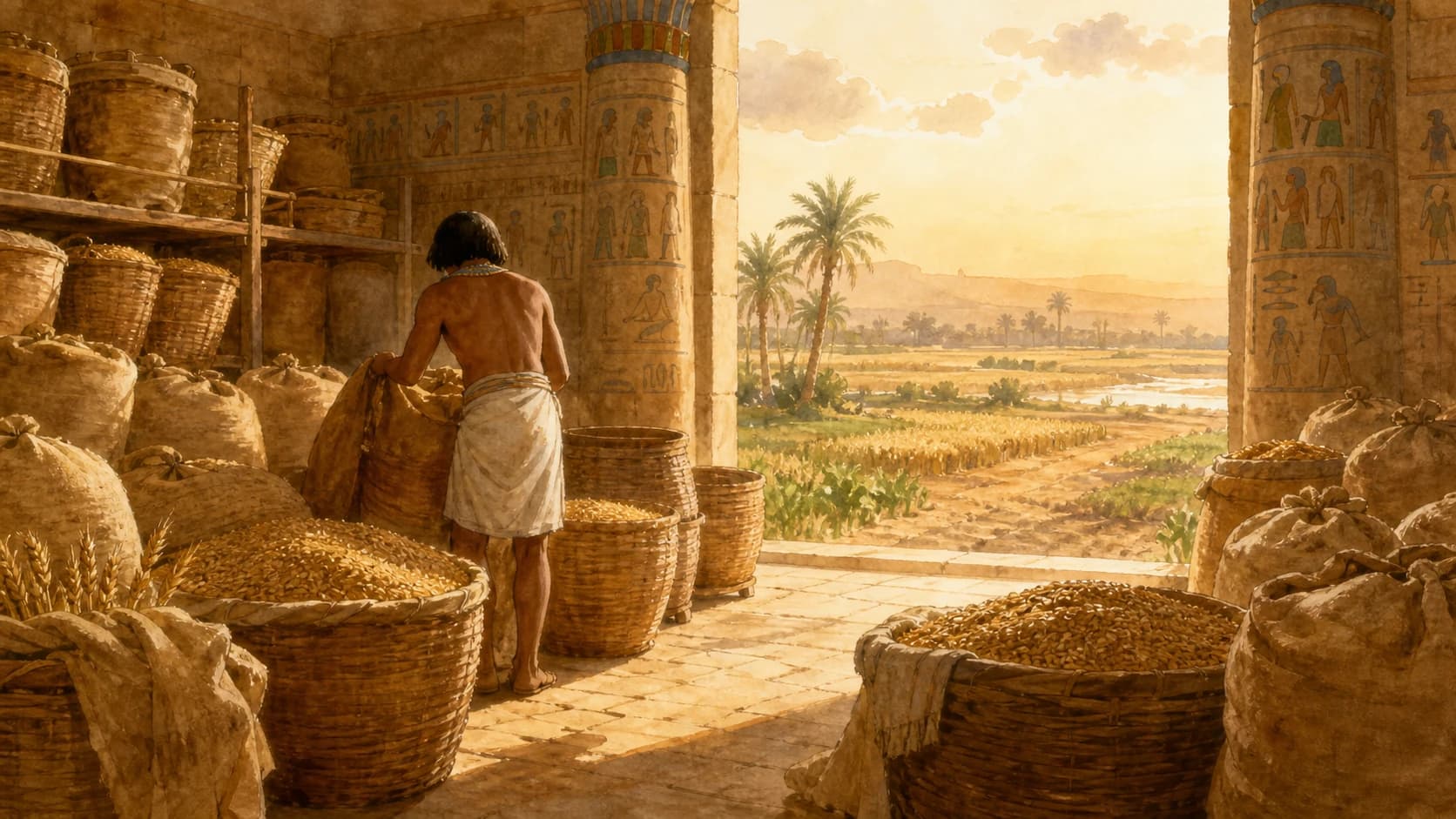
Joseph proposed collecting one-fifth of the harvest during the seven years of abundance in Egypt. The grain was to be stored in each city as food for the coming famine. He explained that if grain was gathered and managed before the famine arrived, the land would not be ruined by it.
Pharaoh approved of the proposal. After Joseph was placed in charge of all Egypt, he stored grain in every city. There was so much grain that he eventually stopped keeping count. When the years of abundance ended and the famine began, there was food throughout Egypt, and the people came to Joseph to obtain it. People from other countries also came to Egypt to buy grain.
This passage highlights three aspects of preparation. First, identify what may be coming. Second, gather what will be needed while times are good. Third, manage what has been gathered according to its purpose. Joseph did not wait until the famine arrived to look for a solution. He prepared for it while the land was still experiencing abundance.
One Thing You Can Do Today
Today, choose one thing you currently have in abundance and set some of it aside for a difficult time. It could be money, time, or even the energy you need for something important. You might begin by recording your income and expenses for a week, then choose one expense you can reduce and set that amount aside. The goal is not to accumulate a great deal. It is to begin the habit of setting apart a portion of today’s abundance for future needs.
Joseph told Pharaoh that the ability to interpret dreams did not come from him but from God. Afterward, he presented a way to prepare for the years of abundance and famine based on what he had heard. In the same way, our preparation today should not become an attempt to grasp everything out of fear. We can examine what we have, consider the needs that may come, and use what we possess for its intended purpose. That is what we can learn from this passage. To revisit this teaching as you read the Bible, open Genesis 41 at Bible Reading.
Related articles
The Purpose of the Signs and Plagues in Exodus 7
In Exodus 7, we examine within the text the purpose for which God sent Moses and Aaron to Pharaoh and performed the signs and the first plague.
What Did Joseph Do After Jacob’s Death in Genesis 50?
In Genesis 50, we look at how Joseph kept Jacob’s burial command, reassured his brothers who feared retaliation, and spoke of God’s promise.
What Did Joseph Reveal to His Brothers in Genesis 45?
In Genesis 45, we look at how Joseph revealed himself to his brothers and explained that God had preserved the life of their family.
 Bible Habit
Turn this article into today’s reading habit
Keep your McCheyne plan, sequential reading, notes, and progress together so the next passage is always clear.
- Today’s passages
- Reading checklist
- Notes and highlights