

The Meaning of Jacob's Wrestling and the Change of Name
A concise summary of the significance of Jacob's wrestling from Genesis 32, exploring the background of the event at Jabok River, the meaning behind Israel's new name, and how it relates to our anxieties and prayers today.
The Meaning of Jacob's Wrestling and the Change of Name
Jacob's wrestling is one of the most remarkable and intense nights depicted in the Bible. When reading Genesis 32, this scene is not merely a mysterious event. It portrays Jacob, who has long been calculating people and circumstances, being subdued before God and simultaneously held tightly. Therefore, this passage is not just about a legendary figure from the distant past; it profoundly speaks to believers today who endure amidst anxiety.
The background of the event is clear. Jacob was returning home from his uncle Laban's house, and at the end of that journey, he was to meet his brother Esau. Past circumstances had caused him to seize the birthright and blessing from Esau, forcing him to leave home. Now, hearing they would reunite, Jacob was deeply afraid. Genesis 32:7 says, “Jacob was greatly afraid and distressed.” He tried to lessen potential harm by dividing his family and possessions, and he prepared gifts in an attempt to manage danger His prayers were made, but his mind remained busy with calculations.
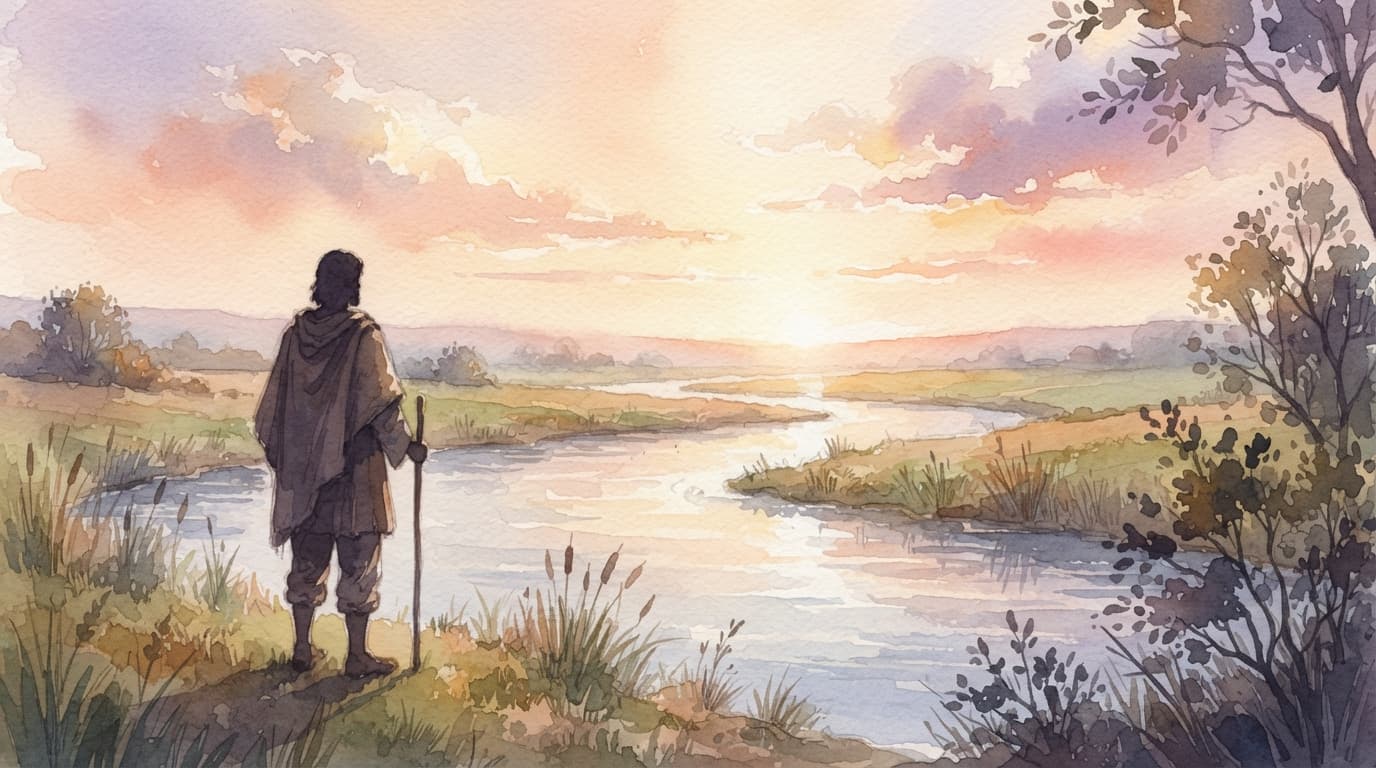
At that point, the event at Jabok River occurs. Jacob sends his family ahead and stays alone. Genesis 32:24 records, “So Jacob was left alone, and a man wrestled with him until daybreak.” When we consider this in conjunction with the context of Hosea 12:3-4, this wrestling is understood not as a simple human struggle but as an encounter with a divine being sent by God. Jacob later refers to that place as Peniel, meaning ‘the face of God,’ and declares, “I have seen God face to face, and yet my life is preserved” (Gen 32:30).
A brief look at the historical context shows that Jabok River was an important boundary in the Gilgal region. For Jacob, that river symbolized more than a geographical crossing; it marked a turning point in his life. It was the threshold from Laban’s world towards Esau. Biblical stories often depict God's dealings at such frontier places. Wilderness, riverside, night, solitude—all these moments reveal human nature more clearly.
The core of this story isn't about “who won.” Instead, God strikes Jacob’s hip, causing him to limp—an act that makes Jacob unable to rely solely on his strength. At this moment, Jacob doesn't give up. He says, “I will not let you go unless you bless me” (Gen 32:26). This is the key to understanding the significance of Jacob's wrestling: the man who once stole blessings through cunning, now seeks blessings only from God’s hand.
God then asks him his name and gives him a new one: “Your name will no longer be Jacob, but Israel, for you have struggled with God and humans and have prevailed” (Gen 32:28). The name Jacob is associated with grasping and deceiving, while Israel reflects a renewed identity established in relationship with God. The word ‘won’ here doesn’t mean overpowering God. It signifies survival through faith, not destruction, by holding onto grace in the face of divine judgment.
In our lives, too, there are nights like this—when inexplicable anxiety, unresolved relationship issues, or the weight of past choices all hit at once. During such times, we become busy like Jacob—replanning, seeking ways to prevent the worst, and rehearsing conversations in our minds. Yet, God sometimes allows us to stand alone after all our preparations—not to abandon us but to draw us truly closer to Him.
As you read the Genesis text, if a particular verse resonates with you, take time to revisit Genesis 32 slowly in Bible Reading. Highlighting verses 24 to 30, Jacob’s words and God's questions become clearer. If terms like “Jabok River,” “Peniel,” or “Israel” feel unfamiliar, following related passages through AI Bible Search can help connect your understanding with the overall narrative.
Finally, reflecting on Jacob’s wrestling leads us to ask: Am I merely trying to solve my problems, or am I holding onto God Himself? We all desire victorious victory without wounds, but Scripture shows us the path of the limping new person. Jacob limped at sunrise, but that limp wasn’t just a mark of defeat—it was a sign that he had begun to walk not in his own name, but under the new name given by God.
Even when considering Devotion, this story offers great help. Devotion isn’t about gathering more information; it’s about the Word shining light on our stubbornness and prompting us to relinquish our false identities. Therefore, Jacob’s wrestling isn’t an invitation to imitate a special experience but a call to honesty before God.
The phrase I want to leave you with today is: “I will not let you go unless you bless me” (Gen 32:26). Anxiety isn’t a sign of a lack of faith. What we hold onto in our anxiety matters most. Even if the night feels long now, God doesn’t waste it. Take a quiet moment to reflect: Am I clinging to my plans, or am I holding onto God's promises?
Related articles
What Did Jacob Do in the Face of Fear in Genesis 32?
We look at how Jacob divided the people into groups, pleaded with God, and prepared a gift when he heard that Esau was coming with four hundred men.
Jacob’s Life: Grace in Brokenness
Follow Jacob’s story of deception, fleeing, God’s promises at Bethel, his wrestling and reconciliation at Jabbok, to see how God holds and molds those who are broken, grounded in Genesis. This calm reflection explores how God shapes and sustains broken people through biblical passages, revealing His grace amidst human weakness.
 Bible Habit
Turn this article into today’s reading habit
Keep your McCheyne plan, sequential reading, notes, and progress together so the next passage is always clear.
- Today’s passages
- Reading checklist
- Notes and highlights