

Jacob’s Life: Grace in Brokenness
Follow Jacob’s story of deception, fleeing, God’s promises at Bethel, his wrestling and reconciliation at Jabbok, to see how God holds and molds those who are broken, grounded in Genesis. This calm reflection explores how God shapes and sustains broken people through biblical passages, revealing His grace amidst human weakness.
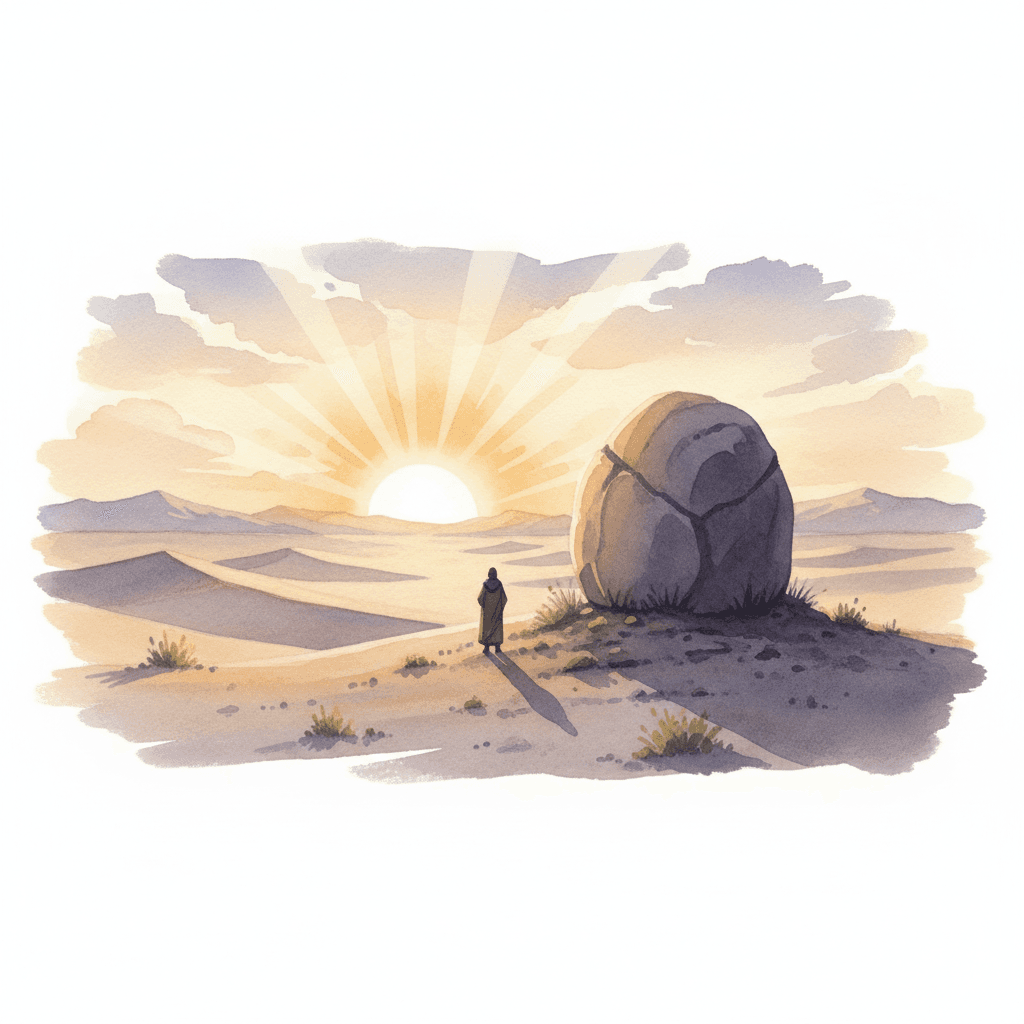
Jacob’s Life: Grace in Brokenness
As I read about Jacob, my heart keeps pausing. His life is too complicated to be called the faith of an ancestor, and it closely resembles our own. From the start, he was not a straightforward man. He was a mixture of anxiety, greed, fear, and calculation. And yet, it is precisely in such moments that God’s grace becomes even clearer. God is not only someone who uses perfect people; He is patient with those He has promised, holding and shaping them until the very end.
One of the pivotal moments in Jacob's life is Genesis 27. He, alongside his mother Rebekah, deceives his father Isaac and seizes the blessing meant for his brother Esau. God had already told Rebekah, "The older shall serve the younger" (Genesis 25:23). The issue was not that God's promise was lacking but that Jacob couldn't wait for it. He tried to hasten God's work with human effort, and his impatience ultimately led him down a path of sin.
This scene doesn’t feel distant; we often choose dishonest ways, claiming to pursue what’s right. We seek God’s will but, in critical moments, tend to lean toward avoiding loss. We exaggerate our efforts at work, point out others’ faults before our own in relationships, or speak harshly at home out of anxiety. Though these may seem like small choices, underneath lies a heart that trusts more in its own way than in God.
After stealing the blessing, Jacob becomes a fugitive. Fleeing from Esau’s anger, he leaves Beersheba for Haran. In the wilderness, he sleeps with a stone under his head. In Genesis 28, God appears to Jacob at Bethel, reiterating the covenant through a vision of the ladder reaching to heaven. "I am with you and will watch over you wherever you go" (Genesis 28:15) — this was not a reward for Jacob’s righteousness but an act of unmerited grace given when Jacob was at his worst, in chaos he couldn’t control.
Bethel was the moment Jacob first deeply realized he was not alone, not as a strong individual but as someone who needed God. God promised never to forsake those sleeping in fear. Faith doesn’t begin when we are unwavering; it is renewed when God’s voice first reaches out in times of silence. Even long nights can be meaningful because one promise — that God is with us — can lift us up.
The years spent in Haran did not leave Jacob untouched. He experienced similar hardships, such as being fooled by Laban, who married Leah before Rachel after seven years of love, and enduring multiple deceptions involving wages and livestock. The Bible doesn’t depict these years as glamorous. Tensions in the family, relentless labor, inner struggles — all these wore on him. His youthful cunning gradually faded during this time.
Those years weren’t just punishment for Jacob. God did not abandon him; instead, He revealed Jacob’s human limits. Some are quick to change, but some, like Jacob, need long periods of refinement. When prayer doesn’t produce immediate change, we may feel God is silent. But even in those seemingly quiet times, God is shaping us. When familiar methods stop working, we learn not to rely on our strength but on His mercy.
In Genesis 31, Jacob, on his way back, declares to God that He has seen his hardship and toil. This isn’t a boastful victory statement but a fragile confession from a weary and broken soul. That’s what makes it so genuine. Faith isn’t always brightly shining; it’s also in the lips that declare God's watchfulness despite injustice.
A well-known scene in Jacob’s story is the wrestling at Jabbok in Genesis 32. Hearing news of his brother Esau, Jacob fears and prepares by dividing his family, sending gifts ahead — he plans for every contingency. Yet, he finds himself alone at night. After all preparations, he faces the unavoidable and stands before God alone.
Someone wrestled with Jacob until dawn, and his hip was dislocated (Genesis 32:25). Jacob had always clung to people with his own strength. But God first broke his power before breaking his grip on him. When Jacob says, "I will not let You go unless You bless me" (Genesis 32:26), it’s not stubborn human stubbornness but a confession that he can no longer survive with his own wisdom — that only God can save him.
God changes his name from Jacob to Israel. This change does not simply alter his outward appearance but signifies a shift in his core being and a fresh start. Jacob now walks with a limp, but that limp becomes a symbol of grace. Though he no longer walks strongly as before, he walks differently — with a new brokenness that’s full of grace.
In faith, there are moments like this: when things go awry, pride crumbles, and we suddenly halt from our 'success.' We often see failure only as defeat. But some wounds aren’t meant to destroy us; they are meant to break the illusion that we can live well without God. Jacob was not made strong to become Israel, but broken to cling more tightly to God.
The encounter with Esau in Genesis 33 deepens this reflection. Jacob, expecting hostility, is surprised when Esau runs to him, embraces him, and weeps. Jacob’s gifts and plans may have meant little in the end, but it was God who opened the door to reconciliation, not Jacob’s calculations. It is God who moves hearts.
Jacob now approaches his brother cautiously, bowing down before him — no longer seeking to take, but humbly surrendering. Those who are broken before God change not just before Him but in their relationships with others. We might have unresolved conflicts, hesitant to reach out because of pride, or waiting for circumstances to change. Not all relationships immediately mend, but the first step — honest humility — reflects a reverence for God.
Jacob’s path was not immediately smooth afterward. He faced hardships like Dinah’s trauma and the death of Rachel while giving birth to Benjamin. Later, he mourned long and deep over losing Joseph. The Bible does not suggest that faith spares believers from suffering; rather, it honestly shows that even those in God’s covenant can endure seasons of tears.
Therefore, Jacob’s later confessions are especially precious. After moving to Egypt, he describes his difficult life as "hard years" (Genesis 47:9). His words are heartfelt and unpretentious. Yet, in his final blessings, he calls God "the God who has shepherded me," "the angel who has redeemed me from all evil" (Genesis 48:15-16). His life was not smooth, but he acknowledges that all his days, even the rough ones, were in the hand of God.
Looking at Jacob’s life as a whole can sometimes be frustrating. His deceptive moments look disappointing, and isolating scenes at Jabok might seem overly dramatic. But viewed in the grander flow, we get a clearer picture of who God is. Human weakness is great, but God's covenant is greater still. Human failure is frequent, but God’s faithfulness endures. This steady grace ultimately carried Jacob to this point.
To follow the story of the patriarchs in order, you can read from Genesis 27 through 49 on Bible Reading. For daily devotions, the 365-day reading plan or Today’s McChain reading schedule can nourish your soul. You’ll see that Bethel, Jabok, and encounters with Esau are not separate scenes but part of God’s long work of shaping a person.
On days when your heart feels heavy, you can hold onto the brief Scripture reading at Today’s Manna, or use AI Bible Search to revisit specific scenes like Bethel, Jabok, or Israel. The key isn’t gathering more information but honestly facing your own insecurity, calculation, and impatience before God.
Jacob’s story is not far from our own. We yearn for acceptance, want to avoid loss, and rush in anxiety. When plans fall apart, it reveals where our trust truly lies. Today, as you reflect, ask yourself: Do I really trust God, or am I just hoping that He will help my plans? Could this shakiness actually be God’s hand leading me to a deeper place? Even if I limp just like Jacob, walking within God's promises is never in vain.
Related articles
What Did Joseph Do After Jacob’s Death in Genesis 50?
In Genesis 50, we look at how Joseph kept Jacob’s burial command, reassured his brothers who feared retaliation, and spoke of God’s promise.
Genesis 49: Jacob’s Blessing and Final Instructions
In Genesis 49, we look at what Jacob said to his twelve sons, the blessings he gave each one according to their portion, and the burial instructions he left behind.
What Did Joseph Reveal to His Brothers in Genesis 45?
In Genesis 45, we look at how Joseph revealed himself to his brothers and explained that God had preserved the life of their family.
 Bible Habit
Turn this article into today’s reading habit
Keep your McCheyne plan, sequential reading, notes, and progress together so the next passage is always clear.
- Today’s passages
- Reading checklist
- Notes and highlights