

Bethel: Meaning and Location, from Jacob’s Stone Pillow to the Northern Kingdom’s Altar
This article organizes the meaning and location of Bethel in the biblical flow, from Jacob’s vision of the stairway to the golden-calf altar of the Northern Kingdom. Reading Genesis, Kings, and the Prophets together leads us to reflect on the essence of true worship.
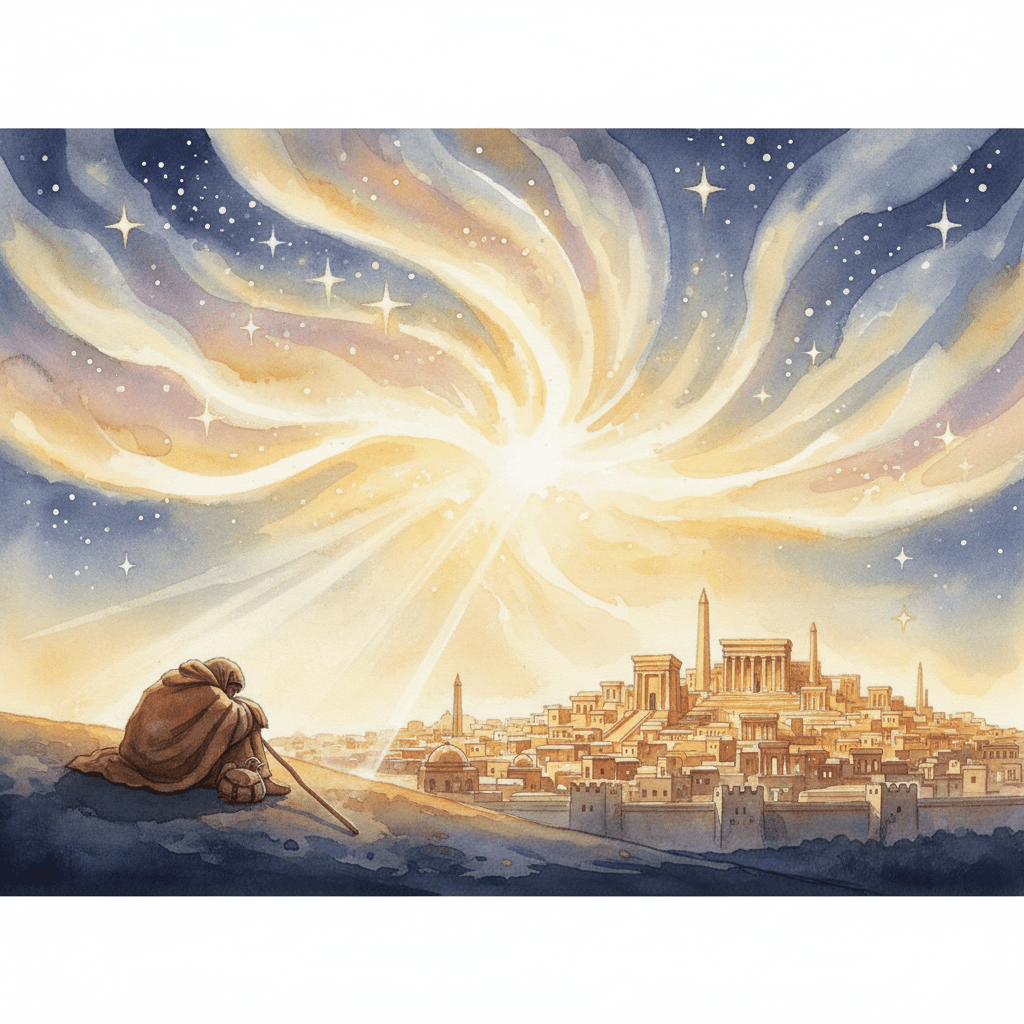
Bethel: Meaning and Location, from Jacob’s Stone Pillow to the Northern Kingdom’s Altar
In the Bible, Bethel is not merely a place name. Bethel is the scene of grace where God first came to Jacob in his fear, and later it became a place showing how easily the covenant people can distort worship. Understanding Bethel therefore makes the flow and message of Genesis, Kings, and the Prophets clearer.
First consider the meaning of the name. Bethel means “house of God” in Hebrew. In Genesis 28, Jacob spends the night at a place while fleeing from his brother Esau and dreams of a stairway reaching to heaven. There Jacob confesses, “Surely the LORD is in this place, and I was unaware of it” (Genesis 28:16). He then names the place Bethel. The city’s original name was Luz (Genesis 28:19). What matters here is that Jacob did not first set out to find God; God sovereignly came to Jacob while he was afraid and anxious. Bethel is a place name that helps us remember the God who acts by grace before human merit or qualification.
Geographically, Bethel was a town in the hill country north of Jerusalem, understood to have been near Ai. Today it is commonly explained in connection with the Beitin area. Scholars do discuss some details of its exact location, but it is generally accepted that Bethel was near the north-south route through the central hill country. This location helps us see that Bethel was not merely a small village; it could become an important point within movement, government, and religious activity. Joshua 7 and 8, which mention Ai east of Beth Aven and near Bethel, also help develop this geographical sense.
Bethel remains important after the era of the patriarchs. In Genesis 35, God tells Jacob to go up to Bethel again, and Jacob builds an altar there. God reaffirms at that place that Jacob’s name is Israel (Genesis 35:10-15). This scene shows that Bethel is not only the place where grace was first experienced; it is also deeply connected with repentance, cleansing, reaffirmation of the covenant, and a renewed relationship with God. It is especially important that Jacob makes his household put away the foreign gods and purifies themselves before going up to Bethel (Genesis 35:2-4). God comes to us by grace, but that grace never justifies worship mixed with sin. Those who approach the holy God are called to fitting cleansing and obedience.
Yet in the long flow of Scripture, Bethel reaches a very sad turning point. Jeroboam I of the Northern Kingdom sets up golden calves and an altar at Bethel and Dan to keep the people from going down to Jerusalem to worship (1 Kings 12:28-29). A place that had remembered God becomes the center of political calculation and distorted religion. This is not merely a religious mistake, but serious rebellion in which people change the worship God appointed to suit their own needs. When we read Amos and Hosea with this background, the prophets’ rebukes sound much heavier. Amos cries, “Go to Bethel and sin” (Amos 4:4), rebuking formal religion. Hosea twists the name Bethel into Beth Aven to expose the shame of idolatry. Hosea 10:5 says, “The people of Samaria will fear for the calf-idol of Beth Aven,” satirically revealing that Bethel was no longer the house of God but had become like a house of sin. A place that once held a holy memory can become a symbol of corruption when it leaves the Word. This is a solemn warning.
This background provides practical help for biblical interpretation. When we read Bethel in Genesis, we see not only Jacob’s moving experience but also that the God of the covenant is faithful even to a fugitive. When we read Bethel in Kings and the Prophets, we learn that having a place of worship does not itself guarantee true faith. The fact that the same place name can carry entirely different spiritual meanings according to its period and context reminds us to read Scripture in context. Biblical place names are therefore not merely background knowledge; they are important keys for holding on to the message of the passage. If you want to examine the passages about Bethel together, you can use AI Bible Search to compare verses in Genesis, Kings, Amos, and Hosea.
Another point to remember is that Bethel’s story is ultimately a mirror for our worship today. The fact that we have a memory of first receiving grace, a time when we wept before the Word, or a moment when God seemed clearly near does not automatically preserve that grace in the present. Just as Jacob put away idols and purified himself before going up to Bethel again, today’s believers must continue returning before the Word. Faith is not merely holding on to past experiences; it is standing before God through present obedience. In this sense, Bible Reading and steady meditation are not simply religious habits but disciplines of godliness that protect worship. It can also be useful to calmly organize what meditation is and examine how to apply the Word to life.
Bethel means “house of God,” but the Bible clearly teaches that no place or form automatically guarantees holiness. True worship is preserved when we obey the Word God has given. It is true that the memory of first meeting God is precious, but that memory cannot replace present faith. God spoke even on the lonely night when Jacob lay with a stone for his pillow, and he guided Jacob’s life according to that promise. The place where we read the Word today is not insignificant. If faith feels dry, we should remember Bethel’s history and not remain merely in nostalgia for past grace; we must stand before the Word again now. Bethel’s central meaning is not the place itself but the God who spoke there. The important question is this: Do I only preserve the memory of Bethel, or am I returning to the God of Bethel? Quietly examining ourselves before this question is the most practical application of reading Bethel rightly.
Related articles
What Did God Promise Jacob in Genesis 28?
God told Jacob, who was leaving for Haran, that He would be with him, protect him, and bring him back. In Genesis 28, we look at that promise and Jacob’s response.
What Should We Do When It Is Time to Return to God?
Genesis 35 shows what Jacob and his household left behind, where they went, and how they worshiped when God called them to return to Him.
Genesis 28: A Promise in the Unsettling Night
Following Jacob's promise at Bethel in Genesis 28, this article explores God's grace first reaching out to us amid anxiety and regret. We reflect on the words to hold onto during fearful nights and how to apply them today.
 Bible Habit
Turn this article into today’s reading habit
Keep your McCheyne plan, sequential reading, notes, and progress together so the next passage is always clear.
- Today’s passages
- Reading checklist
- Notes and highlights