

Understanding the Meaning of Judea and Reading the Terrain: Gaining Background Clarity in Scripture
Judea is more than just a place name; it embodies the history of Judah, Jerusalem-centered faith traditions, and the overall backdrop of the Gospels and Acts. Knowing its meaning and geography enriches your reading of the Bible, making its messages clearer.
Understanding the Meaning of Judea and Reading the Terrain: Gaining Background Clarity in Scripture
As you read the Bible, you often encounter the name “Judea.” However, this term does not merely refer to a city. Sometimes it indicates a geographical region; other times, it represents a historical identity; and it can include the entire space of religious life centered around Jerusalem. Recognizing this background when reading helps scenes in the Gospels and Acts become much clearer. Since the Bible is rooted in real history and physical space, understanding the significance of place names and geography greatly aids proper interpretation.
First, the name Judea originally derives from “Judah.” In the Old Testament, it refers to Jacob’s son Judah, and later signifies the tribe of Judah. Eventually, it came to describe the southern kingdom of Judah, which had Jerusalem and the temple at its center. Although the southern kingdom was conquered and fell to Babylon, even during the exile, the identity of the “people of Judah” persisted among those who maintained the land and traditions. This identity also led to the development of the term “Jew”—referring to the people of Judea. Therefore, when understanding “Judea” in the New Testament, it’s appropriate to see it not only as an administrative district but as a name intertwined with the history and worship traditions of God's covenant people.
In the New Testament, Judea often refers to an administrative and cultural area that includes Jerusalem and its southern surroundings under Roman rule. In this context, Judea is not just a simple place name; it embodies complex bloodline, land, and religious order centered on the temple. Thus, when “Judea” appears in the Gospels, it’s important to consider not only where the event happened but also the historical tensions and religious expectations present in that context.
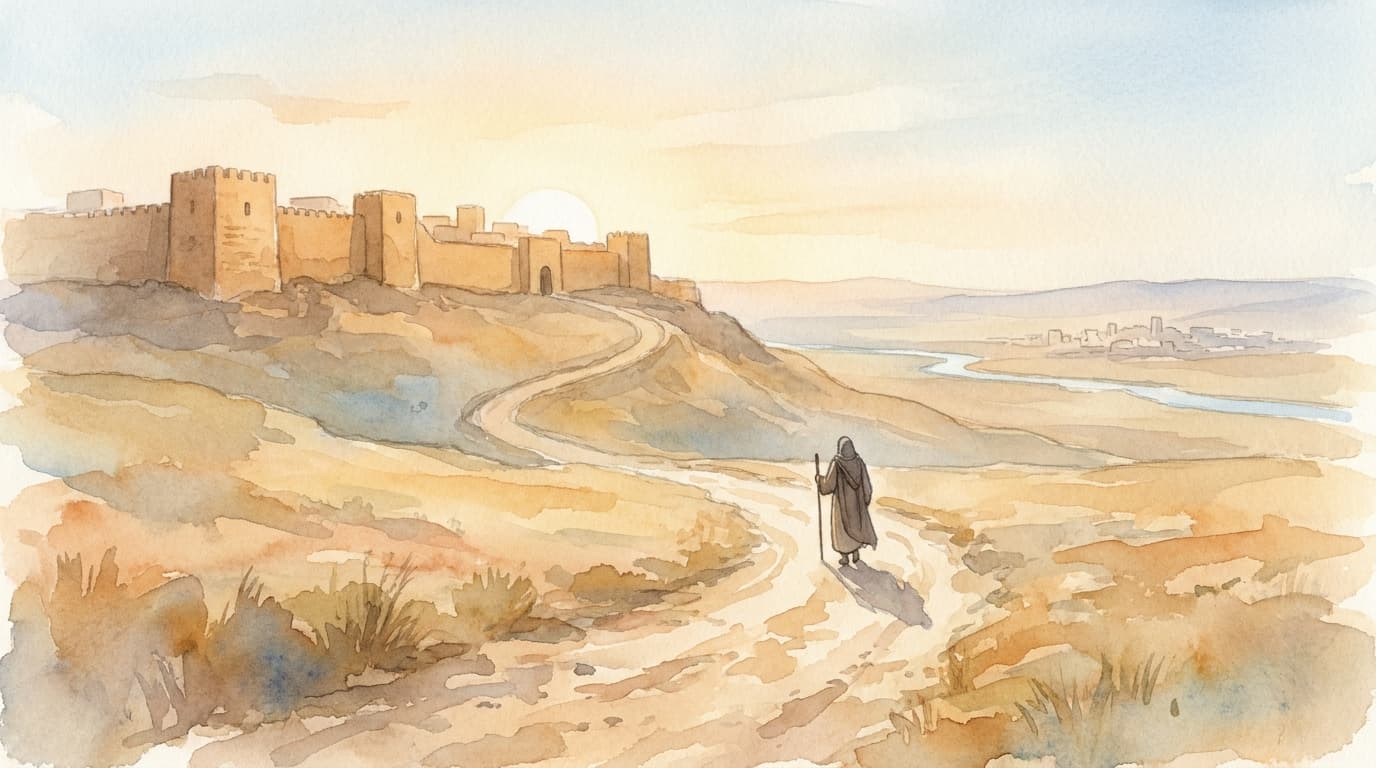
Geographically, Judea lies south of Galilee. Its centerpiece is Jerusalem, with familiar biblical locations like Bethlehem, Bethany, and Jericho nearby. To the west are fertile plains, while eastward, the terrain gradually transitions into arid wilderness leading toward the Dead Sea. This geography offers important clues for understanding various biblical scenes. For example, the difficult, dangerous descent from Jerusalem to Jericho makes the Parable of the Good Samaritan (Luke 10:25-37) more vivid and realistic. The wilderness of Judea also highlights why John the Baptist’s ministry became a symbol of repentance and preparedness. Luke 3:3 mentions, “And he went into all the region around the Jordan, proclaiming a baptism of repentance for the forgiveness of sins.” The wilderness is not just a sparsely inhabited place but a recurring setting for humbling oneself before God and listening to His word.
Historically, Judea has been deeply connected to the temple. Solomon’s temple was located in Jerusalem, and after the Babylonian exile, Zerubbabel rebuilt it. During the New Testament era, Herod the Great extensively expanded it. In general, the temple background in the New Testament is within this Second Temple system. Judea was not a mere province but a religious center focused on worship, sacrifices, festivals, and law education. Many Jews traveled to Jerusalem for festivals like Passover, making Judea a space brimming with religious tension and expectation. The scenes in John’s Gospel, where Jesus enters Jerusalem during various festivals, can be understood against this background. Debates over the temple, reactions to purity regulations, and conflicts over Sabbath interpretation are all more vividly appreciated when viewed through this environmental lens.
This background also greatly aids in understanding Jesus’ ministry. While Galilee had a somewhat peripheral reputation, Judea was a space where religious authorities’ watchful eyes were focused. Therefore, Jesus' words and miracles in Judea often carried public significance beyond personal teaching. Luke 4:44 records, “And He went throughout all Galilee, proclaiming the message in their synagogues and casting out demons.” The movement from Judea to Galilee in His ministry signifies more than just changing locations; it reflects underlying tensions, diverse reactions, and Jesus’ active presence in pivotal moments. Furthermore, the fact that Jesus’ crucifixion took place in Jerusalem—the heart of Judea—underscores the significance of salvation history. God revealed His redemptive plan in the very place where His covenantal promises, sacrifices, and prophets’ words had culminated, fulfilling the shadows of the Old Covenant within Christ.
In Acts, Judea also bears significance. Acts 1:8 records Jesus’ promise: “But you will receive power when the Holy Spirit has come upon you, and you will be my witnesses in Jerusalem and in all Judea and Samaria, and to the ends of the earth.” Here, Judea represents the region where the gospel begins to expand beyond Jerusalem and the covenant community’s immediate area. The progression to include Samaria and the Gentile world shows the strategic unfolding of the gospel mission, executed according to God's plan. This sequence helps us understand the early church’s growth more clearly.
A key caution in biblical interpretation involves the phrase “Jews.” The term can have different meanings depending on context. It does not always refer to all ethnic Jews or the entire Jewish people but may sometimes designate a specific religious leadership or group opposing Jesus. Careful attention to context is essential. The Bible is not a tool for perpetuating stereotypes or prejudice but a record of God’s gospel of salvation for sinners. Knowledge of background should serve not to stereotype but to understand what the text is truly communicating.
When reading with Judea in mind, utilizing maps can be very helpful. As you follow Jesus’ movements depicted in the Gospels, consulting Bible Reading or AI Bible Search when encountering unfamiliar place names can make scenes more vivid. Considering the flow of festivals and pilgrimages centered around Jerusalem, and referring to Today’s Macchain Reading Schedule, can help connect individual events within the broader biblical narrative. If needed, reviewing explanations like What is Macchain Bible Reading? or What is Bible Read-Through? can also help establish a framework for effective reading.
Ultimately, understanding Judea goes beyond memorizing facts about a region. It involves learning how God communicated His word through history and geography to His people. Judea was the land of the temple, the place of the Prophets’ voices, and ultimately, the site where Christ bore our sins on the cross. Reading the Gospels against this background is not just expanding your knowledge but witnessing how God's redemptive story materialized in specific, tangible locations.
This week, try marking whether each gospel event took place in Galilee or Judea. A simple distinction like this can make Jesus’ words, conflicts, obedience, and mission much clearer. The more carefully you read, the more the Bible will cease to be just flat information, becoming instead a living word from the living God at work in history.
Related articles
Beginning at Mount Gerizim and Ending with Acts: Seeing the Boundaries of the Gospel Unveiled When Knowing Samaria
Exploring the geography and history of Samaria, the mountaintop debates, and following passages from John 4 and Acts 8, we examine how the gospel transcends old divisions and boundaries from a biblical perspective.
The Meaning and Geography of Galilee: Reading Jesus' Ministry in Its Biblical Context
Read the ministry of Jesus more clearly through the meaning, geography, and historical background of Galilee. This biblical background guide can make the Gospels look new.
 Bible Habit
Turn this article into today’s reading habit
Keep your McCheyne plan, sequential reading, notes, and progress together so the next passage is always clear.
- Today’s passages
- Reading checklist
- Notes and highlights