

Leviticus 21 Establishes Boundaries for Priestly Service
Leviticus 21 explains how the boundaries of priestly service and the sanctuary were upheld through regulations concerning the dead, marriage, the high priest, and physical defects.
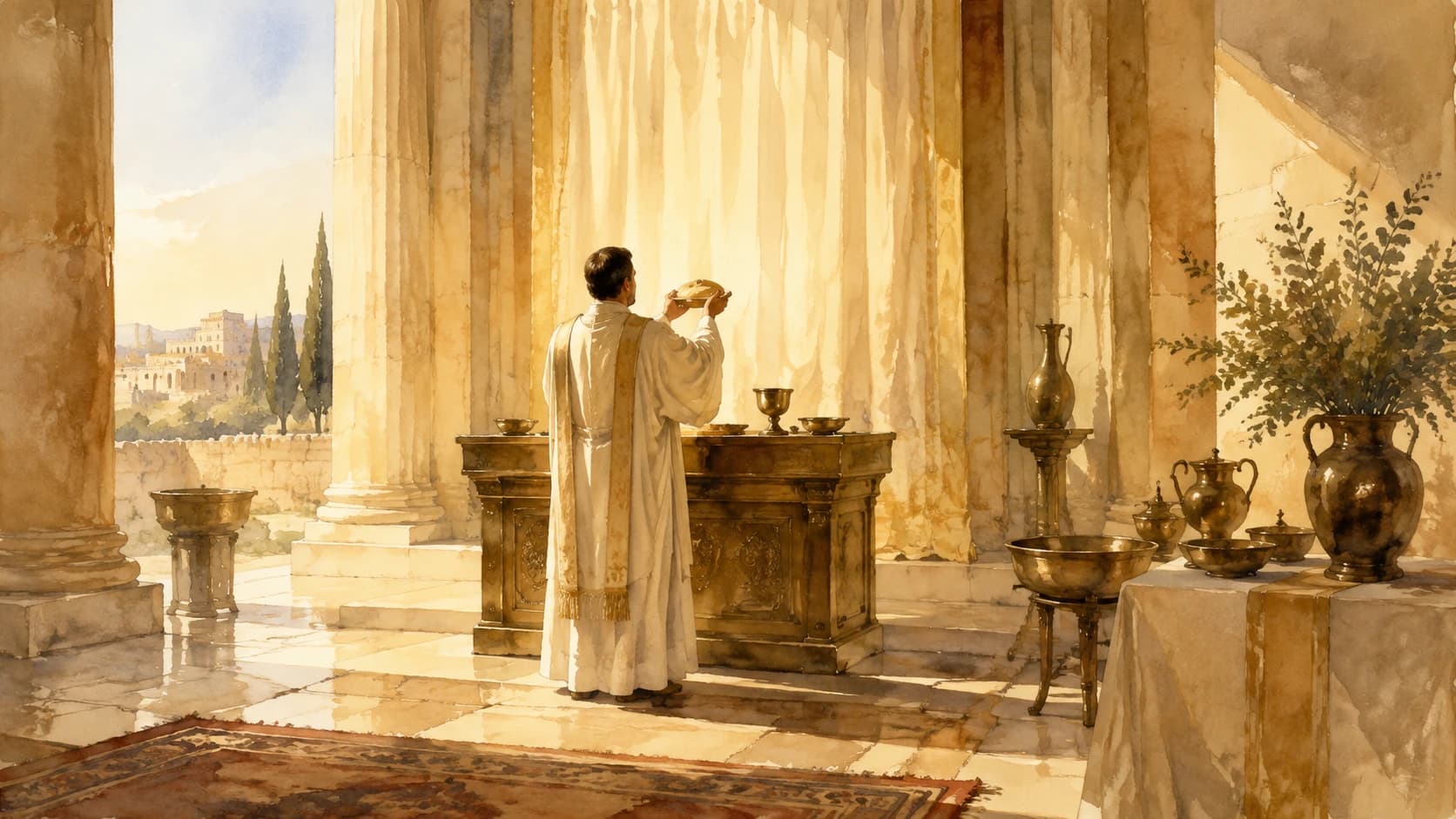
Leviticus 21 clearly defines the boundaries of priestly service because priests were responsible for presenting offerings made by fire to God. The regulations address matters ranging from contact with the dead to marriage and access to the sanctuary, since priests were not to dishonor God's name or profane His sanctuary. The chapter sets out, in turn, the boundaries given to ordinary priests, the high priest, and descendants of Aaron with physical defects.
Priests Followed Prescribed Boundaries Even When Close Relatives Died
The Lord commanded the priestly descendants of Aaron not to defile themselves by contact with a dead person among the people. Exceptions were made for a priest's parents, children, brothers, and unmarried sisters. Although close relatives were exempted, a priest could not participate in mourning for every death in the same way.
Priests were not to shave their heads bald, trim the edges of their beards, or cut their bodies. The passage immediately explains why: they were to be holy to God because they presented the Lord's offerings made by fire—the food of their God. The restrictions associated with the dead and the commands concerning their bodies were inseparable from their responsibility to offer sacrifices.
Boundaries also applied to marriage. A priest was not to marry a prostitute, a woman who had been defiled, or a divorced woman. If a priest's daughter defiled herself through prostitution, she dishonored her father, and the consequence was severe. A priest's private life and even the conduct of his family were connected to the honor of his office.
The Israelites were also required to regard the priest as holy because he presented the food of God. The priest was not alone in observing these distinctions; the people likewise had to recognize and respect the holiness of his office.
The High Priest Was Given Even Stricter Boundaries
The high priest, who had been anointed with oil and clothed in the priestly garments, received stricter commands than ordinary priests. He was not to leave his hair unkempt or tear his clothes. He could not approach any dead body or defile himself even when his father or mother died.
The high priest was not to leave the sanctuary or profane the sanctuary of his God. The passage gives the reason: the consecrating anointing oil of his God was upon him. His commission and responsibility to guard the sanctuary determined the limits of his conduct.
His marriage requirements were also more restrictive. The high priest had to marry a virgin from among his own people. He could not marry a widow, a divorced woman, a defiled woman, or a prostitute. The passage explains that he was not to defile his offspring among his people.
Eating the Sacred Offerings Was Distinct from Approaching the Altar
The latter part of the chapter addresses descendants of Aaron who had physical defects. They could not approach to present the Lord's offerings made by fire. They were also forbidden from going behind the curtain or approaching the altar. The passage repeatedly explains that the sanctuary must not be profaned.
This did not mean, however, that they were entirely forbidden from eating God's sacred offerings. They could eat both the most holy and the holy offerings. The restriction did not exclude them from every form of participation; it applied specifically to presenting the food of God and to duties that required approaching the altar or going behind the curtain. The passage clearly distinguishes between what they were permitted to eat and which duties they were permitted to perform.
The Lord Who Makes Holy Established the Standard for Priestly Service
The same reasons recur throughout these regulations. Priests had to be holy because they presented the food of God, and they were not to dishonor God's name or profane His sanctuary. The high priest faced stricter boundaries than ordinary priests because he had been commissioned through anointing and entrusted with guarding the sanctuary.
The passage also repeats the declaration, “I am the Lord who makes him holy.” Neither the priests nor the high priest established their own standard of holiness. The duties entrusted to them by the Lord determined whom they could approach, where they could enter, and which offerings they could present. Moses delivered these commands unchanged not only to Aaron and his sons but also to all the Israelites.
One action you can take today is to reread Leviticus 21 and mark the expressions “holy,” “must not defile,” and “must not approach.” Beside each expression, note whether the command concerns the dead, marriage, the sanctuary, or the altar. This will make the boundaries of priestly service much clearer.
Related articles
Deuteronomy 23 Sets Clear Boundaries for Holiness
Deuteronomy 23 establishes clear boundaries concerning the assembly, the camp, money, vows, and a neighbor’s property, safeguarding the community’s order and holiness.
Numbers 16: Why Did Aaron Stand Between the Dead and the Living?
Explore the events of Numbers 16—from Korah’s rebellion and the judgment involving the censers to the renewed plague—and discover why Aaron stood between the dead and the living.
What Boundaries Governed Sacred Offerings and Sacrifices in Leviticus 22?
Leviticus 22 commands Israel not to profane the LORD’s holy name, distinguishing who may eat the sacred offerings and when, as well as the condition of acceptable sacrifices and how they must be offered.
 Bible Habit
Turn this article into today’s reading habit
Keep your McCheyne plan, sequential reading, notes, and progress together so the next passage is always clear.
- Today’s passages
- Reading checklist
- Notes and highlights