

Leviticus 7 Set Apart Even the Portions Remaining After the Sacrifice
Leviticus 7 distinguishes not only how offerings were presented, but also when the meat could be eaten, who could eat it, what had to be burned, and which portions belonged to the priests.
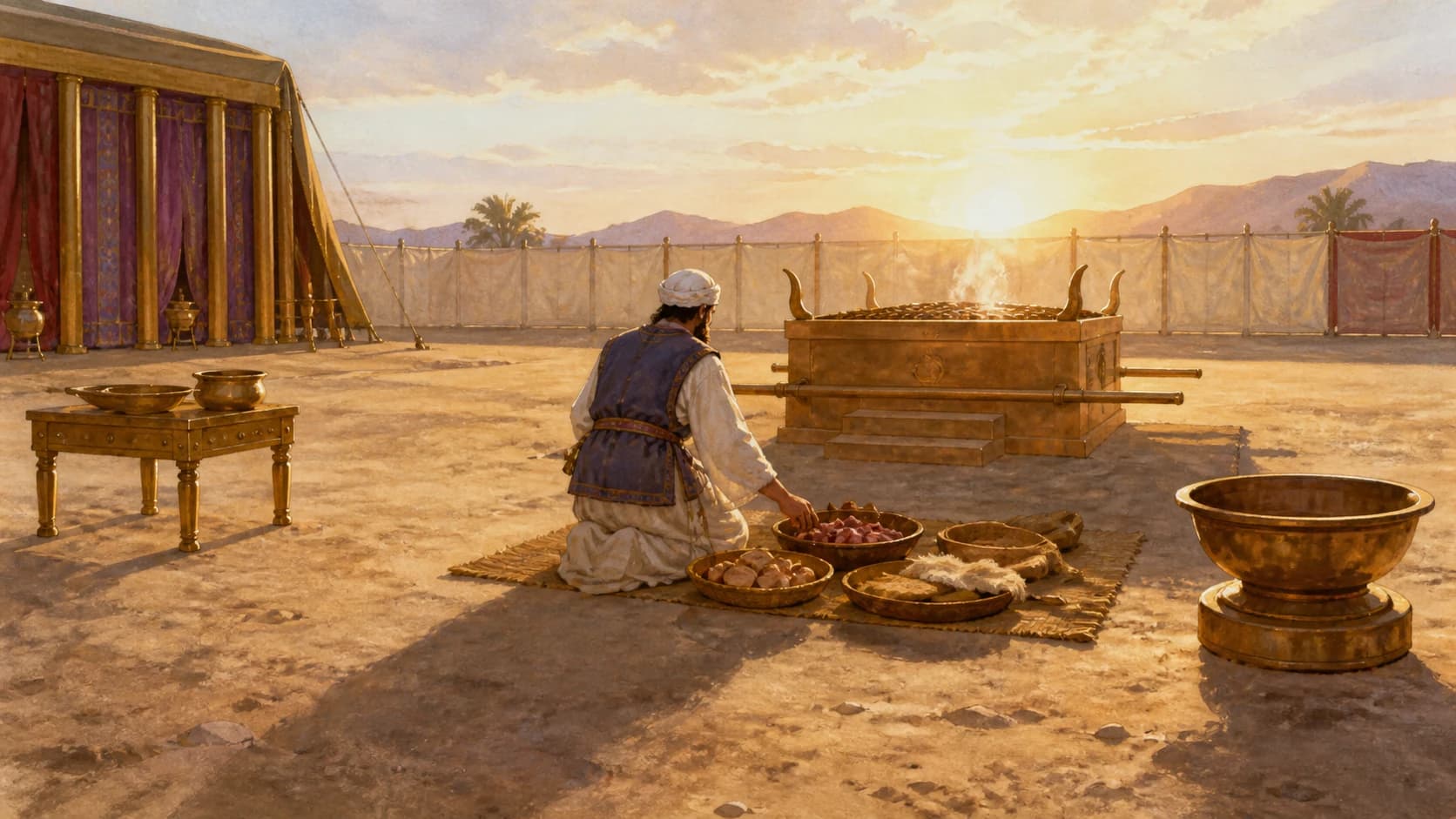
The sacrifices in Leviticus 7 did not end once an offering had been placed on the altar. The chapter carefully distinguishes what was to be burned, who could eat the meat, where and when it could be eaten, and which portions were to be given to the priests. As we follow Leviticus 7, we see that the offerings presented to the Lord were not handled however people wished. Every portion was distributed according to established regulations.
The guilt offering was eaten by designated people in a holy place
The guilt offering was slaughtered in the same place as the burnt offering. The priest splashed its blood against all sides of the altar and burned on the altar the fat tail, the fat covering the internal organs, the two kidneys, and the covering of the liver. Twice, the passage declares that this guilt offering was “most holy.”
The remaining meat was not available for just anyone to eat. Every male in a priest’s family ate it in a holy place, and it belonged to the priest who offered it. The same regulation applied to both the guilt offering and the sin offering.
The portion given to the priest was not the same for every sacrifice. The priest who presented a burnt offering received its hide. Grain offerings baked in an oven or prepared in a pan or on a griddle belonged to the priest who presented them. Grain offerings mixed with olive oil or offered dry were shared equally among all Aaron’s sons. The recipient and portion were determined according to the type of offering.
The day for eating the fellowship offering depended on why it was presented
A fellowship offering presented as an expression of thanksgiving was accompanied by unleavened loaves and cakes mixed with or brushed with olive oil. Loaves made with yeast were also included. One of each kind was presented to the Lord as a contribution, and it belonged to the priest who splashed the blood of the fellowship offering.
The meat of a thanksgiving offering had to be eaten on the day it was presented. None of it could be left until the following morning. Meat from a fellowship offering presented in fulfillment of a vow or as a freewill offering could be eaten on the next day, but anything remaining until the third day had to be burned.
If anyone ate the meat on the third day, the sacrifice would not be accepted. Although it had originally been presented to the Lord, eating it after the appointed time meant it was no longer treated as an offering should be. Even with the same kind of fellowship offering, the permitted time differed depending on whether it was given in thanksgiving, in fulfillment of a vow, or as a freewill offering.
Even clean meat was not eaten after contact with anything unclean
If the meat of a fellowship offering touched anything unclean, it was not to be eaten but burned. Only someone who was ceremonially clean could eat the meat. Anyone who ate it while unclean, or after coming into contact with something unclean, was cut off from their people.
There were also clear restrictions concerning fat and blood. The fat of cattle, sheep, and goats was not to be eaten. Anyone who ate the fat of an animal presented as a food offering was cut off from their people. The Israelites were also commanded not to consume the blood of any bird or animal. Each sacrifice was divided into portions that could be eaten and portions that had to be burned on the altar, and the regulations even addressed the condition of the person eating it.
The breast and right thigh of the fellowship offering belonged to the priests
Anyone presenting a fellowship offering brought its fat and breast with their own hands. The priest waved the breast before the Lord as a wave offering. The fat was burned on the altar, while the breast was given to Aaron and his sons.
The right thigh was presented as a contribution and given to the priest. In particular, the priest who offered the blood and fat of the fellowship offering received the right thigh as his portion. The waved breast and contributed thigh were established as the perpetual share of Aaron and his descendants. The passage records both the priests’ duties and the portions they were to receive.
Leviticus 7 concludes the regulations for the burnt offering, grain offering, sin offering, guilt offering, ordination offering, and fellowship offering. The recurring emphasis is not merely on the act of presenting a sacrifice. The portions to be burned or eaten, the days on which they could be eaten, the people permitted to eat them, and the shares belonging to the priests all had to be distinguished according to God’s command.
As you read Leviticus 7 again today, mark what was “to be burned,” “to be eaten,” and “to be given.” You will see clearly that a sacrifice was not a single act but an observance in which every portion of the offering, down to the last, was handled according to the appointed regulations.
Related articles
Why Does Leviticus 17 Set Apart Sacrifices and Blood?
Leviticus 17 requires sacrifices to be brought to the entrance of the tent of meeting and forbids the consumption of blood. Explore how these commands set apart the place of sacrifice and blood as the life of a creature.
Why Did Aaron Offer Sacrifices for Himself First in Leviticus 9?
In Leviticus 9, Aaron first offered sacrifices for himself before presenting the people’s offerings. Explore how the sacrifices were carried out as commanded and how the glory of the LORD appeared afterward.
How Leviticus 6 Deals with Sin and Sacrifice
Leviticus 6 addresses sins involving taking and denying possession of another person’s property through restitution and a guilt offering, while giving detailed regulations for maintaining the altar fire and handling each sacrifice.
 Bible Habit
Turn this article into today’s reading habit
Keep your McCheyne plan, sequential reading, notes, and progress together so the next passage is always clear.
- Today’s passages
- Reading checklist
- Notes and highlights