

How Leviticus 6 Deals with Sin and Sacrifice
Leviticus 6 addresses sins involving taking and denying possession of another person’s property through restitution and a guilt offering, while giving detailed regulations for maintaining the altar fire and handling each sacrifice.
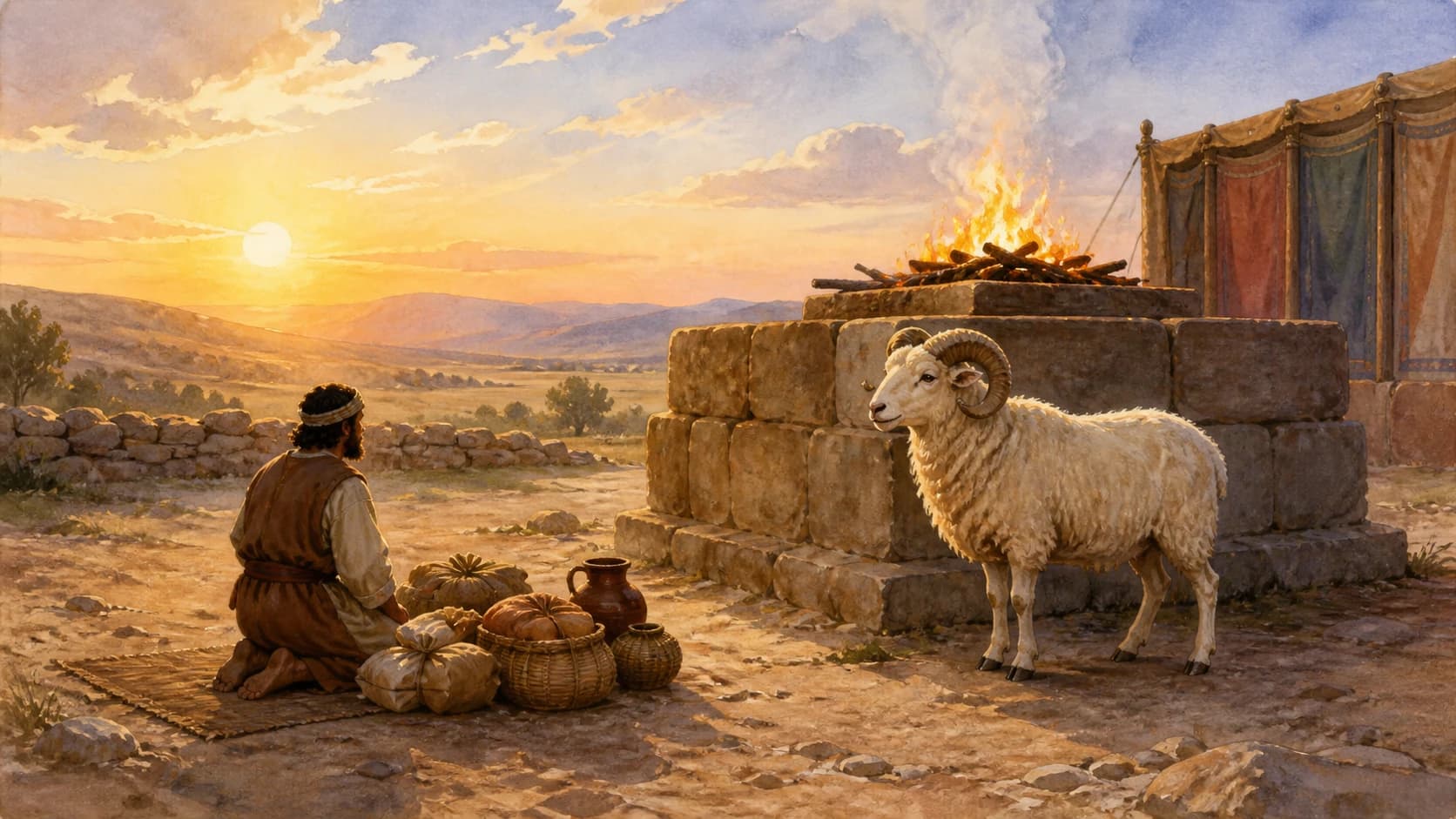
Leviticus 6 commands those whose sins have been exposed to return what belongs to others and present a guilt offering. It then instructs the priests to handle the burnt offering, grain offering, and sin offering according to their prescribed regulations. The chapter describes in practical terms how wrongs are to be made right and sacrifices kept holy.
Returning What Was Taken Was Not the End of the Matter
Verses 1–7 describe several sins involving another person’s property. Someone might deny the truth about property entrusted to them or left as security. They might rob or defraud another person and then deny it. They might also find something that was lost, conceal it, and swear falsely about it.
The passage does not treat these actions as merely disputes between people. Verse 2 identifies them as sins committed by acting unfaithfully against the LORD. Taking another person’s property was compounded by denying the truth and swearing falsely.
When the sin was discovered, the person had to return whatever had been stolen, extorted, entrusted, or found to its owner. Returning only the original property was not enough. An additional one-fifth of its value had to be added. This requirement ensured that the damage caused by the wrongdoing was addressed in a tangible way.
The offender then had to bring the priest an unblemished ram as a guilt offering. When the priest made atonement before the LORD, the person was forgiven for the offense. Restitution and the guilt offering were not interchangeable procedures. The offender had to repay the owner and also bring a guilt offering before the LORD.
The Priests Tended the Altar Fire Every Day
Beginning in verse 8, the chapter sets out the sacrificial regulations that Aaron and his descendants were to observe. The burnt offering remained on the altar throughout the night, and the altar fire was not allowed to go out. Wearing linen garments, the priest placed the ashes beside the altar. When carrying the ashes to a ceremonially clean place outside the camp, he changed into other clothes.
The command to maintain the fire is repeated. Verse 9 says that the fire must be kept burning. Verse 12 says that it must remain alight and instructs the priest to add wood every morning. Verse 13 once again commands that the fire be kept burning continually and never go out.
The altar fire did not continue on its own. Every morning, the priest had to add wood and arrange the burnt offering and the fat of the fellowship offerings upon it. Each repeated command was accompanied by a specific duty that had to be performed daily.
Each Offering Had Its Own Rules for Eating and Disposal
A portion of the grain offering was burned on the altar as a memorial portion. Aaron and his descendants ate the remainder without yeast in the courtyard of the tent of meeting. The grain offering presented by a priest on the day of his anointing, however, was divided between morning and evening and burned completely. A priest’s grain offering could not be eaten.
The sin offering was also treated as most holy. The priest ate its meat in a holy place within the courtyard of the tent of meeting. If any of its blood splashed onto a garment, the stained area had to be washed in a holy place. If the meat was boiled in a clay pot, the pot had to be broken. If it was boiled in a bronze vessel, the vessel had to be scoured and rinsed with water. The meat of a sin offering whose blood had been brought into the sanctuary, however, was not eaten but burned.
Leviticus 6 therefore records more than the mere fact that sacrifices were offered. It distinguishes when the fire was to be tended, how the ashes were to be removed, who could eat each offering and where, and which offerings had to be burned completely. The priests were required to follow every prescribed procedure for each offering without omission. When you read Leviticus 6 again, pay attention both to its repeated commands and to the different ways the offerings were handled. This will make the chapter’s progression much clearer.
One Action to Take Today
If you have something that should be returned or a loss that should be repaid, identify clearly today whom you need to make things right with. In this passage, those whose sins were exposed did more than acknowledge their wrongdoing with words. They returned the original property to its owner and added one-fifth of its value. The first action Leviticus 6 calls for is not merely resolving one’s feelings, but making actual restitution.
Related articles
Leviticus 7 Set Apart Even the Portions Remaining After the Sacrifice
Leviticus 7 distinguishes not only how offerings were presented, but also when the meat could be eaten, who could eat it, what had to be burned, and which portions belonged to the priests.
How Did Those Who Could Not Afford an Offering Make Atonement?
Leviticus 5 describes how those who became aware of their guilt confessed, brought an offering according to their means, and received forgiveness, as well as how offenses involving sacred things were to be repaid.
The Fellowship Offering Followed the Same Order Regardless of the Animal
Leviticus 3 repeats the procedures for presenting fellowship offerings from the herd or flock. Explore the prescribed order and the regulations concerning fat and blood.
 Bible Habit
Turn this article into today’s reading habit
Keep your McCheyne plan, sequential reading, notes, and progress together so the next passage is always clear.
- Today’s passages
- Reading checklist
- Notes and highlights