

God Who Esteems the Smallest Beginnings: Growing Faith Through Little Obedience
God shapes His people not only through grand and noticeable transformations but also through small acts of obedience and slow growth. Reflecting on Zechariah 4:10 and the overall biblical flow, we revisit how faith develops gradually.
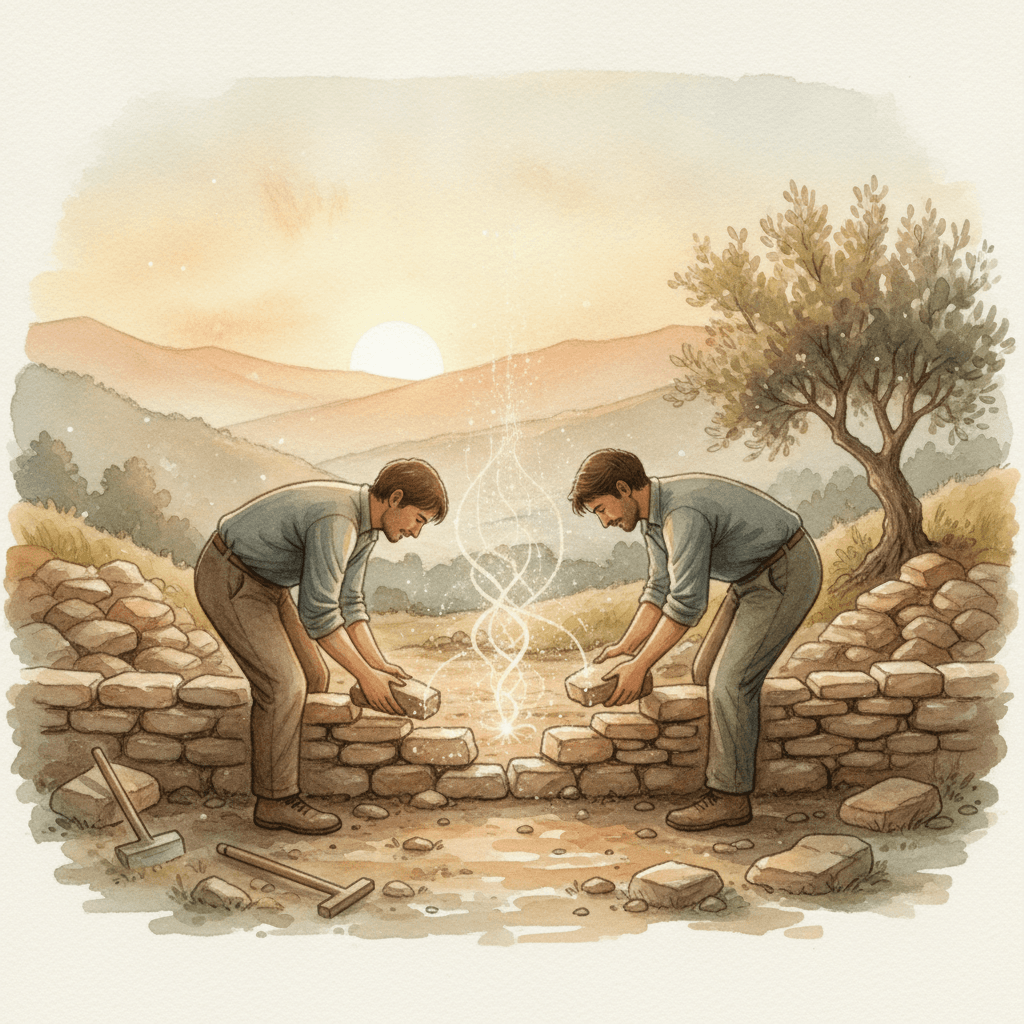
God Who Esteems the Smallest Beginnings: Growing Faith Through Little Obedience
In our walk of faith, it’s easy to believe that only visible, dramatic changes constitute true transformation. We often think that prayer lengthens, understanding of Scripture deepens, and life is perfectly organized all at once for genuine faith to grow. However, the Bible shifts our focus elsewhere. God is not only the Lord of grand and spectacular beginnings but also values small, seemingly slow starts. Therefore, faith growth is not always proclaimed through loud, dramatic scenes. More often, it becomes evident through repeated obedience in unseen moments and through enduring patience during times no one notices.
The first verse that comes to mind when reflecting on this truth is Zechariah 4:10: “Do not despise these small beginnings, for the Lord rejoices to see the work begin.” This was spoken amidst the historical context of the Israelites returning from Babylonian captivity, rebuilding the temple. Although they had returned, circumstances were not favorable, and opposition was fierce. Above all, those who remembered the glory of the original temple saw this new start as humble and unimpressive. With the foundation laid but uncertain to complete, and enthusiasm met with slow results, God told them not to look down on small beginnings.
This message isn’t about blind optimism. It emphasizes that what God initiates cannot be judged by human pride or by progress. As the same chapter states, “It is not by might nor by power, but by My Spirit,” says the Lord of hosts (Zechariah 4:6). Growth in faith is ultimately about God's work, not human boasting. We often inspect ourselves to see ‘how well I am doing,’ but Scripture teaches us to observe ‘how God is working.’
This principle is echoed throughout the flow of the gospel. Micah 5:2 prophesies that the ruler of Israel will come from Bethlehem Ephrathah—a town not considered significant among Judah’s towns. Yet, in that seemingly small place, God began the work of salvation. Jesus Himself didn't arrive in the way the world expected. He called ordinary Galileans, met people one-on-one, preached, healed, and ultimately carried the cross. While many anticipated immediate political upheaval and visible authority, God's kingdom was revealed through calling sinners and renewing hearts.
Here, we learn that faith’s growth is not always measured by outward results. There are days when reading Scripture may not stir your heart, or prayers seem to yield no immediate change. Perhaps your longstanding struggle with sin isn't wiped out in a moment. Yet, such times are not wasted. Psalm 1 describes the blessed person as delighting in the law of the Lord, meditating on it day and night. They are like a tree planted by streams of water, which bears fruit in season, and its leaf does not wither. Trees do not grow overnight. But as long as their roots reach the water, they are alive—even if growth appears slow from the outside.
In our everyday lives, we can see this truth plainly. Someone who used to react sharply to family members now pauses and responds gently for a moment. Someone tempted by comparison and urgency at work clings to a single verse and endures the day honestly. On a restless morning, reading just one paragraph of Scripture can stay in your mind, holding you through the day. These may seem like small changes, but they are far from insignificant because they reflect the Spirit working through the Word.
When speaking of small beginnings, we must also be cautious. The biblical teaching on small starts isn’t a worldly formula that “starting small someday leads to big success.” The Bible's focus isn't self-improvement or success principles but God's will and sovereignty. Therefore, the value of small obedience isn’t in how large an outcome it produces but in to whom that obedience is directed. Zealous efforts for recognition are exhausting, but quiet faithfulness before God endures.
The early church was also built this way. Acts shows that the gospel initially didn’t expand by seizing imperial power. After Pentecost, the church grew as people repented, gathered in fellowship, broke bread, and prayed—changing one city, one household, one life at a time. The more fundamental forces at work weren’t spectacular acts but the living Word of God and the work of the Holy Spirit. Consequently, church growth should be assessed more by the truth of the gospel and the holiness of believers than by mere numbers.
Our practical application is simple. Even on days when you read the Bible without feeling much, don’t give up. When prayer feels unresponsive, remain before God. When you realize you’ve wronged someone, repent without making excuses. When you’re about to dismiss a close person harshly, pause and keep your heart in check. Such actions cultivate genuine faith. Maintaining a steady habit—using tools like Bible Reading or 365-Day Reading Plan—helps create a rhythm for your spiritual walk. What matters most is staying in God's Word, not just doing more.
In the journey of faith, we must also learn to let go of comparisons. Some seem to grow quickly; others appear to be more gifted. But God doesn’t treat everyone exactly the same. What matters isn’t how impressive your progress looks in comparison but whether you remain under the Lord’s Word today. As long as your roots are in the Word, seasons will come and go, and fruit will ripen. Sometimes, even if you don’t notice immediately, your close ones will see the change first.
Ultimately, faith’s growth isn’t about becoming a remarkable person but being molded into someone who trusts the Lord more fully. The impatient heart looks for big moments, yet God works through small, clear acts of obedience given to Him today. Even if today’s slow steps seem insignificant, they are not to be despised, for God is using those very steps. When reflecting on today, even if there’s nothing to boast about, moments like holding on to His Word against evil, worshiping despite exhaustion, or choosing patience instead of judgment—these are never empty days. God builds people in unseen ways and nurtures life within His people through humble beginnings.
When visible progress is slow, it’s crucial not to undervalue small obedience. Even if your reading feels dry, those moments are not meaningless. When responses in prayer seem delayed, it’s not that God is silent. Believers don’t stand on apparent achievements but on God's faithfulness. Therefore, today’s small acts of faithfulness are not just preparation for future greatness but expressions of trust in the God who already sustains us. Through such steps, God humbles, sustains, and ultimately molds us to be more like Christ.
Related articles
Luke 5: Obedience Rooted in the Word
Journeying through Peter’s empty nets and Jesus’ call in Luke 5, we reflect on how trusting in God's Word and obeying Him in moments of failure reveals His grace and leads us to repentance.
Philippians 3: The Most Valuable Person
Philippians 3 shows why Paul laid aside his pride and regarded Christ as the most precious. It prompts us to reflect on faith-based righteousness and our current priorities.
The Values of God's Kingdom and Why Our Lives Change
Following Jesus' parables that reveal the truths of God's kingdom, we explore why people's priorities shift. As the gospel becomes clearer, obedience transforms from obligation to joy, and this can be reflected in our daily lives.
 Bible Habit
Turn this article into today’s reading habit
Keep your McCheyne plan, sequential reading, notes, and progress together so the next passage is always clear.
- Today’s passages
- Reading checklist
- Notes and highlights