

Understanding the Significance of Jesus’ Humility and Growth Through Nazareth
Exploring the history, geography, and background of the Gospel to delve into the meaning of Jesus’ humility and growth. Reflect on how the depth of the Incarnation was fulfilled in ordinary settings and consider its application in our daily lives.
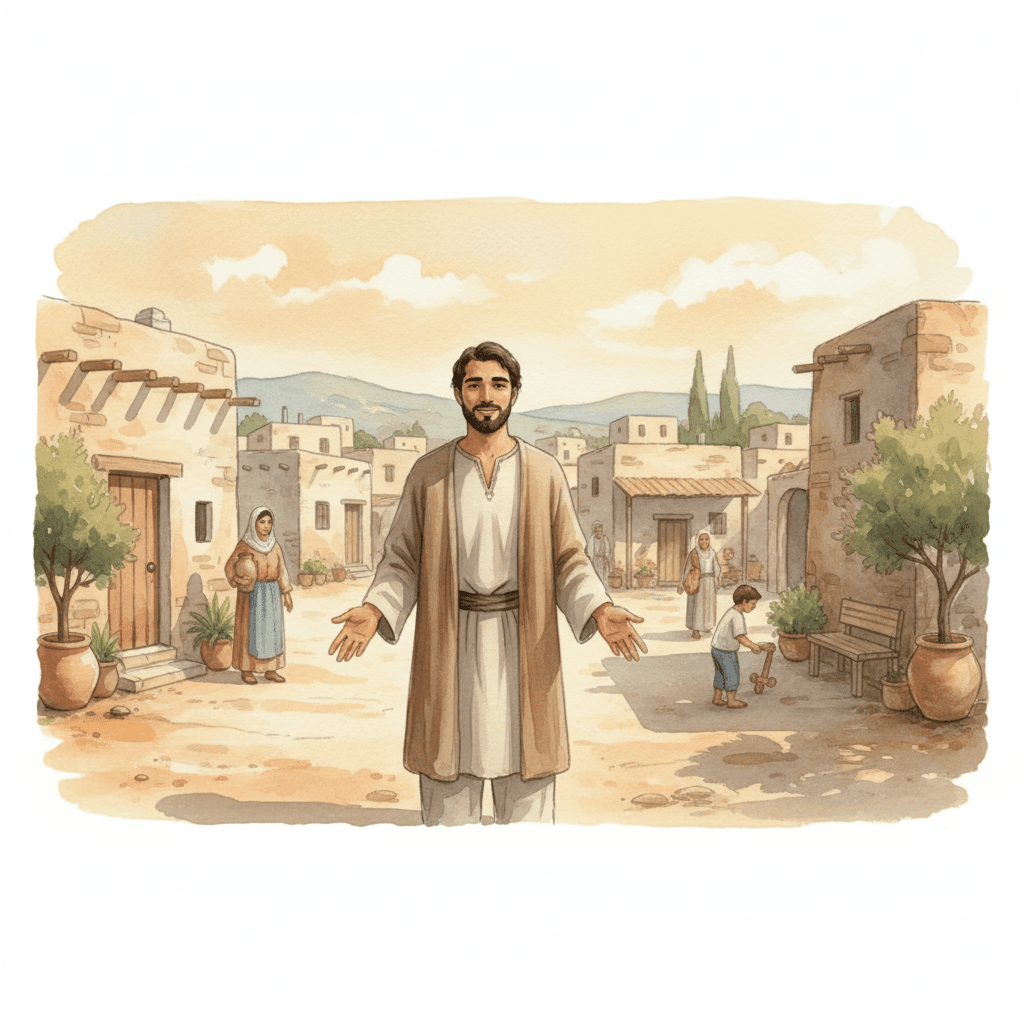
Understanding Jesus’ Humility and Growth Through Nazareth When we hear the name Nazareth, it often sounds vague or distant, despite its frequent mention in the Bible. Unlike Bethlehem, renowned as David’s hometown with symbolic weight, or Jerusalem, a center of the temple and kingship, Nazareth was not associated with grandeur. Yet, God chose Nazareth as the stage for His Messiah’s childhood and growth. Understanding this background makes Jesus’ ministry and the Gospel expressions much clearer.
First, Nazareth was a small village in the Galilee region. Based on archaeological and historical research, it is likely that during Jesus’ time, Nazareth was a relatively small settlement with only a few hundred residents. Its lifestyle was centered around agriculture and a simple community life, quite different from urban splendor, with a modest political standing compared to larger nearby cities. This helps us understand the reaction of Nathanael in John 1:46 when he questions, “Can anything good come out of Nazareth?” His response reflects not just regional prejudice but also the disconnect between people’s expectations of the Messiah coming from a more illustrious background and the humble reality of Nazareth. Many expected the Messiah to come from a more prominent or noble place.
However, it’s precisely at this point that the Gospel’s messaging is revealed. God often accomplishes His salvation work in humble, ordinary circumstances rather than in splendid beginnings. Although Jesus was born in Bethlehem, He grew up in Nazareth. Matthew 2:23 states, “And he went and lived in a city called Nazareth, so that what was spoken by the prophets might be fulfilled, ‘He shall be called a Nazarene.’” This isn’t a direct quotation but rather a summary that echoes the prophetic theme of the despised Messiah and the humble Servant in the Old Testament. Simply put, the fact that Jesus is called a Nazarene is linked to His humility.
Geographically, Nazareth also holds significance. Galilee was viewed as a peripheral region relative to Judea, where Jerusalem and the religious leadership resided, and was a crossroads of various cultures. From the perspective of Jerusalem’s religious authorities, Galilee was more a fringe than the center. Among these Galilean communities, Nazareth was even smaller. Jesus spent His years there, among family, labor, and daily community life, preparing for His public ministry. Luke 2:52 says, “And Jesus increased in wisdom and stature, and in favor with God and man.” Though brief and ordinary, this verse reveals the depth of the Incarnation — that the Son of God grew up in a real village, living a human life.
This background urges us not to overlook Jesus’ human life as superficial. Jesus didn’t descend suddenly from heaven to perform His ministry; rather, He lived out the rhythms of language, culture, labor, and neighborly relationships in a tangible locale. Of course, He was both fully divine and fully human. The Gospel does not hesitate to call Him “Jesus of Nazareth,” a designation rooted in history. It’s not merely an address but a testament to His tangible, human reality. When reading the Bible, such place names can seem trivial, but understanding their context allows us to see each brief mention more fully.
Another point to note is how Nazareth helps us understand the initial reactions to Jesus’ ministry. In Luke 4, Jesus reads from Isaiah in His hometown synagogue, and initially, the people are amazed at His words of grace. But soon, familiarity breeds contempt; their reaction, “Isn’t this Joseph’s son?” reveals a human tendency to overlook true identity when familiarity breeds complacency. Close proximity doesn’t necessarily lead to faith, and sometimes, familiarity can dull reverence. Nazareth, then, becomes a place illustrating how human prejudice can manifest before divine revelation.
Those interested in the meaning of Nazareth’s name often explore its etymology. Scholars suggest connections with the Hebrew ‘Netcher,’ and perhaps Isaiah 11:1, “A shoot shall come out from the stump of Jesse,” which references new beginnings from humble origins. Yet, it’s wise to approach this carefully. It’s safer to see these as possible associations rather than definitive derivations — understanding that early Christians likely associated Nazareth with messianic prophecy through shared imagery. The key point isn’t forced etymology, but how the Bible presents Nazareth as a lowly place where God’s salvation plan was actually fulfilled.
Knowing this background, our reading of the Gospel can lead to meaningful applications. We tend to value visible, recognized backgrounds, and grand beginnings, but God prepared His Son in humble settings like Nazareth. Quiet daily routines, recurring responsibilities, and unnoticed moments are never wasted. When we hold onto a simple Today’s Word or spend a day immersed in Scripture, God forms us even in ordinary days. If you want to follow the Gospel geography more diligently, refer to AI Bible Search to examine passages where Nazareth appears. Connecting how the same place carries different meanings in various contexts enriches our grasp of the Gospel.
Ultimately, Nazareth isn’t a backdrop that veils the Messiah’s glory, but one that reveals its character. Jesus didn’t come as the world expected — with lofty heights or royal splendor — but as a Servant who entered our world full of humility. The name “Jesus of Nazareth” embodies His humility and His love, which entered into real life despite scorn. Recall Luke 2:52: “And Jesus increased in wisdom and stature, and in favor with God and men,” and reflect on John 1:46, where the question “Can anything good come out of Nazareth?” is posed. The Gospel revealed God’s will even where such questions are asked. Our seemingly ordinary and small places are never insignificant in God’s hands. Nazareth quietly but powerfully demonstrates that even in humility, God can accomplish great and good things.
Related articles
 Bible Habit
Turn this article into today’s reading habit
Keep your McCheyne plan, sequential reading, notes, and progress together so the next passage is always clear.
- Today’s passages
- Reading checklist
- Notes and highlights