

Noah Revisited Through Genesis Chapters 7–9: Judgment, Remembering, and the Covenant of a New Beginning
Reflecting on Noah's story in Genesis 7–9, we meditate on God's holy judgment upon sin, His gracious salvation, remembrance, and His faithfulness revealed in the rainbow covenant following the flood.
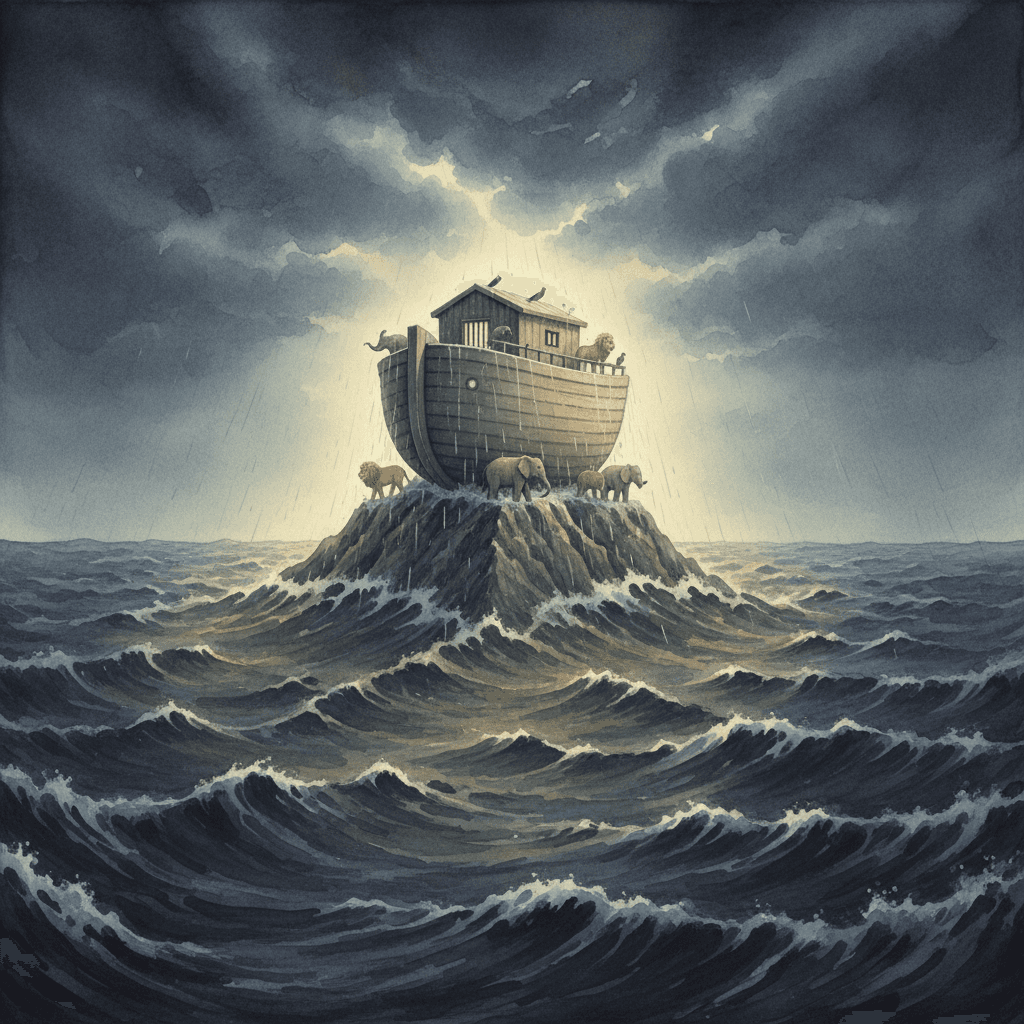
Noah through Genesis Chapters 7–9: Judgment, Remembering, and the Covenant of a New Beginning
When people think of Noah, their first image is often that of a large ark and animals aboard. However, taking a calm read through Genesis 7 to 9 reveals that the focus of these chapters is more profound than just a disaster narrative. The Bible here displays God's holy judgment on sin, the clear path of salvation within that judgment, and God's ongoing covenant after the flood. Noah is a key figure, but the most prominent person revealed in this account is God Himself. He is the One who does not ignore sin, who remembers His people, and who grants a new beginning.
Genesis 7 records the moment judgment actually begins. After choosing Noah, his family, and the animals to enter the ark, God brings about the flood at the appointed time. A verse that captures this moment is Genesis 7:16: “And the Lord shut him in.” This brief phrase beautifully illustrates the essence of salvation. Noah's safety depends not on the ark’s structure or human wisdom but on God. The One who made the entrance and the One who protected by closing the door are both God. The salvation depicted in Scripture works the same way—humans cannot escape judgment by their own strength; they can only live within the path that God opens. Under New Testament light, salvation in Christ is likewise based on God's grace, not our merit.
The scene of the flood is heavy and serious. The high mountains are covered, and beings with the breath of life perish. Approaching this with today’s sensibilities may feel unsettling. Yet, the Bible does not dilute God's judgment into exaggerated symbolism. Because God is holy, He does not overlook sin lightly. While this realization can be frightening, it also provides the context that makes the gospel understandable. If God's judgment were only symbolic, salvation might become superficial comfort. The God of the Bible deals seriously with sin, which is why grace is not cheap.
Yet, Noah’s story is not solely about judgment. Genesis 8:1 marks a clear turning point: “And God remembered Noah, and every living thing, and all the cattle that was with him in the ark.” Here, the phrase ‘God remembered’ does not simply mean He had temporarily forgotten and then recalled. In Scripture, it signifies that God acts according to His covenant and promises. God faithfully fulfills His plans for His people. The processes of receding waters, wind blowing, and the land emerging are not mere natural coincidences—they are divine acts in which God Himself reverses the circumstances.
This point relates deeply to our daily faith journey. Sometimes, we feel as if we are trapped inside an ark, cut off from the outside world. The end seems uncertain, and the same space and day stretch on endlessly. In such moments, people often wonder: Does God really see me? Does He understand my situation? Genesis 8 quietly but definitely answers this question: God does not forget His people. Even if visible change is slow, God is working according to His promises. Faith is not about rushing calculations but trusting God's faithfulness.
The very first act of Noah after leaving the ark is also significant. Genesis 8:20 says Noah builds an altar and offers sacrifices to the Lord. It seems that reorganization should come first, or making plans for daily life, but Noah begins with worship. This scene shows where those saved by grace should re-establish the center of their lives. It's easy to be busy after experiencing salvation, without gratitude, and to prioritize our plans over God. Yet Noah realized that surviving itself was an act of God's mercy, so his immediate response was worship.
Such principles can be applied to our lives. When we pass a difficult phase, it’s tempting to rush into the next task. When a test ends, we cling to another worry; when workplace difficulties resolve, we quickly seek the next anxiety. But believers learn to pause and reflect on the grace they've received. Taking even a moment to give thanks before God, reopening the Word, and looking back on past blessings deepen our faith. Consistent Bible reading and meditation help us remember God's deeds. Noah’s altar does not have to be an elaborate religious act—it can serve as a sign pointing to where believers should refocus their lives.
Continuing to Genesis 9, God establishes His covenant with Noah, his descendants, and every living creature. He promises never to again destroy all life with water and sets a rainbow as the sign of this covenant. The rainbow is more than a picturesque scene in the Bible. After the storm, it reminds us of God's faithfulness in mercy, even following judgment. The world remains imperfect, and human hearts are still prone to evil transformation. Yet, God maintains a relationship of grace, and this is the wonder of His covenant. When our faith wavers, our confidence is ultimately not based on the strength of our resolve but on God's faithful character.
Genesis 9 also does not hide Noah’s fragility. It could have ended simply with the scene of new beginnings after the flood, but the text also records Noah’s shameful incident with drunkenness. This is not meant to diminish Noah’s faith but shows the Bible’s honest portrayal of humanity. Even those who have shown great obedience can stumble. Therefore, Scripture does not conclude with heroic human figures. Noah is an example of true faith, but he is not the ultimate object of hope. Only God remains unshakable.
This fact is especially relevant for us today. At times, we may feel our obedience is strong, and we’ve become quite steadfast. But Scripture teaches us not to rely on ourselves even then. Those standing in grace remain humble. Yesterday’s obedience does not automatically guarantee strength today, nor does tears today mean automatic sanctity tomorrow. Believers live daily by looking into the Word and seeking God's help. Understanding what meditation truly entails and practicing it steadfastly are beneficial for maintaining spiritual discipline.
Revisiting Noah’s story through Genesis 7–9 raises some key questions: Do I accept God's perspective on sin according to Scripture’s weight? Do I remember that salvation is solely by grace? Do I trust God's promise that He remembers me even in long waits? Do I respond with gratitude and worship after overcoming crises? And do I acknowledge my ongoing weakness and remain watchful? These questions are not only for special days. Even on an ordinary Monday, in daily routines, faith grows in such reflections. Regularly reading the Bible even a little every day, following a schedule like 365-day reading plan, can be very helpful.
Ultimately, Noah’s story is not about elevating one individual’s greatness but about revealing the God who opens the way of salvation amid judgment, remembers His people in times of flood, and grants new beginnings through His rainbow covenant. When reading this passage, our gaze shifts beyond Noah’s ark into distant horizons. Even in a shaky, uncertain world, God remains holy, gracious, and faithful. Knowing this, those who trust Him quietly choose obedience today. Even if change seems slow, God is working silently, and His promises will never be in vain.
Related articles
What Covenant Did God Establish in Genesis 9?
In Genesis 9, we look at the covenant God made with Noah and all living creatures, the rainbow as its sign, and the standard for how life should be treated.
What Genesis 5 Records from Adam to Noah
Genesis 5 records how Adam’s descendants continued from the human created in God’s image, and tells of Enoch’s walk with God and Noah’s birth.
Meditation on Genesis 8: God's Faithfulness Revealed After Waiting
Genesis 8 quietly yet clearly shows God's unwavering faithfulness to His people after judgment, and Noah's obedience in waiting for God's timing amid recovery. Reflect on the meaning of worship after judgment and new beginnings.
 Bible Habit
Turn this article into today’s reading habit
Keep your McCheyne plan, sequential reading, notes, and progress together so the next passage is always clear.
- Today’s passages
- Reading checklist
- Notes and highlights