

It's Not Just a Brief Flash of Color After the Rain: Genesis 9 Rainbow Covenant Holds the Certainty of Daily Life
The Genesis 9 rainbow covenant is not merely a fleeting impression but a symbol of God's promise to preserve the world. It invites us to reflect on God's unwavering faithfulness amid our fluctuating daily routines.
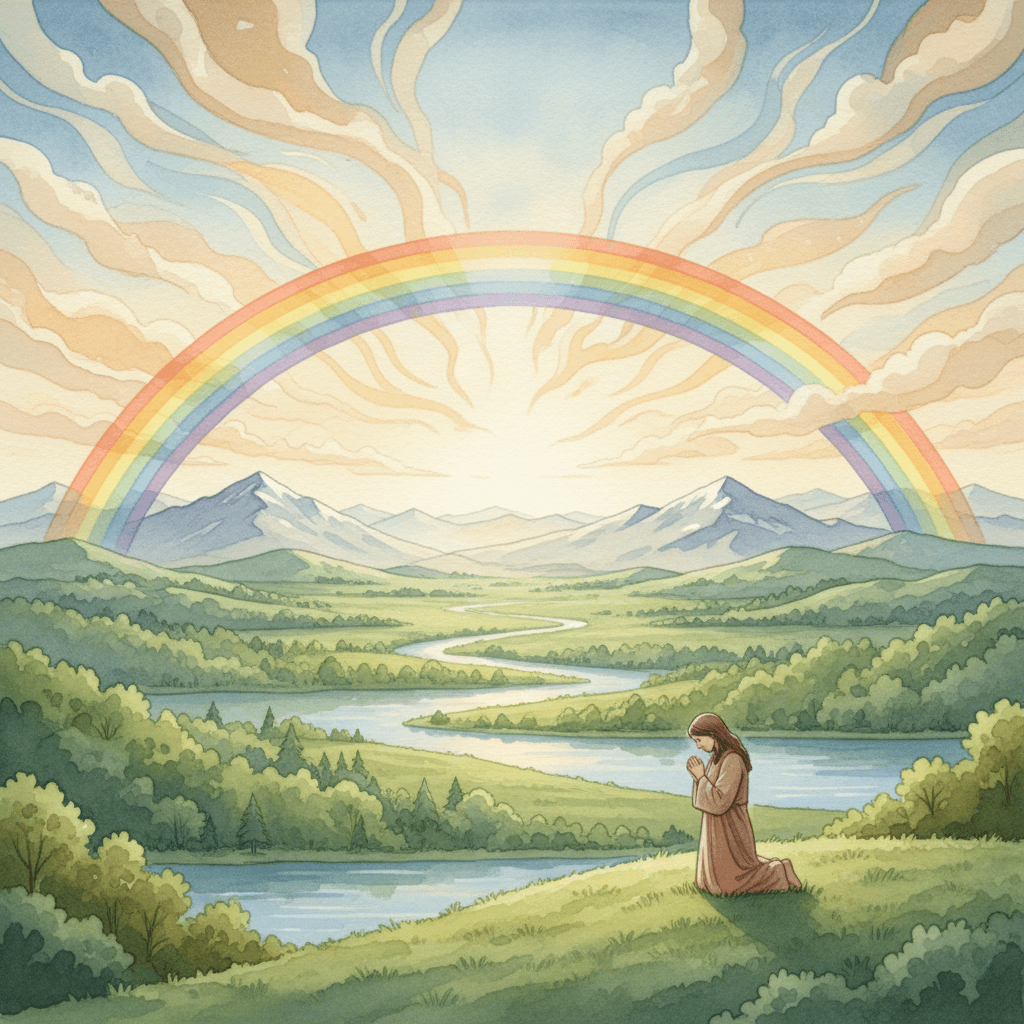
It's Not Just a Brief Flash of Color After the Rain: Genesis 9 Rainbow Covenant Holds the Certainty of Daily Life
When people see a rainbow, they often think of comfort, hope, or a fleeting moment of beauty. But in the Bible, the rainbow isn’t just a visual delight. In Genesis 9, it appears as the sign of a covenant established by God Himself. This isn’t merely a symbol to encourage human optimism; it’s a declaration that even amidst a world shaken by sin, God still sustains His creation.
The key passage is Genesis 9:12-13: "And God said, This is the sign of the covenant I have established between me and all life on earth: I have set my rainbow in the clouds, and it will be the sign of the covenant between me and the earth." The first thing that strikes us here is the scope of the covenant. God did not speak only to Noah, but also to his descendants and, more broadly, to all living creatures on the earth. In other words, the rainbow covenant is a promise that God will not end the world immediately but will preserve it, allowing human life and the created order to continue.
To understand this covenant rightly, we need to see the flow that leads up to it. After the flood, Noah comes out of the ark, builds an altar, and offers sacrifices. In response, God says in Genesis 8:21-22: "Never again will I curse the ground because of humans, for the inclination of their hearts is evil from youth. And never again will I destroy all living creatures, as I have done. As long as the earth endures, seedtime and harvest, cold and heat, summer and winter, day and night will never cease." Here, we learn an important truth: God’s intention to preserve creation is not because humanity has suddenly become good. The reality remains that the human heart is inclined toward evil from youth. Yet, despite this, God maintains the order of the world according to His will and mercy. The rainbow covenant is built on God's faithfulness, not on human merit or optimism.
This is very relevant for us today. We often feel that God's presence depends on circumstances—when things go well, we feel close to Him; when things fall apart, we think He has drifted away. But the Bible teaches the opposite: God's faithfulness precedes anything we experience, and our situations are only fluctuations within His steadfast commitment. The changing seasons, the rising and setting of the sun, planting and harvesting—these ordinary repetitions are not mere natural phenomena but silent testimonies that God does not let go of His creation. They’re so familiar that we forget their miraculous significance, yet each day’s natural order silently affirms His covenant.
In the ancient Near East, many flood stories were shared, but the biblical message is entirely different. In pagan myths, gods are often capricious, unstable, driven by their own moods. However, the God of the Bible, while holy and just, also establishes order through His covenant. Justice and mercy are not opposed but reveal different aspects of God's holiness and faithfulness. The flood demonstrates God's justice—His righteous judgment against sin—while the rainbow after it reveals His patience in preserving the world despite His judgment.
Another crucial point is that the Bible does not fix our gaze solely on the rainbow itself. The sign always points to the One who gave it. People often consume symbols without understanding their meaning. They might enjoy beautiful scenes, sentimental phrases, or brief comforts. But in Scripture, signs are tools to remember God's Word, not just aesthetic ornamentation. The rainbow’s beauty lies not in its rarity but because God Himself declared it to be the “sign of the covenant.”
Thus, the rainbow covenant provides very practical reassurance in turbulent times. It does not promise that life will be free of difficulties. Historically, since Noah, the world remains full of sin, conflict, and tears. Still, God prevents chaos from having the last word. This is a profound comfort for believers: even if the clouds of life seem thick, God has not abandoned His world. Just as a rainbow becomes more vivid after a storm, God's faithfulness sharpens in seasons of instability.
For example, if a family faces unexpected financial hardship, plans are disrupted, and anxiety grows—tomorrow seems uncertain. At such times, many wait only for a dramatic miracle. Of course, God can work in awe-inspiring ways whenever He chooses. But often, He first sustains broken hearts, gives strength to handle today’s tasks, and re-establishes the order of daily life. In the routine of morning routines, preparing meals, caring for each other, and continuing with assigned responsibilities, God continues to act as the covenant-keeping God. Even without grand signs, His hand is still preserving life.
The rainbow covenant also humbles anxious hearts. God did not suddenly transform everything into a perfect new heaven and new earth immediately after the flood. The fullness of that renewal is still in the future. In the meantime, humans live through seasons, learn patience, and cling to promises. Faith, therefore, grows not by instant solutions but through the perseverance of walking by faith, trusting in God's Word day by day.
Furthermore, this covenant reminds us of God's common grace. Both the righteous and the unrighteous live under the same sun and rain, and all continue life within seasonal order. This does not mean the world sustains itself; it means God patiently and persistently upholds it. So, Christians do not despise ordinary daily routines. In the repeated days, subtle orders, and hidden acts of preservation, they learn to see God's hand.
In the end, Genesis 9’s rainbow covenant shifts our focus from the colors adorning the sky to the character of the God behind the scenes. The world remains unstable, our feelings fluctuate easily, and the future often seems blurry. Yet, as long as seasons turn and days begin anew, we can trust that God has not abandoned His creation. A rainbow appears suddenly and then disappears, but His covenant never fades. Therefore, what matters today is not the weather but remembering the One who made the promise. That remembrance anchors our everyday lives, moving us from fear toward trust.
Ultimately, Genesis 9’s rainbow asks us: What is the certainty I am clinging to right now? Is it my visible circumstances? My fluctuating feelings? Or the God who spoke His Word? The Bible clearly points to the latter. Those who remember the covenant-keeping God are not free from anxiety but look to the sovereign hand preserving the world even amid chaos. So, today’s faith begins not with waiting for a miraculous moment but with remembering God's Word already given and continuously reading His faithfulness in our routine days.
Related articles
What Covenant Did God Establish in Genesis 9?
In Genesis 9, we look at the covenant God made with Noah and all living creatures, the rainbow as its sign, and the standard for how life should be treated.
Noah Revisited Through Genesis Chapters 7–9: Judgment, Remembering, and the Covenant of a New Beginning
Reflecting on Noah's story in Genesis 7–9, we meditate on God's holy judgment upon sin, His gracious salvation, remembrance, and His faithfulness revealed in the rainbow covenant following the flood.
 Bible Habit
Turn this article into today’s reading habit
Keep your McCheyne plan, sequential reading, notes, and progress together so the next passage is always clear.
- Today’s passages
- Reading checklist
- Notes and highlights