

The Meaning of Sabbath Year: Biblical Principles of Rest and Renewal
Explore the biblical roots of the Sabbath Year, the regulations in Leviticus, and its historical development within the church. Discover essential principles of rest and renewal that today's Christians need to learn from Scripture.
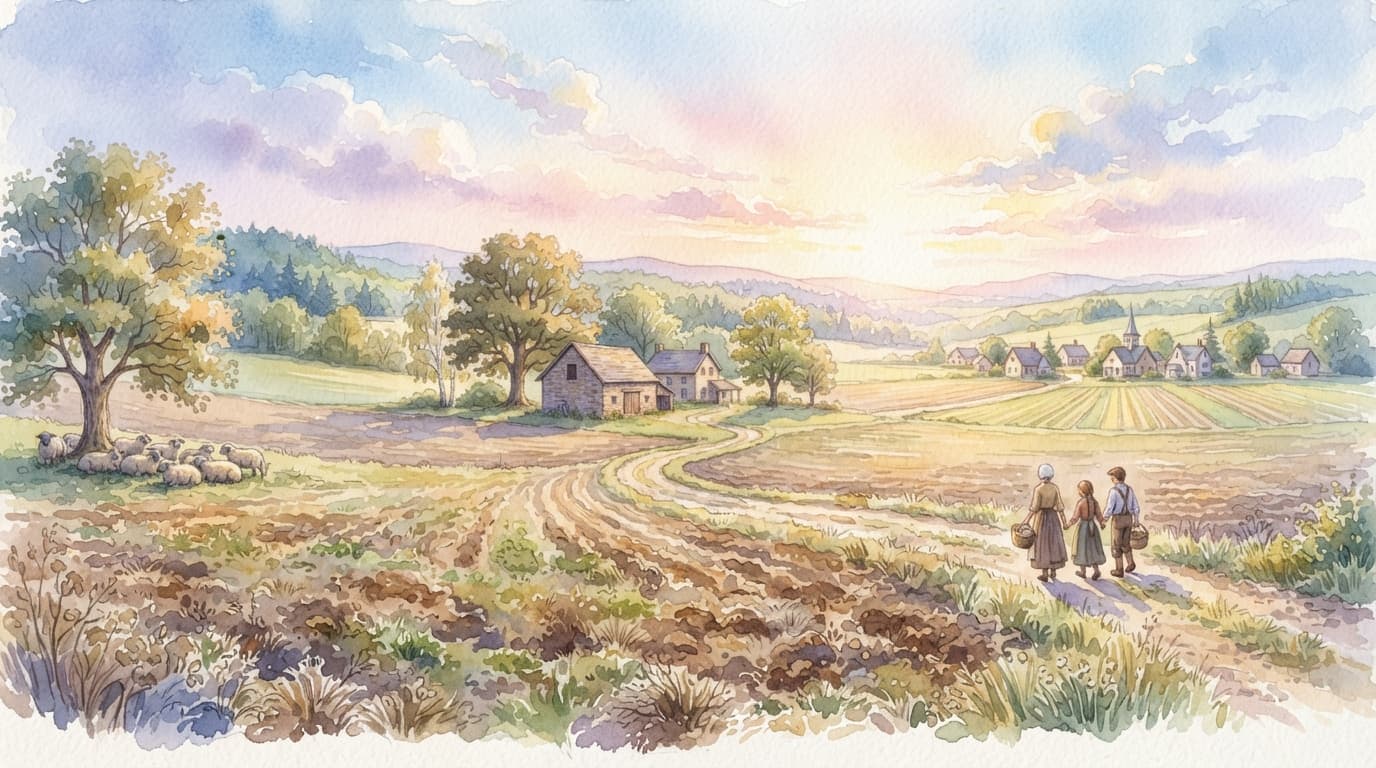
The Meaning of Sabbath Year: Biblical Principles of Rest and Renewal
The term "Sabbath Year" is often used to describe a time of taking a break from work for rejuvenation. However, in the Bible, the Sabbath Year is more than just long-term rest. It was a sacred order established by God, teaching His people to relearn the rhythm of life and their sense of ownership. To truly understand this concept today, it is essential to examine where the Bible places the Sabbath Year.
The primary biblical basis for the Sabbath Year is found in Leviticus 25. God instructed Israel, after entering the land of Canaan, to practice a pattern: "For six years you shall sow your field, and six years you shall prune your vineyard and gather in their fruit, but in the seventh year, the land shall have a sabbath rest, a Sabbath to the Lord" (Lev. 25:3-4). An important point here is that the rest is not only for people but also for the land. The land belongs to God, and people are not owners who endlessly exploit it but stewards entrusted with it.
During the Sabbath Year, agricultural work was paused, and the harvest that naturally grew was not to be hoarded selfishly. Leviticus 25:6 mentions that these produce shall serve as food for you, your servants, your workers, those dwelling with you, and even your livestock. The Sabbath Year was not merely about ceasing labor but also encompassed community justice. It was a time to share in God's provision, not just to guard what we have accumulated.
Deuteronomy presents another facet of the Sabbath Year, emphasizing the forgiveness of debts: "At the end of every seven years, you shall grant a remission of debts" (Deut. 15:1). It also warns against strengthening the hearts of the poor or neglecting them. In essence, the core of the Sabbath Year is about rest, trust, and sharing. It was a time to believe that God supplies, not just to work tirelessly.
Throughout Israel’s history, this command was often taken lightly. 2 Chronicles 36:21 explains that the land enjoyed its Sabbath rest because of Israel's disobedience, highlighting the consequences of neglect. The people, unable to rest, were eventually forced to stop. This reminds us today—if we fail to learn to pause, circumstances often compel us to halt involuntarily.
In church history, the "modern Sabbath Year" is not a direct institutionalization of the Old Testament regulations. Christian communities, under the New Testament, do not apply Mosaic civil laws literally. Instead, they adopt principles—rest, renewal, returning to the Word, and reorganization of ministry—to pastors, missionaries, and Christian organizations for a designated period of rest. This is not a condition for salvation but wise application. Hebrews 4 ultimately teaches that true rest is fulfilled in Christ, but those who believe in that rest will also learn dependence on God in their daily lives.
Thus, a Christian Sabbath Year should not be merely viewed as "a break from busy seasons". Its deeper meaning affirms that it is God who sustains us and our work, not us holding everything together. During busy times, it is easy to forget this truth. Despite daily Bible reading, our hearts remain hurried. In such moments, hold onto a verse from 오늘의 말씀, meditate on it, and pause at 성경 읽기. Sometimes, orienting ourselves towards God through small, intentional moments is more crucial than how much we read.
A full year of Sabbath is not a requirement for every believer. Many may be unable due to work demands or family responsibilities. Still, the biblical principle remains vital. The key is to resist the normalization of busyness, refuse to be enslaved by possessions and achievements, consider neighbors in need, and reject the illusion that life can run without God. These are the core lessons of the Sabbath Year for us today.
There's another important distinction: Sabbath is not laziness. Biblical rest involves not escaping responsibilities but acknowledging that the owner of our responsibilities is not ourselves, but God. For those following a reading plan like 365일 읽기 일정, check today’s portion, and even on days you don’t finish, choose integrity over hurriedness. The spirit of the Sabbath Year calls us to shed perfectionism and walk in step with God.
Today, the concept of Sabbath Year may come as questions rather than mere rules: Why do I fail to rest? Why is stopping so unsettling? Why does letting go feel like failure? Often, beneath these doubts is a matter of faith—do we trust that God will fill and sustain us, or do we rely too much on our own control? Taking time to reflect quietly on these questions can be revealing.
One-line summary: The Sabbath Year is not just a year of work stoppage, but a time of rediscovering that God is the Lord of our lives, a time of renewal and restoration.
Related articles
What Do the Sabbath Year and Jubilee in Leviticus 25 Restore?
In Leviticus 25, the Sabbath year gives the land rest, while the Jubilee restores sold ancestral property and frees fellow Israelites bound by poverty. We explore their meaning through the chapter’s repeated commands.
Luke 4 and the Freedom Opened by the Gospel of Jubilee
Following Jesus' proclamation of “the year of the Lord's favor” in Luke 4, this article explores Jubilee and reflects on the freedom of the gospel that renews forgiveness, restoration, relationships, and possessions in our lives today.
 Bible Habit
Turn this article into today’s reading habit
Keep your McCheyne plan, sequential reading, notes, and progress together so the next passage is always clear.
- Today’s passages
- Reading checklist
- Notes and highlights