

Mark 2: Faith and Love That Opened the Roof
This meditation on the healing of the paralyzed man in Mark 2 considers Jesus as the Son of God who forgives sins and the gospel truth that true faith appears through loving effort and practical companionship.
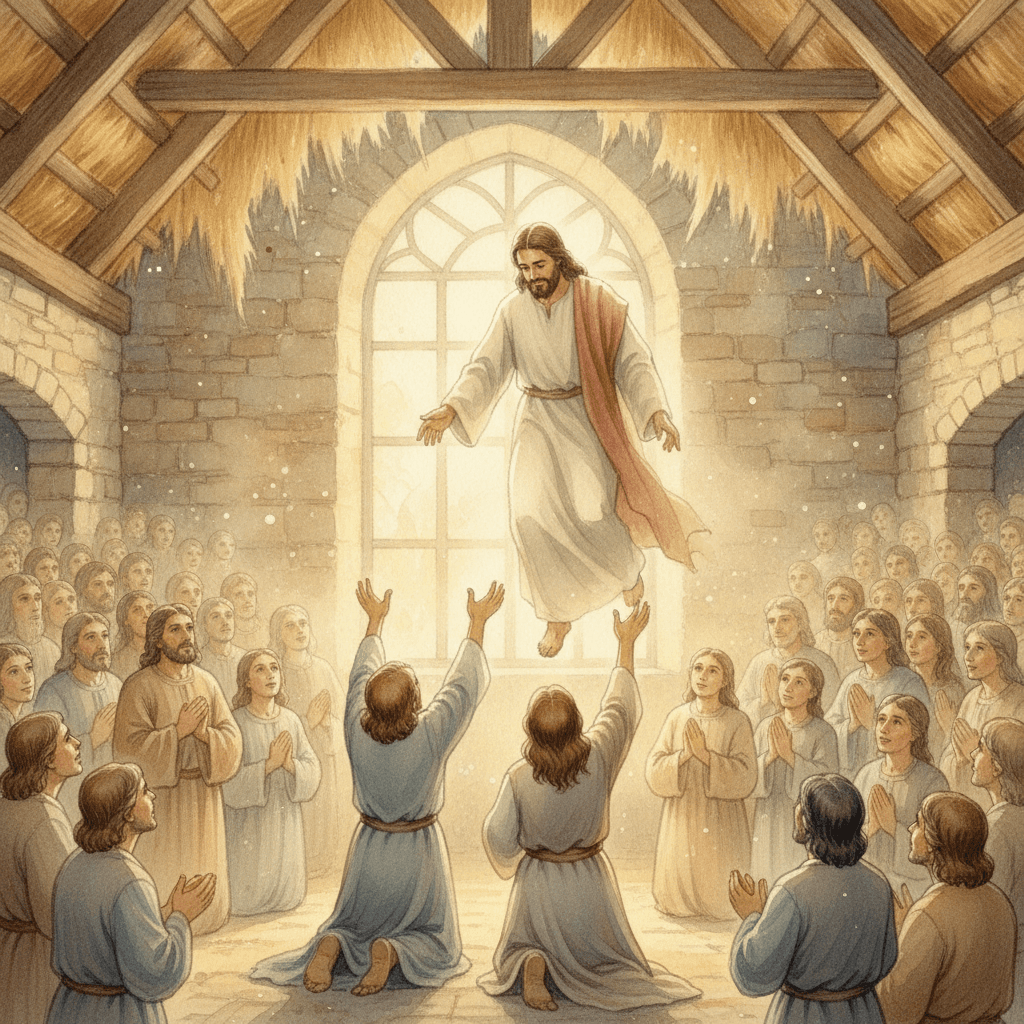
Learning Faithful Companionship in Mark 2: Love That Brings Someone to the Lord Even by Opening the Roof
In the life of faith, we often feel the considerable distance between knowing many words of Scripture and moving according to those words. We say that we believe in the Lord in our hearts, but we easily hesitate when it comes to taking another person's pain as our own and acting. The healing of the paralyzed man in Mark 2:1–12 shines deeply on that point. This passage does not show only the wonder of a miracle. It shows who Jesus is, what faith looks like when it becomes visible, and how practical the love must be that brings one person to the Lord.
The passage begins by saying that Jesus entered Capernaum again after several days. When word spread that he was at home, so many people gathered that there was no room even outside the door. Capernaum was one of the important centers of Jesus' ministry in Galilee, and reports of his teaching and power had already spread widely. People may have expected healing or wanted to hear an authoritative word for themselves. In any case, the house was full, and bringing someone inside was almost impossible.
Just then some people bring a paralyzed man, carried by four of them. Mark records it briefly, but the scene contains much labor. Laying a person who could not move properly on a mat and carrying him through the crowd to the house was not easy. There were narrow paths, a great mass of people, and many chances to want to give up. Yet they did not turn back. Their faith began with the conviction that Jesus could heal the man, and that conviction became action.
When they could not bring him to Jesus because of the crowd, they removed part of the roof above Jesus, made an opening, and lowered the mat on which the paralyzed man was lying. Ordinary houses in that region of Palestine were often built so that people could reach the roof by an outside stairway, and the roof was commonly made by packing branches and earth over wooden beams. Opening someone else's roof was certainly not a light action. They must have felt embarrassed and exposed to the eyes of those around them. But they held on to something more important than their reputation. Bringing their friend before Jesus was more urgent than standing politely in front of others.
One expression here catches our attention. Jesus does not say that he saw only the paralyzed man's faith; he says that he saw “their faith” (Mark 2:5). The Lord was seeing the labor and faith of those who carried the burden together. This is a crucial scene for the life of the church and its members. Each of us stands before God by faith, but we are also called to be a channel that brings another person to the Lord. Holding beside someone who has lost courage until that person returns to the Word, praying earnestly for someone who no longer has strength even to pray, and taking the hand of someone whose steps are heavy to go together to worship are not small things.
Jesus' first words, however, are unexpected. People may have expected healing, but Jesus first says, “Son, your sins are forgiven” (Mark 2:5). We often think that solving the visible problem is most urgent. Jesus knows where humanity's deepest need lies. Bodily healing is precious and desperate, but a more fundamental problem is sin before God. Without forgiveness there is no true peace or reconciliation with God. This scene makes the heart of the gospel clear: Jesus is not merely a healer, but the Son of God who has authority to forgive sins.
The teachers of the law respond in their hearts. They ask who can forgive sins but God alone (Mark 2:7). There is something right in what they say: the authority to forgive sins belongs to God alone. The problem is that they do not see who is standing before them in Jesus. Knowing their thoughts, Jesus asks which is easier: to say to the paralyzed man, “Your sins are forgiven,” or to say, “Get up, take your mat and walk.” He then says that he wants them to know that the Son of Man has authority on earth to forgive sins, and commands the man, “I tell you, get up, take your mat and go home” (Mark 2:11). At that word, the man immediately rises, takes his mat, and walks out in front of everyone.
This miracle is not simply an event in which one person's body was restored. The visible healing became a sign testifying to invisible authority. Jesus not only heals sickness with his word; he is the Lord who forgives and saves sinners. We do not gain righteousness by works but are justified by faith in Christ alone. The point of this passage is not to understand that we will be saved if we work as hard as the four men. Rather, we must see rightly who Jesus is and hold on to the truth that faith coming to him is the way of life. True faith inevitably produces the labor of love.
This word reaches our daily lives very concretely. Around us are people who look fine on the outside but are so tired in their hearts that they no longer have strength to stand alone. Some have given up on themselves after repeated failure; others avoid the Word because of guilt and wounds. What they need is not a formal sentence offered from a distance but someone who will actually walk beside them. A person who has stayed away from worship for a long time may want to return but hesitate for months because of awkwardness and fear. If someone adjusts the time to go together, listens quietly after worship, and shares the Word without pressure, that small companionship may feel to the person like opening a roof.
This passage also asks how much our faith has laid down its concern for appearances. The four men did not insist on an orderly method and choose to do nothing. Faith does not glorify rudeness or disorder, but it clearly shows that saving a person comes before our comfort and image. Sometimes we are too proper to love and too cautious to serve. Contacting someone first may feel burdensome, approaching to start a conversation may feel awkward, and making time to sit with someone may feel inconvenient. At such times the passage quietly asks: What is truly important?
The scene in Mark 2 finally turns us toward ourselves. We too were once led toward the Lord through the prayers, counsel, patience, and love of others. We may feel that we walked in by our own strength, but when we look back, someone's tears and labor were behind us. Now we too should become such a channel for someone else. This does not mean doing something grand. It means not judging a discouraged person quickly, rebuilding that person with the Word, and staying beside the person so that he or she can come to the Lord. Faith does not end as a private conviction; it grows in the direction of giving life to another.
At the same time, we must not forget that the center of bringing someone to the Lord is ultimately not our effort but Jesus himself. We are not the ones who change people; the Lord is. We are guides, not saviors. We do not need to lose heart when immediate change is not visible while helping someone. The power of the gospel is still alive, and the Lord still forgives sinners and raises the broken. Our task is to carry the burden together in love, not give up, and bring that person before Jesus. When we do not spare the labor of laying a person before the Lord, we see more clearly that Jesus still heals and raises sinners today.
Related articles
Preparation Revealed in the Face of Seemingly Late Times: Jesus' Call to Watchfulness
Jesus’ words 'Stay alert' are not about calculating the end date but a call to live holily and faithfully today. We explore the meaning of faith and preparation that emerge more clearly as the wait prolongs.
Meditation on the Parable of Talents: The Weight of Faithfulness with the Time Entrusted to Us
Following the Parable of the Talents in Matthew 25, this reflection considers faithfulness and stewardship rather than comparison. It thoughtfully explores how trusting in the Lord influences our time, responsibilities, and obedience today.
 Bible Habit
Turn this article into today’s reading habit
Keep your McCheyne plan, sequential reading, notes, and progress together so the next passage is always clear.
- Today’s passages
- Reading checklist
- Notes and highlights