

Matthew 13 Explained: Learning Patience in a Mixed World Rather Than Rushing
Through the Parable of the Weed among the Wheat in Matthew 13, we reflect on how believers should live with the right perspective and attitude amid a world tainted with evil. We meditate on the importance of trusting God's timing and practicing patience and self-examination over hasty judgments.
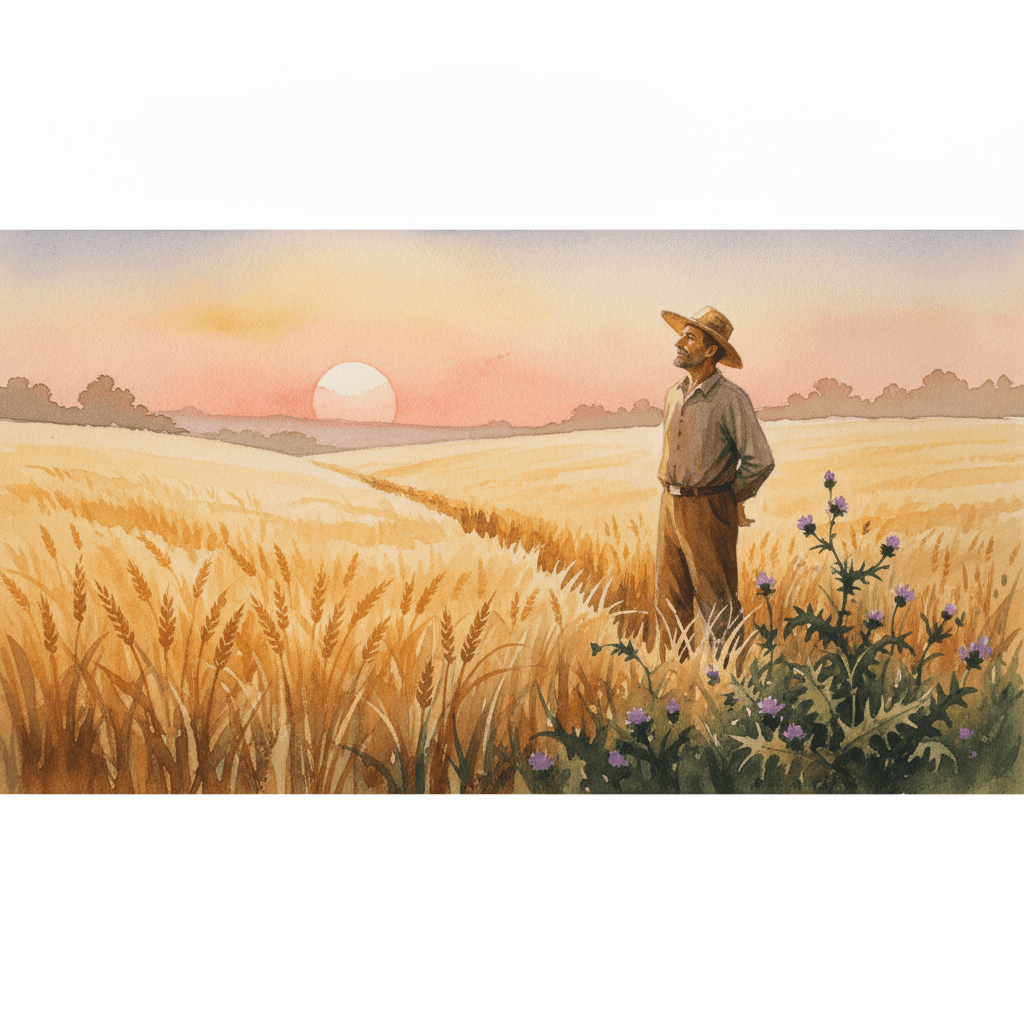
Matthew 13 Explained: Learning Patience in a Mixed World Rather Than Rushing
The parable of the weeds in Matthew 13 gently guides us to understand how believers should perceive the reality of a world where good and evil coexist. Jesus describes a scene where an enemy stealthily sows weeds in the field of the good seed. When the plants sprout and produce grain, the servants notice the difference. They ask, “Sir, didn’t you plant good seed in your field? Where then did the weeds come from?” (Matt. 13:27). This question isn’t just about farming but closely relates to the common questions we ask in life: If God is good and sovereign, why does the world seem so chaotic? Why does evil persist so easily? Why do disappointments happen even among those who claim to believe?
Jesus clearly states the cause: “An enemy did this” (Matt. 13:28). The Bible doesn’t describe evil ambiguously; it reveals that God is not the creator of evil, and that evil is associated with the enemy’s work opposing God's good purposes. At the same time, Jesus permits delaying the act of removal. When the servants ask if they should go and pull out the weeds, the master replies, “No, lest in pulling the weeds you root up the wheat along with them. Let both grow together until the harvest” (Matt. 13:29-30). This highlights a critical focus of the parable: While it’s not wrong to hate evil, how and when we deal with it must be under God's wisdom and sovereignty.
Understanding this parable within its original context makes the meaning clearer. Many expected that when the kingdom of God arrived, evil would be immediately eradicated, leaving only the righteous. Yet, Jesus teaches that the kingdom has already begun but is not yet complete. Just as a seed needs time to grow and bear fruit, God’s kingdom advances quietly but surely. Now is not the time for total resolution; rather, it’s a period when true natures are revealed and ultimately judged by their fruits. The apparent delay of God’s justice is not weakness but His long-suffering reign and wisdom.
Jesus then provides an interpretation: “The one who sows the good seed is the Son of Man, the field is the world, the good seed are the sons of the kingdom, the weeds are the children of the evil one, the enemy who sowed them is the devil, the harvest is the end of the age, and the reapers are the angels” (Matt. 13:37-39). This interpretation offers a vital balance: On one hand, the Bible realistically acknowledges the coexistence of good and evil and the certainty of judgment. On the other hand, it emphasizes that ultimate discernment and judgment are not in human hands but belong to God.
This is where our impatience shows. People tend to judge quickly based on appearances, reach hasty conclusions from a single scene, or want to swiftly bring things to an end to feel at peace. Jesus, however, observes the intertwined roots and growth process of both wheat and weeds. He understands that pulling out weeds prematurely could damage the wheat too. His patience isn’t indifference but a form of protection, preservation, and divine wisdom for proper discernment. Even in our frustrating waiting periods, God is never absent. He isn’t inactive just because we can’t see His work, nor has He forgotten us because of His slow actions.
This teaching deeply relates to both the church and everyday life. Some people, after experiencing hypocrisy or wounds within the community, grow cynical about faith itself. Others, upon seeing problems, jump to conclusions about individuals, ending relationships, and trying to execute justice on their own. The parable of the weeds warns against both cynicism and impatience. Though the Lord doesn’t dismiss evil lightly, He doesn’t entrust its resolution to our rashness. Believers need discernment, not apathy; patience grounded in truth, not explosive anger. In this sense, this passage makes us reconsider what “meditation” is — since Scripture isn’t merely a tool to criticize the world but a mirror to examine our own hearts and attitudes.
Let’s consider more concrete examples: When an honest worker at the workplace seems to suffer loss, it might appear that more clever and calculating people are recognized faster than those who follow the rules. In such moments, the heart wavers. Temptations arise: ‘Should I compromise a little?’ or ‘I must expose their wrongdoings!’ Sometimes, wrongdoing must be addressed properly. But even in those moments, believers must guard their souls. If hatred and pride fill their hearts, they are growing the fruit of sin themselves while judging others. The parable of the weeds challenges us to ask—not “what should I remove?” but “what kind of fruit am I bearing?”
This naturally leads to self-examination. Are we more prone to classify and label others, or to honestly reflect before the Word? Are we accepting God’s patience as grace, or using it as an excuse to loosen up? The Bible’s teaching on patience doesn’t mean passive neglect. James 5:7 says, “Be patient, therefore, brothers, until the coming of the Lord. See how the farmer waits for the precious fruit of the earth, being patient about it, until it receives the early and the late rains.” The farmer’s waiting is not idle; it’s diligent care, expecting the harvest. Likewise, a believer’s patience is not silent indifference, but a trusting stance that clings to good and trusts God’s perfect timing. Since such perseverance doesn’t develop overnight, adhering to principles like 7 Tips for Bible Reading Habit can help us continually embed the Word into our lives.
The parable of the weeds in Matthew 13 also clearly affirms the certainty of final judgment. The harvest will come. Even if everything appears mixed now, it will not remain so forever. Jesus explains that at the end of the age, weeds will be gathered and burned, just as they are gathered in the parable (Matt. 13:40-42). This is a solemn warning not to overlook evil, but also a great comfort for those weary in doing good. God is not blind or forgetful; all things will be revealed in His time. Even when the present looks blurry, His timing is sure. As believers, rather than rushing to create a quick victory, we trust in the final judgment belonging to the Lord and choose obedience today.
This parable should also be read in the light of the Gospel. We aren’t called merely to discern weeds in the world, but also to remember that we ourselves were once dead in sins, but God made us alive together with Christ. We were made citizens of His kingdom by grace. Therefore, this passage doesn’t serve as a reason to condemn others but instead leads us to humility before God’s grace. The righteous are not distinguished by their own righteousness but justified by faith in Christ. Consequently, although we do not set salvation as a condition for bearing good fruit, we hold onto the truth that genuine faith inevitably produces fruit in life.
Ultimately, this parable doesn’t stop at explaining why the world is chaotic. It teaches us how to live amid that chaos. Those who remember that the harvest is still coming are less prone to despair or quick violence. They plant themselves in the Lord’s word, neither overlook the evil around nor try to judge the world with human strength. More importantly, they focus on cultivating their own fruit instead of obsessing over the weeds around them. To follow along with the entire chapter, it’s helpful to regularly read the Bible or use the 365-Day Reading Plan to grasp Matthew’s overall flow.
As we read Matthew 13, we gradually learn that the way the Lord manages the world is much wiser than our impatience. This learning doesn’t diminish the reality of evil; instead, it redirects us away from quick judgments and rash confidence. God is continuously protecting His people, growing His kingdom, and will deliver perfect judgment and salvation at His appointed time. Therefore, what we need today isn’t the hurried urge to instantly settle everything but patience rooted in His word, diligently bearing good fruit. In this way, believers learn patience over frustration, discernment over anger, and faithful obedience amid turbulent times, instead of despair.
Related articles
Luke 5: Obedience Rooted in the Word
Journeying through Peter’s empty nets and Jesus’ call in Luke 5, we reflect on how trusting in God's Word and obeying Him in moments of failure reveals His grace and leads us to repentance.
Philippians 3: The Most Valuable Person
Philippians 3 shows why Paul laid aside his pride and regarded Christ as the most precious. It prompts us to reflect on faith-based righteousness and our current priorities.
The Values of God's Kingdom and Why Our Lives Change
Following Jesus' parables that reveal the truths of God's kingdom, we explore why people's priorities shift. As the gospel becomes clearer, obedience transforms from obligation to joy, and this can be reflected in our daily lives.
 Bible Habit
Turn this article into today’s reading habit
Keep your McCheyne plan, sequential reading, notes, and progress together so the next passage is always clear.
- Today’s passages
- Reading checklist
- Notes and highlights