

What Should You Do When You Have No Way to Make a Living?
Genesis 47 shows how Jacob’s family and the people of Egypt found a place to live and food to eat during a severe famine. It invites us to consider the importance of honestly acknowledging our struggles and asking for the help we need.
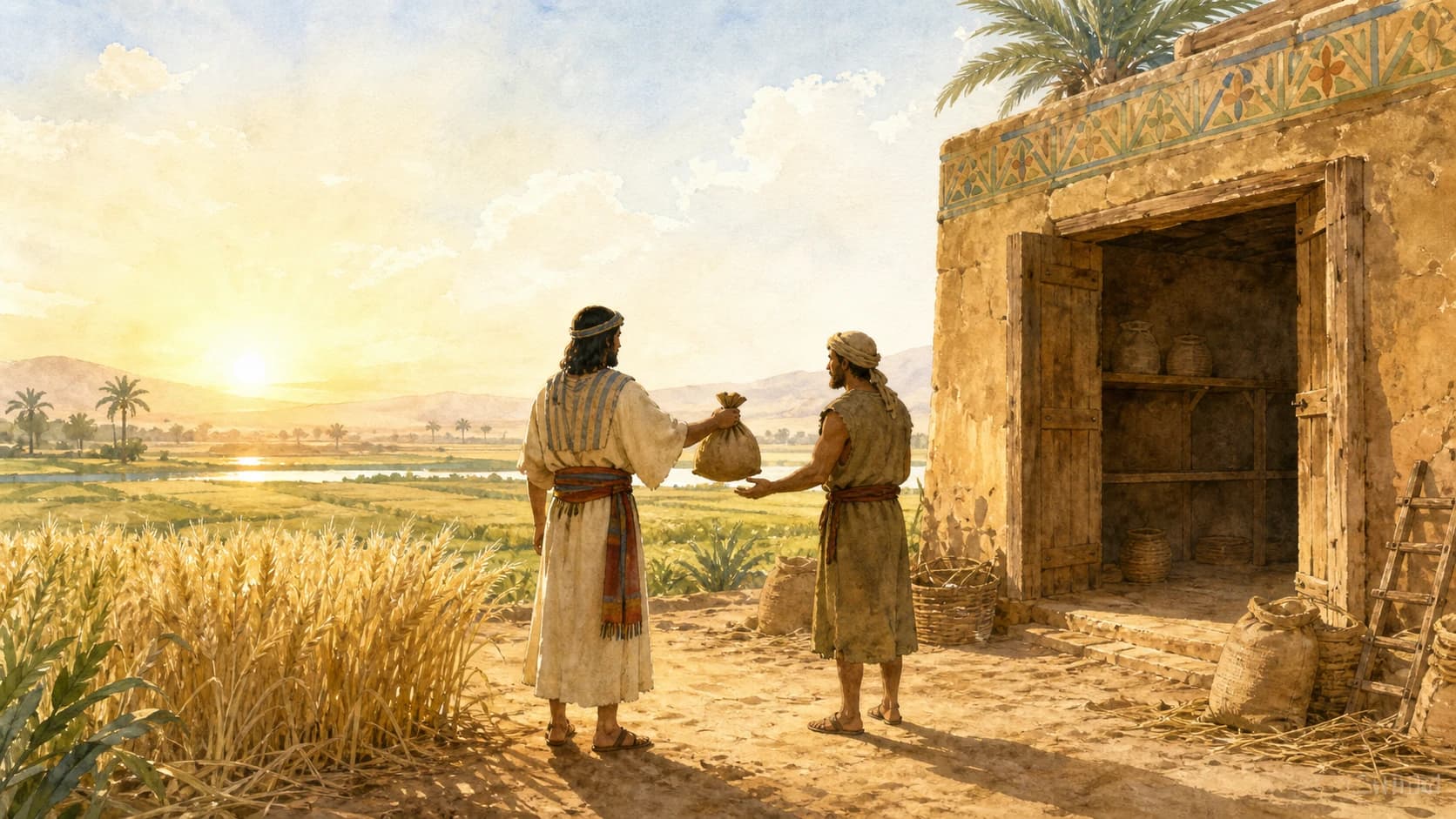
When your livelihood is threatened, it can be hard to know what to say or where to begin. Genesis 47 tells of people who needed food and a place to live. They explained their circumstances and asked for specific help. One practical lesson we can take from this passage is to speak clearly and honestly about what we lack.
Jacob’s family asked for a place to live
Joseph told Pharaoh that his father, his brothers, and all their flocks, herds, and possessions had arrived in the land of Goshen. Joseph’s brothers explained that they were shepherds. Because the famine in Canaan was so severe that there was no pasture for their flocks, they asked for permission to settle in Goshen.
Pharaoh told Joseph to settle them in the best part of Egypt. He also said that any capable men among them could be put in charge of his own livestock. Following Pharaoh’s command, Joseph gave his family a place to live and provided food according to the number of their dependents. Jacob’s family received the land and provisions they needed.
As the famine worsened, the people’s possessions dwindled
The famine grew even more severe throughout Egypt and Canaan. The people spent all their money buying grain. When their money was gone, they exchanged their livestock for enough food to last that year.
The following year, they said that both their money and livestock were gone, leaving them with only their bodies and land. They asked Joseph to buy them and their land in exchange for food and to give them seed. Joseph acquired all the farmland of Egypt for Pharaoh and moved the people into the cities. The only land he did not buy belonged to the priests, who received an allowance from Pharaoh.
Joseph gave the people seed and told them to sow the land. They were to give one-fifth of the harvest to Pharaoh and keep the rest for seed and food for their families. The people said that Joseph had saved their lives. The passage does not hide the fact that, during the famine, ownership of their money, livestock, and land changed one after another.
Jacob’s family became established in Goshen
The Israelites settled in the land of Goshen, acquired property there, and became fruitful and multiplied greatly. Jacob lived in Egypt for seventeen years and reached the age of 147.
As his death drew near, Jacob asked Joseph not to bury him in Egypt. He wanted Joseph to carry him out of Egypt and bury him in the ancestral burial place once he had been laid to rest with his fathers. Joseph promised to do as his father asked and confirmed it with an oath. Even at the end of his life, Jacob did not leave his wishes vague; he expressed them clearly and specifically.
Write down the help you need today in one sentence
This passage does not promise that asking for help will immediately solve every problem. It does show, however, that Joseph’s brothers, the people of Egypt, and Jacob spoke honestly about their circumstances and what they needed.
Choose one difficulty you need to address today. Then complete this sentence: “What am I lacking right now, and whom will I ask for what kind of help?” Before making your request, you may want to read Genesis 47 again and notice what each person said and what they received.
Related articles
The Purpose of the Signs and Plagues in Exodus 7
In Exodus 7, we examine within the text the purpose for which God sent Moses and Aaron to Pharaoh and performed the signs and the first plague.
What Did Joseph Do After Jacob’s Death in Genesis 50?
In Genesis 50, we look at how Joseph kept Jacob’s burial command, reassured his brothers who feared retaliation, and spoke of God’s promise.
Genesis 49: Jacob’s Blessing and Final Instructions
In Genesis 49, we look at what Jacob said to his twelve sons, the blessings he gave each one according to their portion, and the burial instructions he left behind.
 Bible Habit
Turn this article into today’s reading habit
Keep your McCheyne plan, sequential reading, notes, and progress together so the next passage is always clear.
- Today’s passages
- Reading checklist
- Notes and highlights