

What Genesis 5 Records from Adam to Noah
Genesis 5 records how Adam’s descendants continued from the human created in God’s image, and tells of Enoch’s walk with God and Noah’s birth.
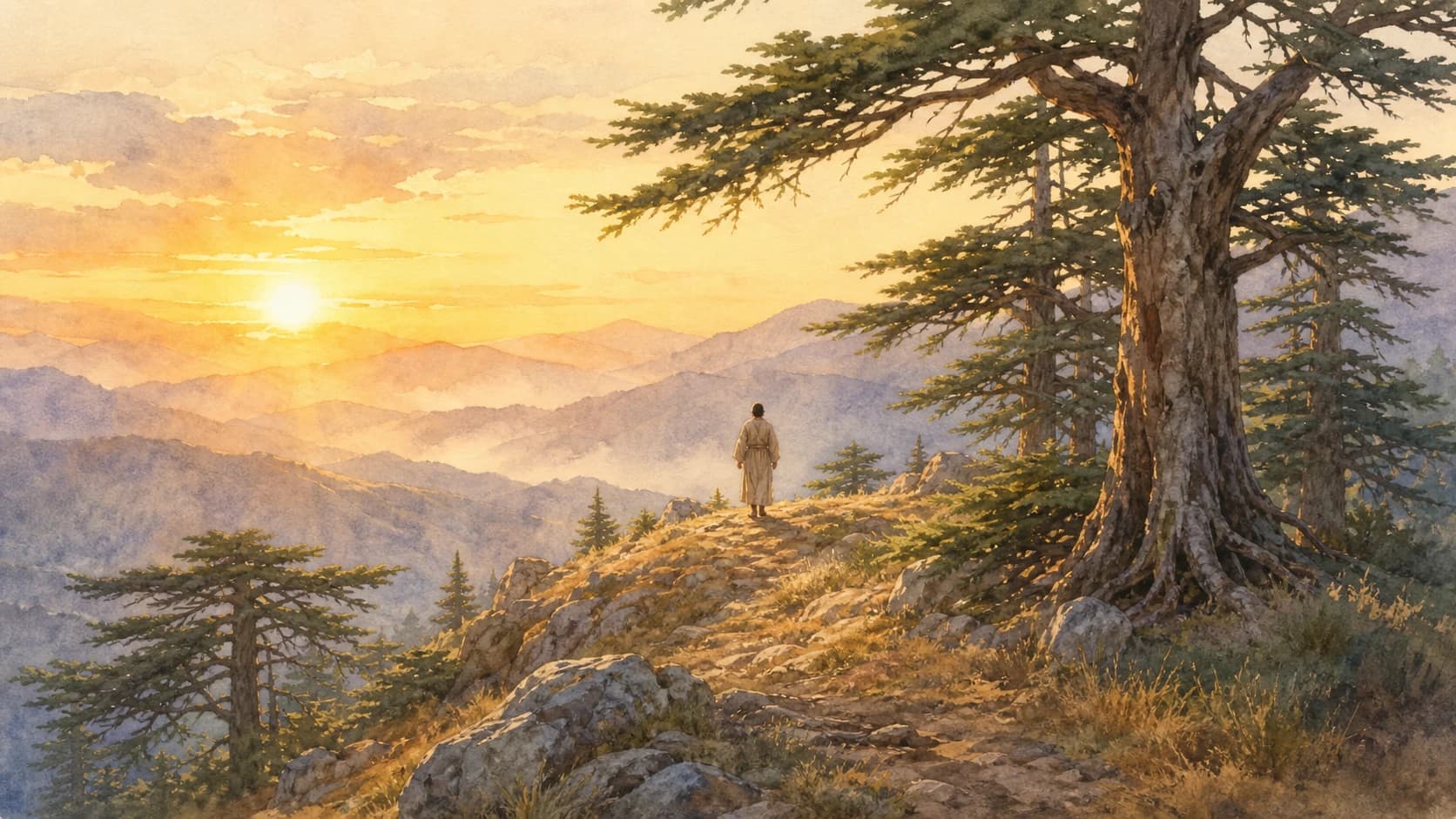
Genesis 5 records that the descendants of Adam continued from the people God created and reached Noah. In the midst of repeated generations of birth and death, Enoch walked with God, and Lamech named his son Noah and spoke words about him. This can be confirmed in Genesis 5:1-32.
Why Names and Ages Recur
When you read Genesis 5, the names and ages continue for a long time. It records in order who fathered a son at what age, how many years he lived afterward, and how old he was in all. Because similar sentences are repeated, it is easy to miss what each record is saying.
However, before listing the genealogy, the passage first tells us who the human being is. When God created humanity, he made them in his own image. He created male and female, blessed them, and called their name humanity. Then Adam fathered a son in his own likeness, after his own image, and named him Seth.
Therefore, this genealogy does not merely list names. It records the process by which descendants were born from the human God created, and from those descendants the next generation continued again.
How Adam’s Descendants Continued
Adam fathered Seth, and Seth fathered Enosh. Enosh fathered Kenan, and Kenan fathered Mahalalel. Mahalalel fathered Jared, and Jared fathered Enoch. Enoch fathered Methuselah, and Methuselah fathered Lamech, and Lamech fathered Noah.
The passage repeatedly notes that these people had other sons and daughters as well. It also tells the number of years each person lived from Adam to Lamech. In the records, except for Enoch, the phrase “and he died” is repeated at the end. Not only birth and life, but also each person’s death is included in the genealogy.
At the end, it records that after Noah was five hundred years old, he fathered Shem, Ham, and Japheth. In this way, the genealogy in Genesis 5 begins with Adam and reaches Noah and his three sons.
What Is Different About Enoch’s Record
Enoch’s record contains content that sets him apart from the others. Enoch fathered Methuselah at sixty-five years old. After that, he walked with God for three hundred years, fathered sons and daughters, and lived a total of three hundred sixty-five years.
The passage says twice that Enoch walked with God. It then records that God took him, and he was not there anymore. Genesis 5 does not explain the process or the reason further. Therefore, within the scope of what the passage reveals, we can confirm only this: Enoch walked with God, and God took him.
This record clearly shows how one person lived even within a long genealogy. Enoch also had children, and many years passed in his life. The passage records that time as a period in which he “walked with God.”
Noah’s Name and Lamech’s Words
Lamech fathered a son when he was one hundred eighty-two years old and named him Noah. Lamech said that this son would comfort them in their laborious work because the LORD had cursed the ground. Genesis 5 records Noah’s birth and name in the genealogy before explaining the outcome of those words.
Afterward, Lamech fathered more children, lived seven hundred seventy-seven years, and died. The genealogy ends with the record that Noah fathered Shem, Ham, and Japheth. The passage connects the record of the descendants continuing from Adam all the way to Noah’s three sons.
Read Genesis 5 Once Today
One thing to do today is to read Genesis 5 in full. As you read, follow the names from Adam to Noah in order. And in Enoch’s record, look for and mark the expression “walked with God,” which appears twice.
This helps you move through the genealogy without rushing past it and directly confirm what the passage actually repeats and what it records differently. Rather than adding many other conclusions today, it is enough to look within this one chapter at how Genesis 5 records the creation of humanity, the continuation of generations, the repetition of death, Enoch’s walk, and Noah’s birth.
Text Basis
- Genesis 5:1-2
- Genesis 5:3-20
- Genesis 5:21-24
- Genesis 5:25-32
Related articles
What Covenant Did God Establish in Genesis 9?
In Genesis 9, we look at the covenant God made with Noah and all living creatures, the rainbow as its sign, and the standard for how life should be treated.
Meditation on Genesis 8: God's Faithfulness Revealed After Waiting
Genesis 8 quietly yet clearly shows God's unwavering faithfulness to His people after judgment, and Noah's obedience in waiting for God's timing amid recovery. Reflect on the meaning of worship after judgment and new beginnings.
Noah Revisited Through Genesis Chapters 7–9: Judgment, Remembering, and the Covenant of a New Beginning
Reflecting on Noah's story in Genesis 7–9, we meditate on God's holy judgment upon sin, His gracious salvation, remembrance, and His faithfulness revealed in the rainbow covenant following the flood.
 Bible Habit
Turn this article into today’s reading habit
Keep your McCheyne plan, sequential reading, notes, and progress together so the next passage is always clear.
- Today’s passages
- Reading checklist
- Notes and highlights