

What Do the Sabbath Year and Jubilee in Leviticus 25 Restore?
In Leviticus 25, the Sabbath year gives the land rest, while the Jubilee restores sold ancestral property and frees fellow Israelites bound by poverty. We explore their meaning through the chapter’s repeated commands.
In Leviticus 25, the Sabbath year gives the land rest, while the Jubilee restores sold ancestral property and frees fellow Israelites bound by poverty. Throughout the chapter, God repeatedly makes clear that neither the land nor the Israelites belong permanently to any human owner; they belong to the Lord. We can see what these laws restore by examining, in order, the Sabbath year’s rest, the Jubilee’s return, and the commands concerning fellow Israelites in poverty.
In the Seventh Year, the Land Was Given Rest
After entering the land God was giving them, the Israelites could sow their fields, tend their vineyards, and gather their produce for six years. In the seventh year, however, they were neither to sow their fields nor prune their vineyards. They were also not to harvest what grew by itself or gather the grapes from untended vines as they would during an ordinary harvest.
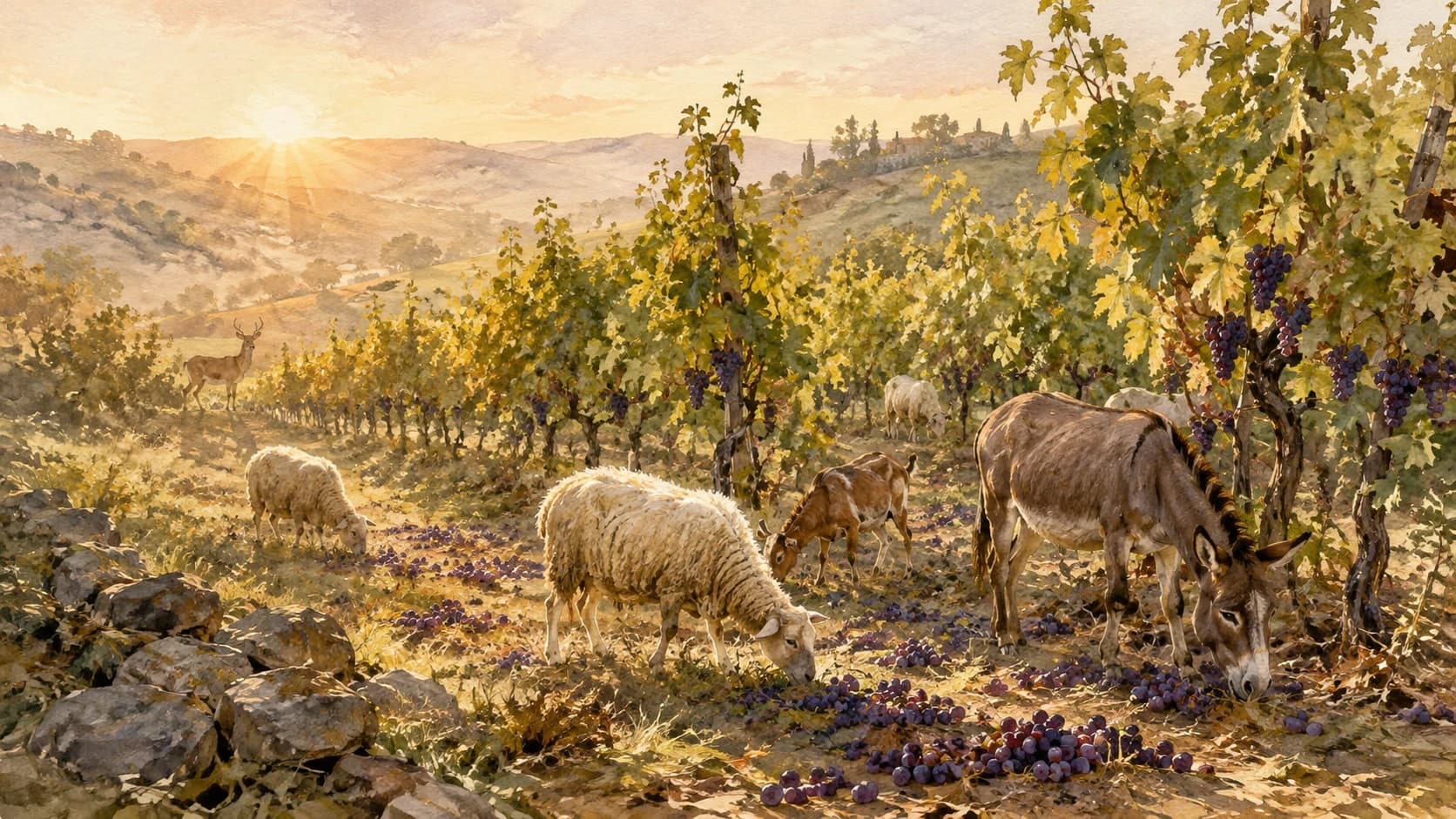
This did not mean that no one could eat what the land produced during the Sabbath year. Its produce was food for landowners and their male and female servants, hired workers, resident foreigners, livestock, and wild animals alike. Ordinarily, people cultivated the fields and gathered the crops. In the seventh year, however, cultivation and exclusive control of the harvest ceased. The land rested before the Lord, and whatever it produced became food for people, livestock, and wild animals.
The people might ask what they would eat in the seventh year. God promised to bless the sixth year so that it would produce enough for three years. Even after sowing again in the eighth year, they could continue eating from the old crop until the harvest of the ninth year. Because the command to let the land rest appears alongside this promise of provision, the Sabbath year was not a command that left the people to starve.
In the Fiftieth Year, People Returned to Their Property and Families
After seven Sabbath years—a total of forty-nine years—the trumpet was to sound throughout the land on the Day of Atonement. In the fiftieth year, liberty was to be proclaimed to all its inhabitants. Everyone was to return to their ancestral property and to their clan.
The command to stop sowing and harvesting was repeated for the Jubilee. Added to it was the command that sold land be restored and fellow Israelites in servitude be released. The cycle of rest for the land and the cycle of restoration for people came together in the Jubilee.
Land could not be sold permanently. God declared, “The land is mine,” and described the Israelites as strangers and sojourners living with him in the land. The price of a sale therefore had to be based on the number of harvests remaining until the Jubilee. More remaining years meant a higher price, while fewer years meant a lower price. Even someone who lacked the means to redeem the land could return to their ancestral property in the Jubilee.
The passage does not treat every house in the same way. A house in a walled city became the permanent property of its buyer if it was not redeemed within one year of its sale. A house in an unwalled village, however, could be redeemed like a field and had to be returned in the Jubilee. Houses in the cities belonging to the Levites also reverted to them in the Jubilee. The Jubilee was not a general cancellation of every transaction. It followed the distinctions established in the text so that ancestral property would not be lost forever.
Fellow Israelites in Poverty Were Not Treated as Opportunities for Profit
When fellow Israelites became poor and could no longer support themselves, they were to be helped so that they could continue living among the community. No interest was to be charged on money, and no profit was to be made from food. Those who sold themselves because of poverty were not to be ruled over harshly as slaves but treated as hired workers or temporary residents.
They served until the Jubilee and then left with their children, returning to their clan and their ancestral property. If they had been sold to someone else, a brother or close relative could redeem them by paying a price calculated according to the years remaining. Even if they could not be redeemed earlier, they and their children were to be released in the Jubilee.
The basis for these commands becomes clear in the final verse. The Israelites were God’s servants, whom he had brought out of Egypt. Because the land belonged to God, it could not be sold permanently. Because the Israelites were God’s servants, fellow Israelites could not be held as permanent slaves. The Sabbath year and the Jubilee were about more than suspending ownership and labor. They gave rest to the land, restored lost ancestral property, and enabled those bound by poverty to recover their families and freedom.
The passage also offers a direct action we can practice today. When lending money or food to someone in need, we can refuse to take advantage of that person’s hardship by charging interest or seeking a profit. Leviticus 25 commands God’s people to see those in poverty not as opportunities for greater control, but as neighbors who should be helped to live among them.
Related articles
Luke 4 and the Freedom Opened by the Gospel of Jubilee
Following Jesus' proclamation of “the year of the Lord's favor” in Luke 4, this article explores Jubilee and reflects on the freedom of the gospel that renews forgiveness, restoration, relationships, and possessions in our lives today.
The Meaning of Sabbath Year: Biblical Principles of Rest and Renewal
Explore the biblical roots of the Sabbath Year, the regulations in Leviticus, and its historical development within the church. Discover essential principles of rest and renewal that today's Christians need to learn from Scripture.
 Bible Habit
Turn this article into today’s reading habit
Keep your McCheyne plan, sequential reading, notes, and progress together so the next passage is always clear.
- Today’s passages
- Reading checklist
- Notes and highlights