

1 Peter 1: The Beginning of a Holy Life
The holiness described in 1 Peter 1 is not legalism or cheap grace. It is the direction for believers redeemed by Christ's precious blood, to live out holiness in family, work, and solitude with calm and conviction.
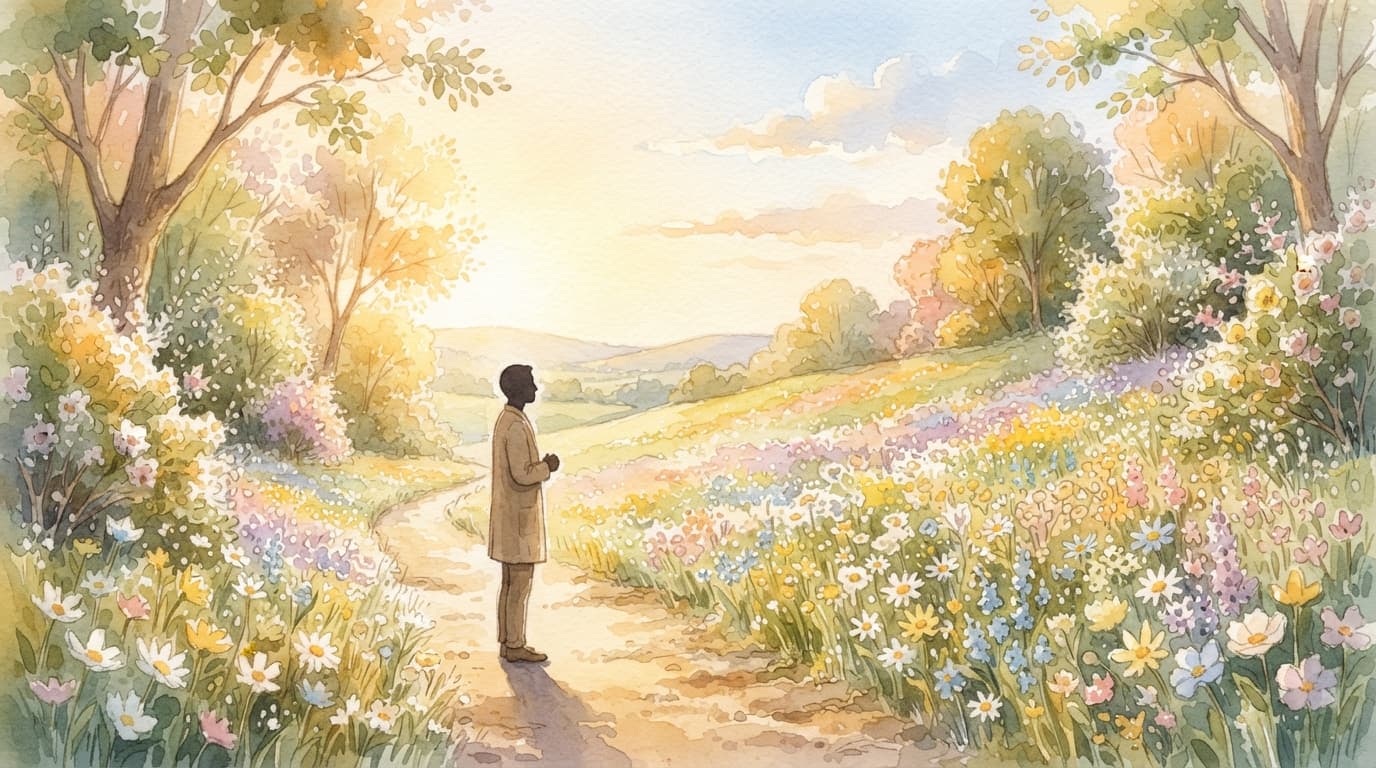
1 Peter 1: The Beginning of a Holy Life
When you hear the word 'holiness,' your heart might feel heavy first. It can seem like an impossibly high standard, distant from our daily routines. However, the holiness stressed in the Bible isn't just a spiritual discipline reserved for a select few. It’s the way of life given to those who believe in Jesus Christ and become God’s people.
1 Peter chapter 1 clearly illustrates this calling. "But as he who called you is holy, you also be holy in all your conduct, because it is written, 'Be holy, for I am holy.'" (1 Peter 1:15-16). Here, holiness isn’t just a reverent atmosphere observed inside church walls. It covers the whole of life — including tone, attitude towards money, choices in relationships, and even thoughts when alone.
The recipients of this letter were not living in comfortable times. 1 Peter 1:1 states they were strangers scattered across Pontus, Galatia, Cappadocia, Asia, and Bithynia. Living as a minority in unfamiliar places, they faced misunderstandings and pressures because of their faith. Peter does not tell them to blend in, nor to play it safe. Instead, he urges them to live in a manner worthy of God's calling—an identity rooted in belonging to God. Holiness isn’t an ornament added to an already comfortable life; it’s what maintains its integrity amidst a shaking world.
This calling always begins with what God has first done. 1 Peter 1:3 explains that God has caused us to be born again through the resurrection of Jesus Christ. Therefore, holiness isn’t about refining our character as self-improvement. It’s about living in accordance with the new life we’ve received. Since our roots have changed, the fruits will change too.
If we overlook this, holiness quickly splits into two paths. One is legalism—struggling to push ourselves and despairing when we fail. The other is cheap grace—believing salvation means we can live carelessly. But the gospel doesn't endorse either. While our salvation isn’t based on works, a person truly justified by faith cannot remain in their old ways.
1 Peter 1:18-19 emphasizes that we were redeemed, not with perishable silver or gold, but with the precious blood of Christ, like that of a lamb without blemish or spot. Reading this slowly, the importance of holiness sinks in. If we are bought at such a costly price, taking our old, futile ways lightly isn't an option. Holiness isn’t a frantic attempt to earn God’s love; it’s the natural walk of someone deeply loved by Him.
Holiness is also a matter of allegiance. We are no longer ruled by our feelings or desires, but belong to the Lord. This isn’t just a profound realization—it reveals itself in everyday moments. When rushing on your way to work, when your pride is hurt, or when injustice happens, what comes out first? Will you respond based on your feelings, or as someone belonging to the Lord? That split second reveals what truly governs your heart.
The family is the clearest testing ground for holiness. It’s easy to smile outside but become harsh with loved ones at home. We might dismiss sharp words or unkind treatment with tiredness, but holiness begins in the small, everyday exchanges — in how we speak at the dinner table, handle disappointment, and whether we’re brave enough to apologize.
For instance, consider when a child repeats the same mistake. It’s simple to lose patience and vent in the name of discipline. But stopping to ask: Am I trying to build this child up, or just vent my frustration? That pause is where holiness grows. Choosing not to insult, not to diminish a person’s character, even in frustration, is a testament to a transformed heart.
The same applies at work and school. Everyone craves recognition, but when that desire becomes excessive, small lies or omissions often follow. Covering one’s mistakes, downplaying others’ achievements, or avoiding responsibility—these are common temptations. True holiness isn’t about grand spiritual experiences, but honesty: speaking truthfully even at personal cost, avoiding false appearances, and remaining diligent in unseen places.
Even in solitude, our true character is revealed. While we may appear well-controlled in public, our thoughts give us away. Do we indulge in unnecessary content late at night? Do we seek comfort in habitual ways when lonely? Or do we, in those quiet moments, stay committed to the Lord? Sin rarely grows all at once; tiny compromises pave the way, and repeated moments of neglect turn hearts dull.
1 Peter 1:13 encourages us: "Prepare your minds for action, being sober-minded, set your hope fully on the grace that will be brought to you at the revelation of Jesus Christ." It’s about gathering our scattered hearts and staying alert. Holiness isn’t vague goodness, but waking up to our spiritual state. Knowing our weak moments, patterns of failure, and being watchful at vulnerability points is crucial.
For example, if late-night fatigue leads us to distraction or uncontrollable social media scrolling, perhaps it’s not just about willpower. It might be time to change habits that feed indecision or comparison. If we feel compelled to bend the truth, maybe temporarily avoiding certain social media platforms is an act of obedience. Holiness involves how we open or close the door to daily life, not just fleeting intentions.
The Word is essential in this journey. 1 Peter 1:23 reminds us that we’ve been born again, not of perishable seed, but through the living and abiding word of God. Our emotions fluctuate many times a day; what seemed like a sin yesterday can feel insignificant today. In those moments, the Word realigns our perspective, anchoring us in God’s will rather than our fleeting feelings.
Bible reading doesn’t always require long, deep study. Short, consistent portions are often more effective. If you read 1 Peter 1:15 in the morning, try to carry that message into your day—reflect on how your words, expressions, actions, and choices reveal whether you belong to the Lord or not. Revisiting the scripture via 성경 읽기 or starting the day with a brief verse from 오늘의 말씀 can be greatly encouraging.
When we stumble, repentance is necessary. The longer we hide or endure in our sin, the harder our hearts become. David openly confessed his sins to God in Psalm 51. Repentance isn’t about hating ourselves—it’s about returning to God. We shouldn’t take sin lightly, but neither should we view our failures as bigger than Christ’s cross.
Sometimes, holiness feels slow. Falling repeatedly in the same spot, with little noticeable change, can discourage us. But God doesn’t transform His people overnight. If we have repented instead of reacted, if we have acknowledged rather than excused, and if we’ve brought our sins before God instead of hiding them—His grace is already at work. Even these gradual changes are significant.
1 Peter 1 doesn’t only speak of holiness as fear. Verses 8 and 9 tell us we rejoice with an inexpressible and glorified joy, believing in the unseen Lord. Holiness isn’t a set of rules that deprive joy; it’s a path leading us into a deeper, purer happiness greater than fleeting pleasure. As our hearts fill with the gospel, the allure of worldly temptations diminishes.
Today, starting holiness doesn’t require grand gestures. A kind word to your family, resisting the temptation to twist facts for personal gain, or simply pausing to stay with the Word instead of rushing into exhaustion—all are meaningful steps. If you want to re-read 1 Peter 1 slowly, you can do so via 성경 읽기—God continues His work in the simplest moments. Holiness isn’t a distant mountain but a clearer step taken today with each small, faithful walk.
Related articles
Psalm 15 Questions the True Worshiper
Through a reflection on Psalm 15, we follow the main flow and key words to understand what it means to dwell before God. We also explore practical applications, from words, relationships, money, to vows.
Learning the Meaning of Meekness from the Heart of Jesus
Centered on Matthew 11, this article examines biblical meekness through Jesus' character, the historical setting, and applications in our words, emotions, and conflicts.
The Meaning and Significance of Sanctification: Holy Transformation After Salvation
Sanctification is not an effort to attain salvation but a process of becoming more like Christ through the Holy Spirit after justified by faith. We explore its biblical meaning, distinctions from justification, and the fruits of sanctification evident in daily life.
 Bible Habit
Turn this article into today’s reading habit
Keep your McCheyne plan, sequential reading, notes, and progress together so the next passage is always clear.
- Today’s passages
- Reading checklist
- Notes and highlights