

The Site of Conversion Unveiled by Knowing Damascus: Biblical Background and Meaning
Follow the geography, history, and biblical significance of Damascus to see how Old Testament judgment and New Testament conversion intersect in one city. This article provides deeper biblical insights into Saul’s encounter on the road to Damascus.
The Site of Conversion Unveiled by Knowing Damascus: Biblical Background and Meaning
Damascus is not just a fleeting mention in the Bible. In the Old Testament, it stands as a significant hub of Aram, and in the New Testament, it marks a pivotal moment where Saul’s conversion and calling unfold. If we understand Damascus solely as ‘a city,’ we risk missing the weight and tension embedded in the biblical text. Exploring its biblical background reveals why Damascus is remembered both as a symbol of judgment and as the scene of transformation.
First, Damascus is known as one of the oldest cities. Today, located in southwestern Syria, it served as a corridor between the Lebanese mountains and desert regions. The city was relatively fertile due to streams called Abana and Barada (see 2 Kings 5:12), which allowed settlements and commerce to thrive even amidst arid wilderness. These geographical features made Damascus more than just a political center—they turned it into a crossroads for various nations, merchants, languages, and cultures. This is why Damascus appears repeatedly in the Bible: strategic pathways often become battlegrounds or centers of economic competition.
In the Old Testament, Damascus is closely linked to Aram. During David’s reign, the Arameans of Damascus opposed Israel. 2 Samuel 8:5-6 reports that Arameans from Damascus helped King Hadadezer of Zobah but were defeated by David, resulting in a garrison established in the region. Later, during Solomon’s era, Rezon of Damascus gained power and became an adversary to Israel (1 Kings 11:23-25). In the divided kingdom period, Damascus frequently represented a threatening force to both Israel and Judah, as seen in 1 Kings 15 and 2 Kings 8, 16, where political tensions with Aram and Damascus surface.
Prophets also attach significance to Damascus. Amos 1:3 declares, “For three transgressions of Damascus, I will not revoke the punishment, because they threshed Gilead with implements of iron.” This isn’t just about a powerful city—it underscores that nations acting in cruelty and arrogance before God face divine judgment. Isaiah 17 also prophesies judgment upon Damascus. Thus, biblically, Damascus symbolizes more than human strength or prosperity; it reflects the history under God's sovereignty.
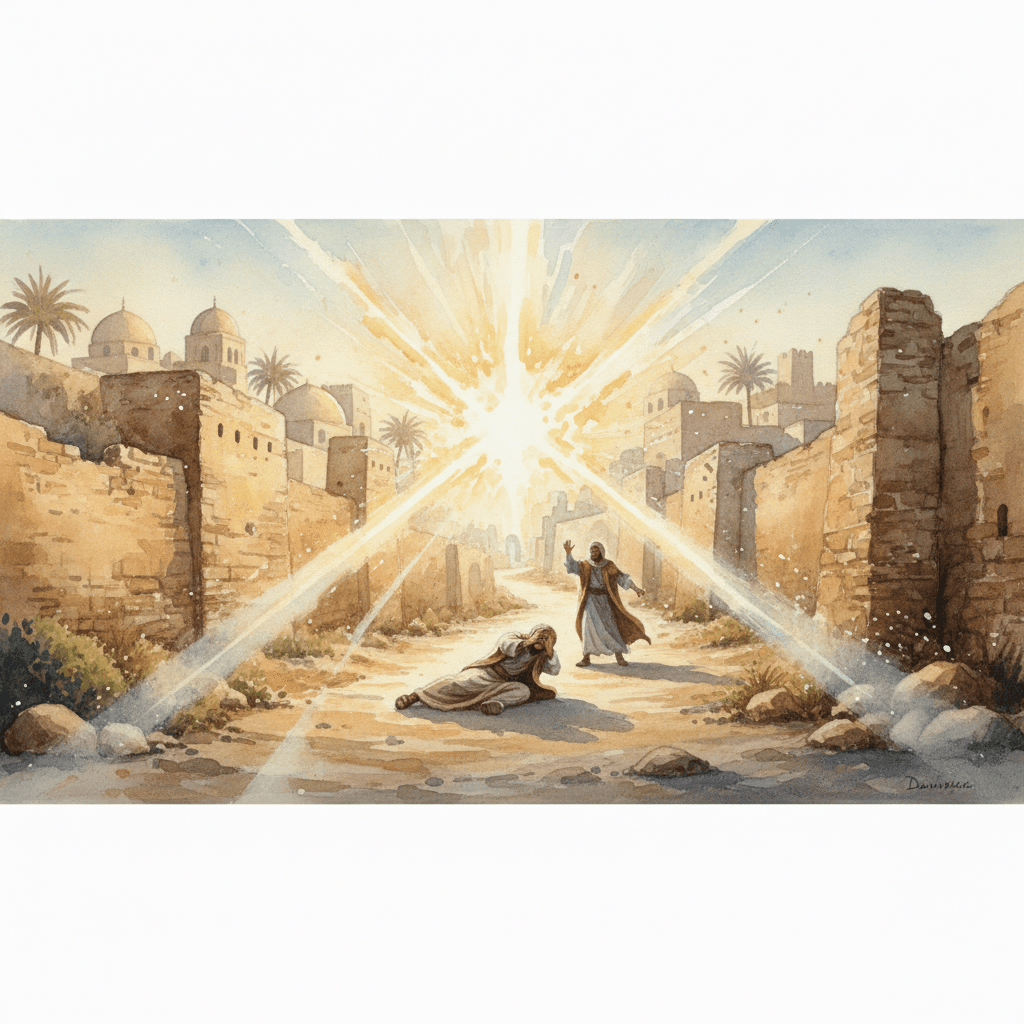
Moving into the New Testament, Damascus shifts to a scene of divine intervention. Saul, “still breathing threats and murder against the disciples of the Lord,” goes to the high priest to request letters authorizing him to arrest believers in Damascus (Acts 9:1-2). This indicates that a Jewish community and synagogues existed there—an environment suitable for diaspora Jews, with influence from Jerusalem’s religious authorities extending into the city. Saul’s journey to Damascus shows that the gospel was spreading beyond Jerusalem, reaching the city’s network of communities. His steps needed to happen for the gospel’s expansion to be genuine and far-reaching.
On that road, the Lord encounters Saul: “Saul, Saul, why are you persecuting me?” (Acts 9:4). This statement makes it clear: persecuting the church is synonymous with persecuting Christ Himself. Damascus is not just a backdrop but a place where human religious zeal is challenged by God’s truth. Saul believed he was faithfully serving God, but he was actually opposing Christ. The Lord’s mercy did not end Saul’s story with judgment—rather, His grace intervened, stopping Saul from destruction. The scene on the road to Damascus became a symbol of spiritual transformation: from physical journey to inward change—the turning from self-righteousness to grace.
A crucial point is that Saul’s conversion was initiated by Christ’s unmerited outreach, not by his own realization. The power of conversion is God’s sovereign act, not merely a human decision. Saul’s transformation is more than psychological; it is the divine calling of a sinner into His own. Genuine Christian faith recognizes this scene as a testimony to God's sovereignty and grace. The fact that a persecutor became an apostle points more to the power of the gospel than to human will.
Understanding this background, reading Acts 9 with the Bible Reading link makes the details clearer. First, the gospel was already reaching international cities. Second, the synagogue network served as a conduit for both evangelism and opposition. Third, Jesus uses even His strongest opponents to become witnesses for His name. Therefore, Damascus embodies both threat and grace—an intersection of the language of judgment and salvation. Recognizing this duality deepens our biblical reading.
When considering Damascus, it’s helpful to also look at what follows Saul’s encounter. Ananias initially fears Saul but obeys Jesus’ command to seek him out (Acts 9:10-17). This illustrates that conversion isn’t just an inner change; it’s verified and accepted within the community of believers. Soon, Saul begins to proclaim Jesus as the Son of God in the synagogues (Acts 9:20). The voice that once persecuted now heralds the gospel. Damascus isn’t merely a fallen place but also the launchpad for a new mission.
Studying this background not only enriches your knowledge but also deepens your engagement with the Bible. As you read familiar passages, understanding their historical, geographical, and biblical context enhances their meaning. If you want to see why recognizing biblical places and events matters, check out Bible Reading Plan or Why It’s Important to Read the Whole Bible. If you’re curious about connections like Damascus, Aram, synagogues, or Saul’s conversion, using AI Bible Search to find related scripture can be helpful.
Today, what might Damascus be asking us? Are we holding onto familiar religious language while closing our ears to the Lord’s voice? Are we prepared to accept His grace when He shakes our confidence? Remember, biblical places are not mere map points—they are venues where God encounters people and redirects lives. If you’ve read today’s Damascus passage, don’t just see it as Paul’s past—you’re invited to reflect quietly on what the Lord might be stopping, changing, or redirecting in your own life.
Related articles
The Meaning of the Dead Sea and Reading Dryness Through Biblical Geography
This article explores the significance of the Dead Sea and its biblical geography, explaining why salt flats, deserts, and arid lands are often associated with dryness and judgment, while also reflecting on God's promise of restoration in Ezekiel, offering practical application for our hearts today.
The Meaning of Wilderness: How to Read Dry Seasons in Life
Exploring the biblical concept of wilderness as a space not just of desert, but of testing, provision, and restoration. Following passages from Exodus, 1 Kings, and Hosea, thoughtfully reflects on how to interpret dry seasons today.
Reading Joshua 6: Conquering Jericho — Faith in Obedience Before Towering Walls
Exploring the fall of Jericho in Joshua 6 from a historical and theological perspective, reflecting on how obedience and God's sovereignty are revealed against imposing walls, and pondering their relevance in our lives today.
 Bible Habit
Turn this article into today’s reading habit
Keep your McCheyne plan, sequential reading, notes, and progress together so the next passage is always clear.
- Today’s passages
- Reading checklist
- Notes and highlights