

Reading Joshua 6: Conquering Jericho — Faith in Obedience Before Towering Walls
Exploring the fall of Jericho in Joshua 6 from a historical and theological perspective, reflecting on how obedience and God's sovereignty are revealed against imposing walls, and pondering their relevance in our lives today.
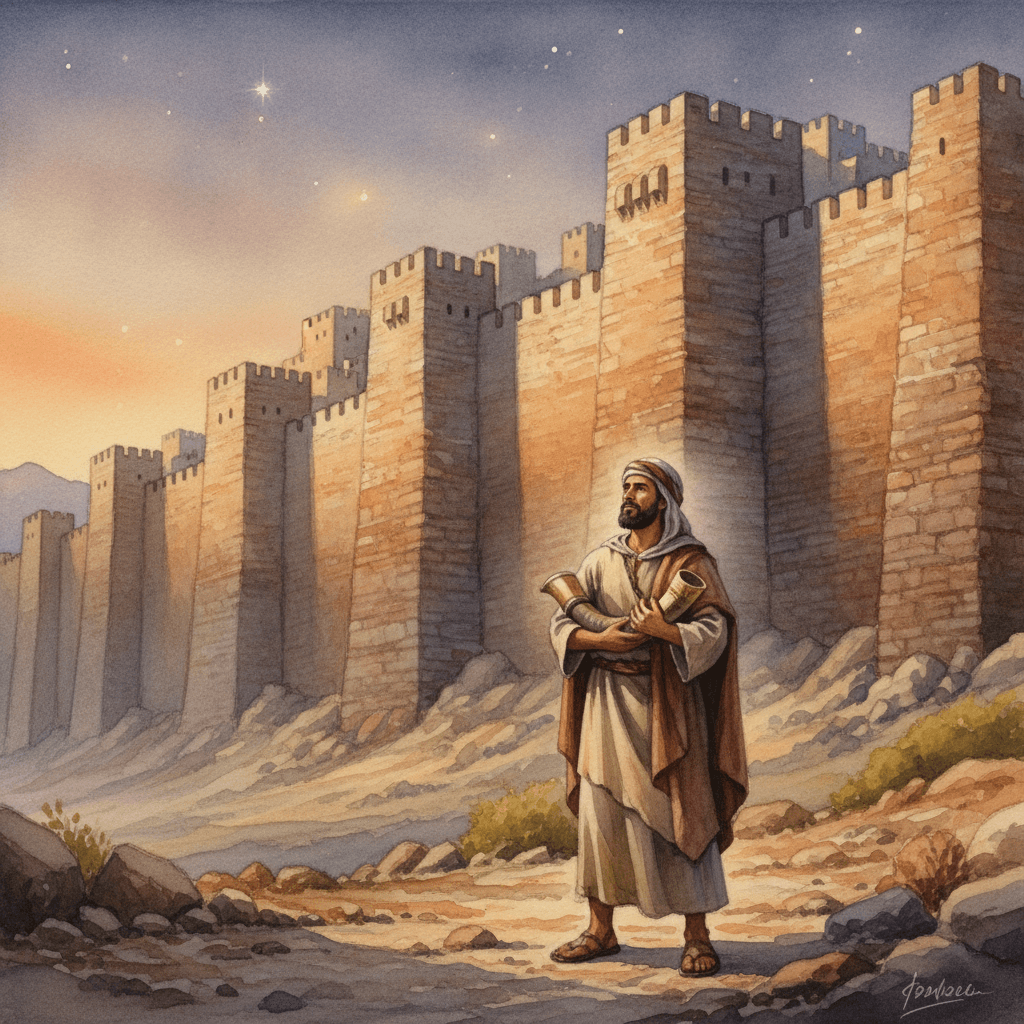
Who Works First Against Immense Walls?
When reading the Bible, some passages become even clearer not just because of the events themselves, but because of the place and context in which they occur. Jericho is a prime example. It isn't just an ancient city but represents the huge reality Israel faced at the threshold of the Promised Land. God doesn’t shy away from that reality—in fact, He reveals His way right there. So, the story of Jericho should be seen not just as a tale of warfare, but as a text illustrating how God's promises and human obedience intersect.
Jericho was an oasis city situated in the lowlands near the northern end of the Dead Sea, west of the Jordan River. Its importance wasn’t only geographical; having access to water and arable land gave it significant value. Add to that its strategic location along trade routes, making it crucial militarily and economically. That Israel's first encounter upon crossing the Jordan after leaving the wilderness was with Jericho is meaningful. Entering the promised land didn't mean all barriers automatically vanished—those tall, sturdy walls still stood.
Joshua 6 questions the very nature of faith at this moment. In verse 2, God declares to Joshua, “See, I have given Jericho into your hand, with its king and mighty men of valor.” The city remains intact, its formidable walls still visible. Yet, God speaks as if the victory has already been accomplished. The Bible’s faith isn't vague optimism that ignores present circumstances; rather, it’s a stance of holding onto God's word as more certain than visible realities.
The command given by God also defies common military logic. The people were to march around the city, priests blow trumpets, and after a period of silence, shout—something entirely different from conventional siege tactics. This wasn’t about tactical efficiency; it was a way to prevent the misconception that human strength or skill was the source of victory. Joshua 6:20 recounts, “So the people shouted, and the priests blew the trumpets, and when the people heard the sound of the trumpet, they shouted a great shout, and the wall fell down flat.” The highlight isn’t how strong Israel was, but how faithful God is.
Beyond that, Jericho is not merely a fallen city but symbolizes the first fruits presented to God. It’s significant that God Himself regulated the handling of the spoils from that first conquest. This isn’t a reward for Israel’s military prowess but a gift from God, bestowed through His covenant. Therefore, Jericho demands a reverence that surpasses the excitement of victory. At the very first step into the land, God made it clear who its true owner was.
Understanding the historical and geographical context makes this scene more vivid. The fertile waters and strategic importance made Jericho no easy place to surrender. Its walls weren’t just barriers; they were symbols of security and control, built by humans to protect and dominate. Yet, the Bible repeatedly shows us that even the most seemingly secure places cannot be truly fortified before God. Conversely, even the most despairing circumstances become channels of salvation when God works.
This passage resonates with us today, as we face our own Jerichos—issues that seem immovable. These might be longstanding conflicts, increasing anxieties about the future, or recurring sinful habits. We tend to focus first on the size of the obstacles—how high they seem, how long they've stood, how weak we feel. Joshua 6 shifts our question: It’s not about how big the walls are but whether God’s word is more certain than our judgments.
Obedience doesn’t always come with immediate inspiration. The time spent marching around Jericho must have felt long and quiet for the people. The walls didn’t crumble overnight, and progress wasn’t visible while circling the city repeatedly. Perhaps, the real training of faith begins in such moments—doing what is commanded despite the situation remaining unchanged, trusting the word even when prayer isn’t answer immediately, choosing confidence over urgency. That’s the obedience of marching around Jericho.
Here’s a simple example: Someone facing a crucial career decision feels uncertain for months. They gather information, seek advice, but fear grows. We tend to expect the answer—walls to fall immediately. Still, the process of honestly examining oneself in front of God’s word, prioritizing what pleases Him over greed or ego, and faithfully fulfilling small responsibilities, may itself be the act of walking around Jericho. Great change may come suddenly, but faith grows daily through ongoing obedience.
Another point to notice is that Jericho's victory was not a source of pride for Israel. Those who experienced God's work in that event learned reverence before confidence. Reflecting on Joshua 6 prompts us to examine our own attitudes. Are the breakthroughs we desire truly for God's glory, or are they driven by maintaining our pride and control? God does not leave His people powerless, but He also does not allow us to live as if we are in charge.
Furthermore, this story makes clear that obedience isn’t the basis for salvation. The victory belongs solely to God from start to finish. The Israelites’ obedience was not what moved God to act; it was an expression of trust in God's promises already given. From a gospel perspective, God's people are not those who earn salvation by their strength but those called by grace, responding with faith. Just as human effort could not break down Jericho’s walls, the powers of sin and death are not defeated by human will or merit. Salvation is God's work first, and obedience is the fruit of trusting that work.
Jericho thus functions as a window into the faith of every generation. The promise has already been made, but reality often still looks formidable. What do God's people live by? The Bible’s answer is clear: by living not according to the height of visible walls but by trusting in God's faithfulness. The walls of Jericho are fallen—and that event still speaks to us today. God does not remain silent in front of seemingly impassable obstacles, and walking in obedience according to His word is never wasted.
Reading Joshua 6, our perspective on each day shifts somewhat. Instead of immediately focusing on what must fall today, we ask, "What is one step I need to take today in obedience to God's word?" Even if the walls still seem to stand, God has already paved a path of obedience within His people. Faith isn’t only expressed through grand declarations; it is also quietly sustained in the act of walking forward in His word. The faith of the people standing before Jericho is rekindled within us as we walk this path today.
To deepen your understanding of such passages, it can be helpful to use resources like Bible Reading and Today’s Manna. If you want to comprehend the flow of Scripture like Joshua did, consulting the McChene Bible Reading Guide or Today’s Reading Chart might be beneficial. The most important thing is not merely knowing more information but standing in faith before God's already spoken word. The story of Jericho invites us again to walk that simple, profound path of obedience.
Related articles
The Meaning of the Dead Sea and Reading Dryness Through Biblical Geography
This article explores the significance of the Dead Sea and its biblical geography, explaining why salt flats, deserts, and arid lands are often associated with dryness and judgment, while also reflecting on God's promise of restoration in Ezekiel, offering practical application for our hearts today.
The Meaning of Wilderness: How to Read Dry Seasons in Life
Exploring the biblical concept of wilderness as a space not just of desert, but of testing, provision, and restoration. Following passages from Exodus, 1 Kings, and Hosea, thoughtfully reflects on how to interpret dry seasons today.
The Site of Conversion Unveiled by Knowing Damascus: Biblical Background and Meaning
Follow the geography, history, and biblical significance of Damascus to see how Old Testament judgment and New Testament conversion intersect in one city. This article provides deeper biblical insights into Saul’s encounter on the road to Damascus.
 Bible Habit
Turn this article into today’s reading habit
Keep your McCheyne plan, sequential reading, notes, and progress together so the next passage is always clear.
- Today’s passages
- Reading checklist
- Notes and highlights