

The Meaning of the Dead Sea and Reading Dryness Through Biblical Geography
This article explores the significance of the Dead Sea and its biblical geography, explaining why salt flats, deserts, and arid lands are often associated with dryness and judgment, while also reflecting on God's promise of restoration in Ezekiel, offering practical application for our hearts today.
The Meaning of the Dead Sea and Reading Dryness Through Biblical Geography
In reading the Bible, there are moments when a single place name can transform the atmosphere of the passage. The Dead Sea is one such example. On maps, it appears as a long, southern lake—yet within Scripture, this place is more than just a background. It evokes images of barrenness, boundaries, the consequences of sin, yet also resonates with God's promises of restoration, becoming a stage for hope.
What we commonly call the Dead Sea in the Old Testament is mostly referred to as the "Salt Sea." Its name literally means salt ocean. In Numbers 34:12, the boundary of the land of Canaan is described, and this sea is mentioned. Likewise, in Joshua 3:16, during the crossing of the Jordan River, the same name appears. The name alone reveals a lot about this region: water flows in, but there are no significant outflows, and under the intense sun, continuous evaporation increases salinity.
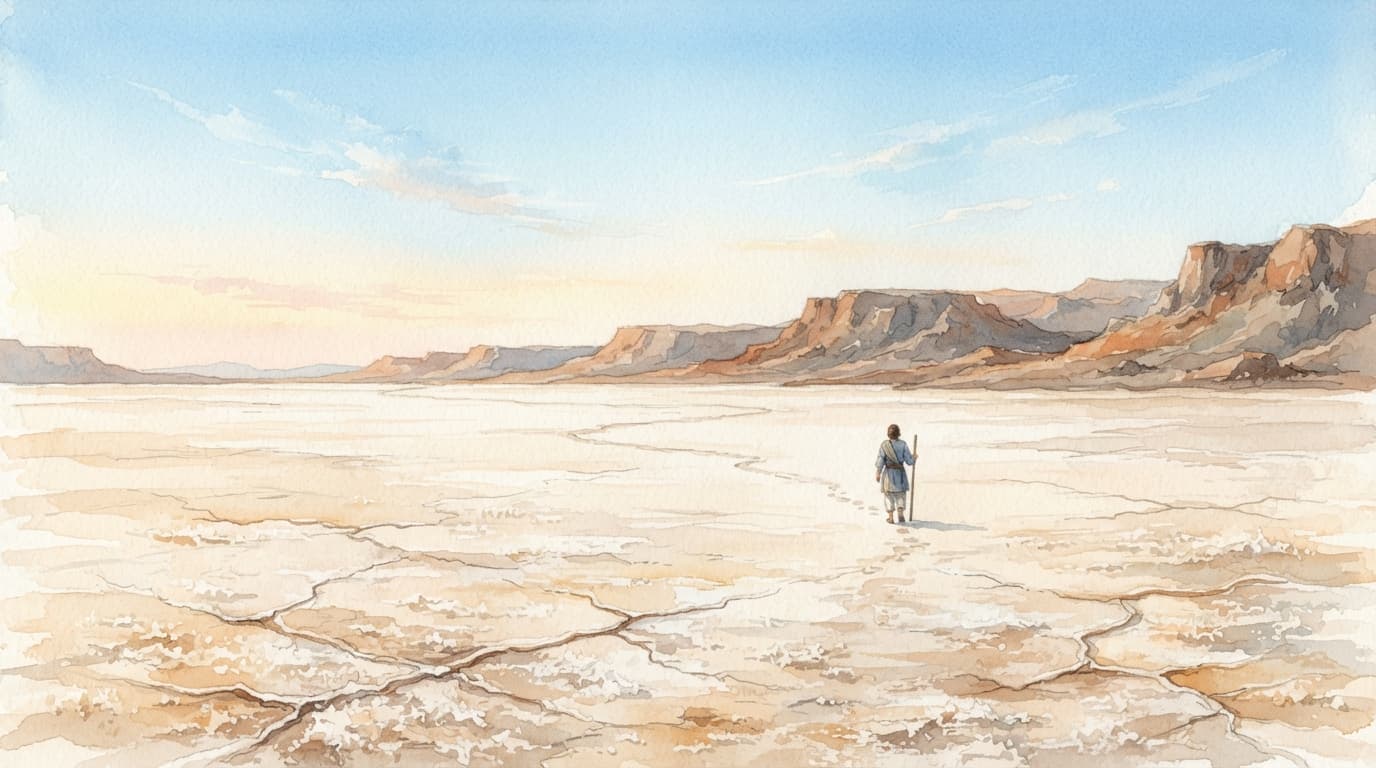
Understanding this background makes some biblical expressions more vivid. The Dead Sea sits well below sea level, surrounded by wilderness, cliffs, and rugged slopes. From a distance, it can seem calm and peaceful, but up close, it feels more like land unfit for habitation. The landscape that comes to mind is drier, with cracked soil and parched lips, rather than lush riverbanks.
Thinking especially of the Judean Wilderness to the west of the Dead Sea makes several biblical scenes come alive more vividly. As one descends from Jerusalem heading east, the scenery rapidly changes. The air of the mountain regions gives way to the heat of the desert. Winding, rocky trails between boulders tire travelers, and as the sun sets, silence envelops the landscape. For the original readers of the Scriptures, the desert was not just an abstract symbol but a real, tangible place.
Because of this, the wilderness often symbolizes tests and revelation in the Bible. It’s where human strength is stripped away, hidden hearts are exposed, and only God's word must be held onto. The inner dryness that may be unnoticed when one is full and comfortable is revealed more clearly in barren places. When imagining the scenery around the Dead Sea, these biblical patterns come to life as more than just ideas—they seem to touch the skin.
The area around the Dead Sea has long been associated with the memory of judgment. Deuteronomy 29:23 describes the land forsaken by God as “all the land becoming sulfur and salt,” where nothing is sowed or grows. This description does not merely refer to the soil's condition; it illustrates how forsaking God results in despair and bleakness. Seemingly abundant temporarily, turning away from the Lord ultimately leads to withering.
Jeremiah 17:5-6 echoes this imagery: “Cursed is the man who trusts in man and makes flesh his strength, whose heart departs from the Lord. He shall be like a shrub in the desert, unable to see goodness coming, living in dry, barren land, in inhospitable places where no one dwells.” This is not just about feeling down. It depicts a spiritual state where, despite seeming to endure, the heart is already parched, and grace cannot penetrate.
In our daily lives, similar moments occur. An overfull schedule, yet a growing sense of roughness inside; sharp words in conversations; reactions hardened, even gratitude dulled when receiving good news. Things seem to be moving smoothly outwardly, yet internally, hearts are hardening. The dryness described in the Bible doesn’t only follow major failures; it can seep in gradually when prayer is deferred, sins are taken lightly, or the Word is pushed aside for calculations.
Thinking about the Dead Sea also reveals aspects of the human heart—an inflow of many things, but little outflow. Hearing God's Word, seeking counsel, and receiving comfort are good, but if they don’t lead to repentance and obedient action, bitterness can deepen inside. Clinging to grace without releasing it, harboring worries instead of turning them into prayer—these habits cause the heart to become like parched land.
However, the Dead Sea also symbolizes that God’s restoration is possible even in the most barren places. Ezekiel 47:8-9 describes waters flowing from the temple, turning a dead sea into a thriving, life-giving body of water. “He said to me, ‘This water flows toward the eastern region and goes down into the Arabah, where it enters the Dead Sea. When it empties into the sea, the water becomes fresh, and swarms of living creatures will live wherever the river flows. Its swamps and marshes will be transformed, and there will be huge numbers of fish.’” Here, death and barrenness give way to life—a vivid picture of revival.
What makes this promise so impactful is that it presents a new, transformed order rather than slight improvement. Places once closed off and unreachable open up, new life bursts where before only dryness reigned. The gospel is the same. Though humans cannot wash away the dryness of sin with their own strength, God raises the dead through Christ. He softens hardened hearts and reconnects broken obedience.
In this context, the Dead Sea becomes more than a geographical detail; it turns into a mirror. It prompts us to reflect on where in ourselves the waters are stagnating. Are conversations with family ending sharply? Are old wounds causing us to shut our hearts? Are we dulling our conscience for fleeting gains? Usually, dryness arrives quietly, so it’s vital to examine ourselves before it deepens.
Restoration rarely begins with grand gestures. Small acts—opening the Word before the phone in the morning, summoning courage to apologize briefly, honestly bringing anxieties before God—these small steps become the starting points of renewal. When hearts harden, such obedience might seem insignificant. Yet, Scripture reminds us that God works through small streams to transform dry land.
Knowing biblical geography isn’t just an accumulation of background knowledge; it helps us understand why these places are paired with biblical stories. The Dead Sea showcases how sharply sin’s effects can be felt and also whispers hope: where God’s living water reaches, even the most closed-off heart can come alive again. When unfamiliar with biblical place names, following the passage in 성경 읽기 or exploring verses about the Salt Sea and wilderness in AI 성경 검색 can deepen our understanding.
Whenever we encounter expressions like salt sea, wilderness, or dry land in our reading, taking a moment to pause is helpful. Reflect on whether such landscapes are present in your own heart. Are your words becoming dry, despite speaking a lot? Have your love and patience waned? Are you so busy that silent moments with the Lord have disappeared? Are you holding onto the grace you’ve received without sharing it?
The name "Dead Sea" isn’t placed in Scripture to scare us. Rather, it quietly calls us not to ignore these dry places in ourselves and to look toward the path of life the Lord offers. It acts like a gentle sign, reminding us to face dryness honestly and to look forward to the way He restores."
Related articles
The Meaning of Wilderness: How to Read Dry Seasons in Life
Exploring the biblical concept of wilderness as a space not just of desert, but of testing, provision, and restoration. Following passages from Exodus, 1 Kings, and Hosea, thoughtfully reflects on how to interpret dry seasons today.
The Site of Conversion Unveiled by Knowing Damascus: Biblical Background and Meaning
Follow the geography, history, and biblical significance of Damascus to see how Old Testament judgment and New Testament conversion intersect in one city. This article provides deeper biblical insights into Saul’s encounter on the road to Damascus.
Reading Joshua 6: Conquering Jericho — Faith in Obedience Before Towering Walls
Exploring the fall of Jericho in Joshua 6 from a historical and theological perspective, reflecting on how obedience and God's sovereignty are revealed against imposing walls, and pondering their relevance in our lives today.
 Bible Habit
Turn this article into today’s reading habit
Keep your McCheyne plan, sequential reading, notes, and progress together so the next passage is always clear.
- Today’s passages
- Reading checklist
- Notes and highlights