

Tracing God’s Covenant Footprints: From Abraham’s Tomb to David’s Throne in Hebron
Hebron is the site where Abraham's altar, the Cave of Machpelah, Caleb's inheritance, and David’s early kingship are connected through covenant history. Following this place reveals how God faithfully fulfills His promises throughout history. Understanding Hebron is more than memorizing biblical geography; it’s learning to see God's unfolding promises in real time within actual places and generations.
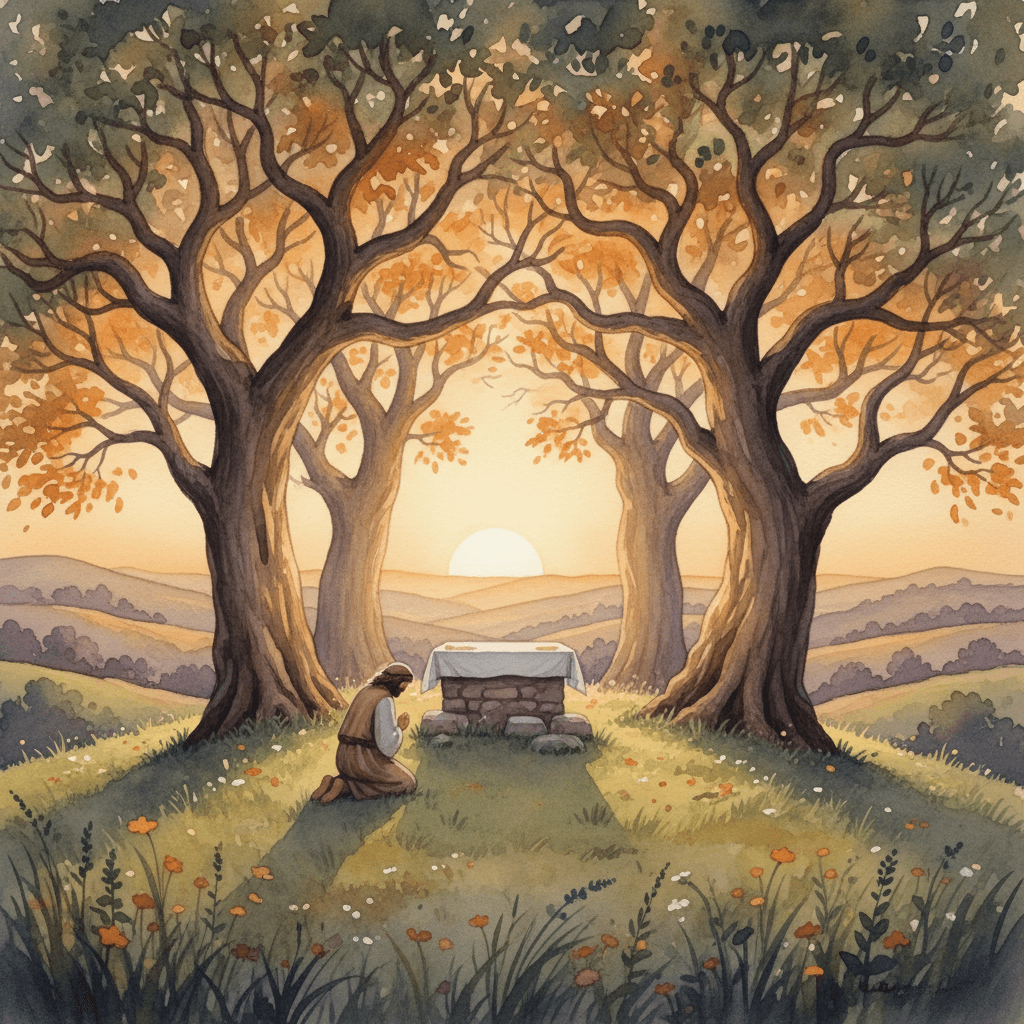
Tracing God’s Covenant Footprints: From Abraham’s Tomb to David’s Throne in Hebron
As you read the Bible, some place names pass by like mere backgrounds, while others stand out as central to the narrative’s flow. Hebron is one such place. Initially, it might seem like just an ancient city name, but as you follow the related passages, you’ll see that this single location is layered with themes of covenant, worship, burial, inheritance, and kingship. To know Hebron is not only about adding a name to your biblical geography but about developing eyes to see how God actively fulfills His promises in history.
The name Hebron is often associated with meanings like “fellowship,” “union,” or “alliance.” While there may be different detailed discussions about its etymology, what biblical readers should first notice is that this city truly embodies the weight of relationships and covenants. In Genesis 13:18, it says, “Then Abram moved his tents and came to the oak of Mamre, which is at Hebron, and he built an altar to the Lord there.” After hearing the promise, Abram builds an altar in Hebron. Therefore, Hebron is not just a place where he dwelt but a site of responding to God's covenant through worship.
Geographically, this city holds strategic importance. Hebron is known as a highland city in the Judean mountains. Though mountains are often not easy to traverse, they serve a critical role in settlement and defense, offering broad vision and a central community hub. This background helps us understand why biblical figures are so deeply connected to it. God’s work is never abstract; it reveals itself concretely in land, cities, families, and generations.
One of the first major events associated with Hebron is the Cave of Machpelah. In Genesis 23, when Sarah died, Abraham, in a formal transaction before the Hittites, acquires the cave and land of Machpelah. This scene is remarkable. God has promised Abraham land, yet that promise was not yet fully realized at this point. Still, Abraham pays a price for a portion of land—an act of faith that the PROMISE is no empty word. The small plot of land becomes a symbol that the promise given by God is being believed and claimed.
This event gains deeper meaning over time. Genesis 49:29-31 records Jacob’s final instructions to bury him with his ancestors in the cave of Machpelah. Genesis 50:13 confirms that his family buried him there. This family site is more than a place of remembrance; it witnesses the continuation of God’s covenant. Though the promise still awaited full fulfillment, believers looked beyond death to the land of promise. This was not mere optimism but an assurance that God is faithful and will not lie.
Hebron is significant beyond the patriarchal era. It also features prominently during the exploration of the promised land. Numbers 13:22 recounts how the spies ascended southward and reached Hebron. This place was not just rumored to be the land of promise but a real site of exploration, where fear and faith split. Many saw the formidable defenses and giants and became disheartened, but Caleb was different. As Joshua 14:13-14 states, Joshua gave Hebron to Caleb because he followed the Lord wholeheartedly. The same location saw some trembling in fear while others trusted God's promises. Hebron teaches us that faith isn’t about ignoring reality but trusting in a God greater than it.
When the story of David joins the picture, Hebron’s significance broadens even further. After Saul’s death, David inquiries of the Lord before acting. In 2 Samuel 2:1, David asks, “Shall I go up to the men of Judah?” and the Lord responds, “Go up to Hebron.” Then, verse 4 records that the men of Judah anointed David king over their tribe. The start of David’s kingship in Hebron is profoundly meaningful. In that city, rich with the memory of the patriarchs, God begins a new chapter in the history of the covenant, inaugurating kingship. Though Jerusalem later became the imperial capital, its origins also trace back to Hebron.
Lining up these passages, Hebron emerges as more than a city. It stands as a signpost of God's faithfulness—where Abraham built altars, Sarah was buried close by, Caleb received his inheritance, and David was anointed king. Despite the different eras, God's sovereignty remains unchanged. People change, generations pass, but the Lord does not forget His covenant.
This also has clear applications for our lives. We often accept that God is working in vague, theoretical ways, postponing obedience, thinking, “Good things will happen someday somewhere.” However, the story of Hebron shows faith is always connected to tangible places. There is a site for building altars, for making sacrifices, for waiting patiently, and ultimately, for receiving inheritance. Faith isn’t about jumping over reality; it’s about holding onto God's Word and living today.
For example, you may have long prayed for something, but in the immediate moment, there’s no visible change—whether it’s reconciliation, family issues, life direction, or workplace difficulties. It’s tempting to loosen our grip on God’s Word because results are not yet visible. Yet, just as Abraham prepared a burial site and Caleb remembered the promise after many years, believers keep stepping forward by faith, even when unseen. They worship sincerely, do not abandon honesty, wrestle with forgiving difficult people, and continue little acts of obedience. God never regards such steps as wasted.
Hebron also teaches us valuable lessons from the Bible reading. The Bible is not just a collection of separate, powerful scenes. When a place name appears repeatedly across different eras, it reveals that God is working through one grand story of redemption. Paying close attention to place names deepens our understanding of the flow of Scripture. As you regularly read through the Bible and encounter places like Hebron, ask yourself, “Who worshipped God here? Who trusted His promises? What is God continuing to do?” These questions make familiar narratives richer and more three-dimensional. If necessary, refer to resources like McCheyne Bible Reading to connect Scripture’s larger narrative.
Ultimately, Hebron reminds us that though God’s promises might seem slow, they never disappear. Faith expresses itself in enduring obedience rather than fleeting emotions. Even if today’s circumstances are not finished or fully realized, a place of worship, patience, and obedience rooted in God's Word can become a space God remembers—the covenant place. When we look at Hebron through Scripture, our trust deepens as we see God's hand working in ways beyond what is immediately visible—more profound and longer-lasting than we often realize.
Related articles
The Meaning of the Dead Sea and Reading Dryness Through Biblical Geography
This article explores the significance of the Dead Sea and its biblical geography, explaining why salt flats, deserts, and arid lands are often associated with dryness and judgment, while also reflecting on God's promise of restoration in Ezekiel, offering practical application for our hearts today.
The Meaning of Wilderness: How to Read Dry Seasons in Life
Exploring the biblical concept of wilderness as a space not just of desert, but of testing, provision, and restoration. Following passages from Exodus, 1 Kings, and Hosea, thoughtfully reflects on how to interpret dry seasons today.
The Site of Conversion Unveiled by Knowing Damascus: Biblical Background and Meaning
Follow the geography, history, and biblical significance of Damascus to see how Old Testament judgment and New Testament conversion intersect in one city. This article provides deeper biblical insights into Saul’s encounter on the road to Damascus.
 Bible Habit
Turn this article into today’s reading habit
Keep your McCheyne plan, sequential reading, notes, and progress together so the next passage is always clear.
- Today’s passages
- Reading checklist
- Notes and highlights